BEIRUT: Lebanese President Joseph Aoun on Tuesday warned against ending the United Nations peacekeepers’ mandate in the country’s south, after the UN Security Council began debating extending their mission.
The annual mandate renewal this year comes after Lebanese authorities, under heavy US pressure, have committed to disarming Hezbollah by year end, following a November ceasefire deal that sought to halt more than a year of hostilities between the Iran-backed group and Israel.
Israel and the United States, which wields a veto on the Security Council, have reportedly opposed the renewal.
“Any timetable for the mandate of UNIFIL that is different from the actual needs will negatively impact the situation in the south, which still suffers from Israeli occupation,” Aoun told force commander Diodato Abagnara, according to a presidency statement.
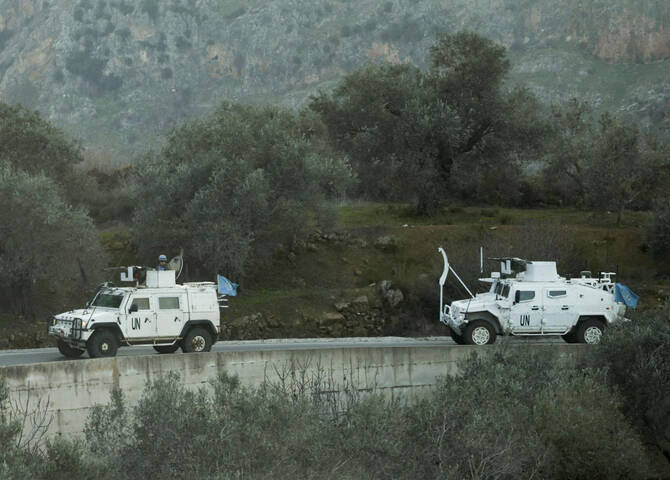
The UN Interim Force in Lebanon has been deployed since 1978 to separate Israel and Lebanon and counts some 10,000 personnel from around 50 countries.
The Security Council on Monday began debating a resolution drafted by France to extend the force for a year with the ultimate aim of withdrawing it.
Aoun said Beirut “has begun contacts with Security Council member states, and brotherly and friendly countries, to ensure the extension” of UNIFIL’s mandate.
He cited Lebanon’s need for the force to help “maintain security and stability in the south” and to support the army following the government’s decision to increase troop numbers there to 10,000 personnel.
Under the ceasefire, Hezbollah was to withdraw from near the Israeli border, while the Lebanese army was to bolster its deployment there.
Abagnara said on X that UNIFIL’s “close coordination” with the Lebanese army was “key to help restore stability.”
Last week, UNIFIL said that with its support, the army had deployed to more than 120 positions in the country’s south.
Despite the ceasefire, Israel has continued to strike Lebanon, saying it will do so until Hezbollah is disarmed. Israeli forces also occupy five areas of the south that it deems strategic.
The text of the draft resolution would extend UNIFIL’s mandate until August 31, 2026 but “indicates its intention to work on a withdrawal of UNIFIL.”
A vote of the 15-member Security Council is expected on August 25, before the force’s mandate expires at the end of the month.


Lebanon president urges extension of UN peacekeepers’ mandate
https://arab.news/wk7an
Lebanon president urges extension of UN peacekeepers’ mandate

- Israel and the United States, which wields a veto on the Security Council, have reportedly opposed the renewal
- UN Interim Force in Lebanon has been deployed since 1978 to separate Israel and Lebanon and counts some 10,000 personnel from around 50 countries


UN, aid groups warn Gaza operations at risk from Israel impediments
- Dozens of international aid groups face de-registration by December 31, which then means they have to close operations within 60 days
UNITED NATIONS: The United Nations and aid groups warned on Wednesday that humanitarian operations in the Palestinian territories, particularly Gaza, were at risk of collapse if Israel does not lift impediments that include a “vague, arbitrary, and highly politicized” registration process.
Dozens of international aid groups face de-registration by December 31, which then means they have to close operations within 60 days, said the UN and more than 200 local and international aid groups in a joint statement.
“The deregistration of INGOs (international aid groups) in Gaza will have a catastrophic impact on access to essential and basic services,” the statement read.
“INGOs run or support the majority of field hospitals, primary health care centers, emergency shelter responses, water and sanitation services, nutrition stabilization centers for children with acute malnutrition, and critical mine action activities,” it said.
SUPPLIES LEFT OUT OF REACH: GROUPS
While some international aid groups have been registered under the system that was introduced in March, “the ongoing re-registration process and other arbitrary hindrances to humanitarian operations have left millions of dollars’ worth of essential supplies — including food, medical items, hygiene materials, and shelter assistance — stuck outside of Gaza and unable to reach people in need,” the statement read.
Israel’s mission to the United Nations in New York did not immediately respond to a request for comment on the statement. Under the first phase of US President Donald Trump’s Gaza plan, a fragile ceasefire in the two-year-old war between Israel and Palestinian militants Hamas began on October 10. Hamas released hostages, Israel freed detained Palestinians and more aid began flowing into the enclave where a global hunger monitor said in August famine had taken hold.
However, Hamas says fewer aid trucks are entering Gaza than was agreed. Aid agencies say there is far less aid than required, and that Israel is blocking many necessary items from coming in. Israel denies that and says it is abiding by its obligations under the truce.
“The UN will not be able to compensate for the collapse of INGOs’ operations if they are de-registered, and the humanitarian response cannot be replaced by alternative actors operating outside established humanitarian principles,” the statement by the UN and aid groups said.
The statement stressed “humanitarian access is not optional, conditional or political,” adding: “Lifesaving assistance must be allowed to reach Palestinians without further delay.”


