
RIYADH: Egypt posted a record primary surplus of 629 billion Egyptian pounds ($13 billion) in fiscal year 2024–2025, despite a 60 percent drop in Suez Canal revenues, the presidency said in a statement.
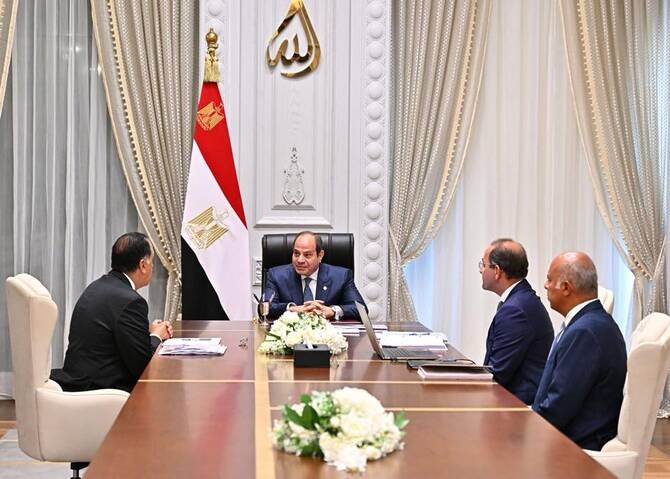
During a meeting with Prime Minister Mostafa Madbouly and Finance Minister Ahmed Kouchouk, President Abdel Fattah El-Sisi was briefed on the country’s preliminary fiscal performance, which showed a surplus equated to 3.6 percent of gross domestic product.
The result represents an 80 percent increase compared to the 350 billion pounds achieved during the 2023-2024 fiscal year.
The finance minister said the strong performance was delivered despite significant external shocks, most notably the sharp decline in Suez Canal revenues, which cost the budget an estimated 145 billion pounds compared with initial projections.
He added that the results coincided with improvements across all major economic indicators, particularly in private investment, industrial activity, and exports.
Presidency spokesperson Mohamed El-Shennawy said tax revenues also saw a significant increase, rising by 35.3 percent year-on-year to 2.204 trillion pounds.
This marks the highest tax revenue growth in recent years and reflects a broader expansion of Egypt’s tax base.
The finance minister said overall revenues grew by 29 percent, while primary expenditures rose by 16.3 percent.
The minister attributed the performance to a comprehensive tax reform agenda, which includes voluntary taxpayer registration, amicable dispute resolution, and the application of digital tools, including the creation of a dedicated e-commerce unit and the implementation of a tax risk management system.
Between February and August, Egypt received 401,929 requests to resolve longstanding tax disputes, along with more than 650,000 voluntarily submitted new or revised tax filings, generating 77.9 billion pounds in revenue.
Moreover, 104,129 small businesses with annual revenues below 20 million pounds applied for tax benefits under Law No. 6 of 2025.
Kouchouk highlighted the government’s social spending commitments. Over 80,000 critical medical cases were treated at state expense, and 2.3 billion pounds were allocated to cover health insurance for vulnerable citizens in various provinces.
In education, 160,000 teachers were hired for the 2024-2025 academic year to address staffing shortages, at a cost of 4 billion pounds.
A further 6.25 billion pounds was set aside for school meal programs to ensure students receive balanced nutrition and combat malnutrition.
El-Sisi stressed the importance of maintaining strict fiscal discipline to support economic recovery and development, and called for stronger public-private partnerships to achieve sustained growth and financial stability.
He also directed the continuation of efforts to generate primary surpluses and to increase allocations for the “Takaful and Karama” cash transfer welfare programs, as well as for the health and education sectors, as part of broader efforts to alleviate burdens on citizens and promote social justice.