

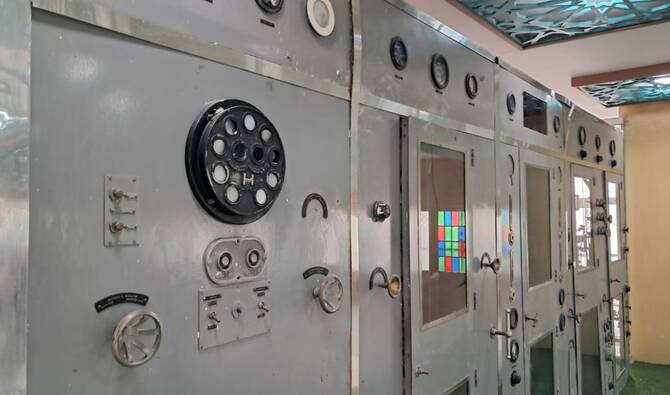

ISLAMABAD: Encased in glass at the center of a softly lit hall in Islamabad’s Radio Pakistan museum stands a towering relic of the country’s birth — a Marconi transmitter that once carried the solemn words:
This is Pakistan Broadcasting Service, Lahore. We now bring to you a special program on ‘The Dawn of Independence.’
It was the night of August 13, 1947. As the world tuned in, the voices of broadcasters Zahur Azar and Mustafa Ali Hamdani broke the silence, one in English, the other in Urdu, to announce the creation of a new nation on Radio Pakistan, the national broadcaster which came into being simultaneously with Pakistan.
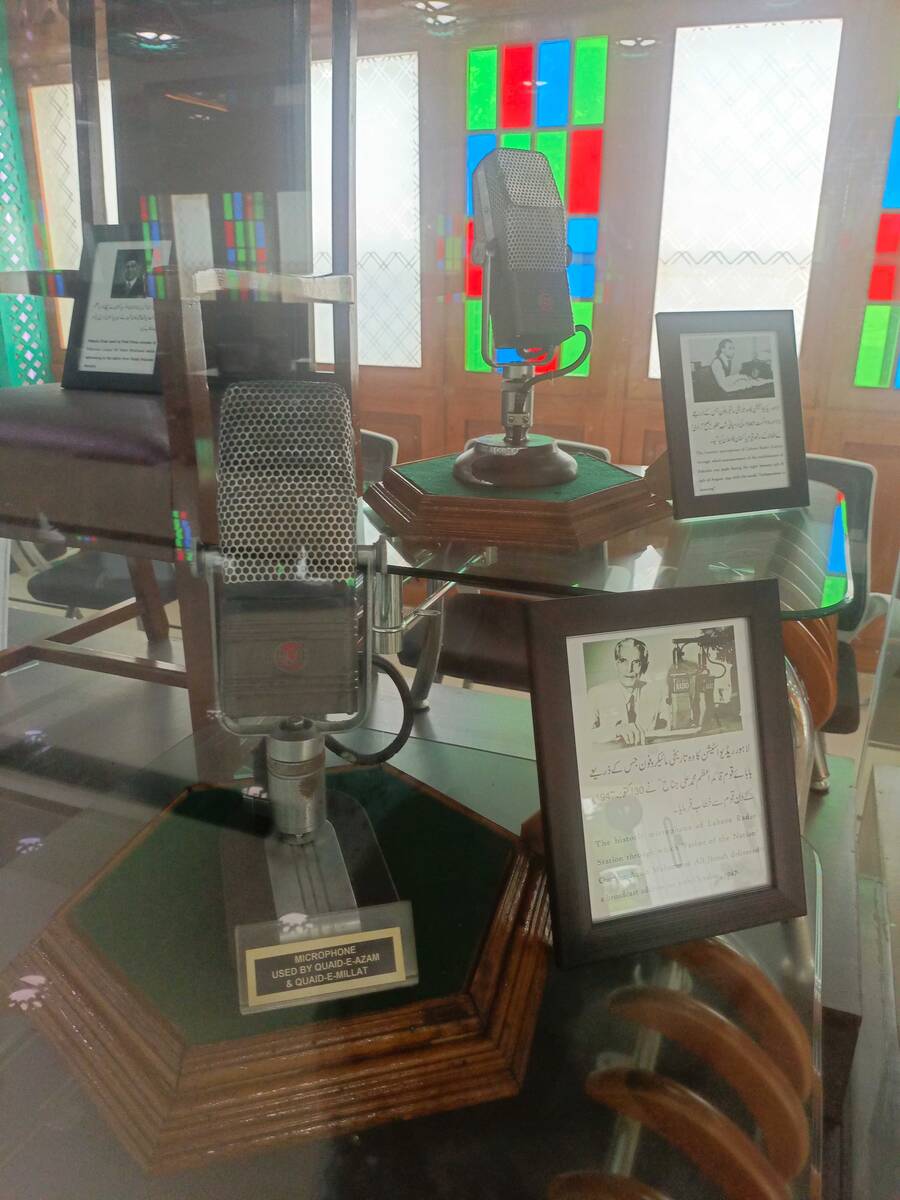
The photo taken on August 1, 2025, shows the Mics used by Quaid-e-Azam Muhammad Ali Jinnah. (AN Photo)
Installed in Lahore in 1937 as part of British India’s early radio infrastructure, the transmitter was repurposed a decade later to deliver the defining broadcast of Pakistan’s emergence as an independent state.
Today, nearly eight decades on, it has found a second life in the capital, restored, preserved, and displayed as a monument to the country’s broadcast and political history at the Radio Pakistan museum.
“This transmitter was stored away in our engineering store for years,” Saeed Ahmed Shaikh, director-general of Radio Pakistan, told Arab News.
“It was vacuum tube technology, obsolete. But because vibrant nations preserve and document their history, we brought it here, restored it, and put it on display.”
BROADCAST THAT ECHOED THROUGH TIME
Back in 1947, radio was the most immediate and far-reaching medium available. Newsprint was slow, television still rare. The airwaves were how people learned of revolution, war — and freedom. And this Marconi machine was how Pakistan was introduced to itself and the world.
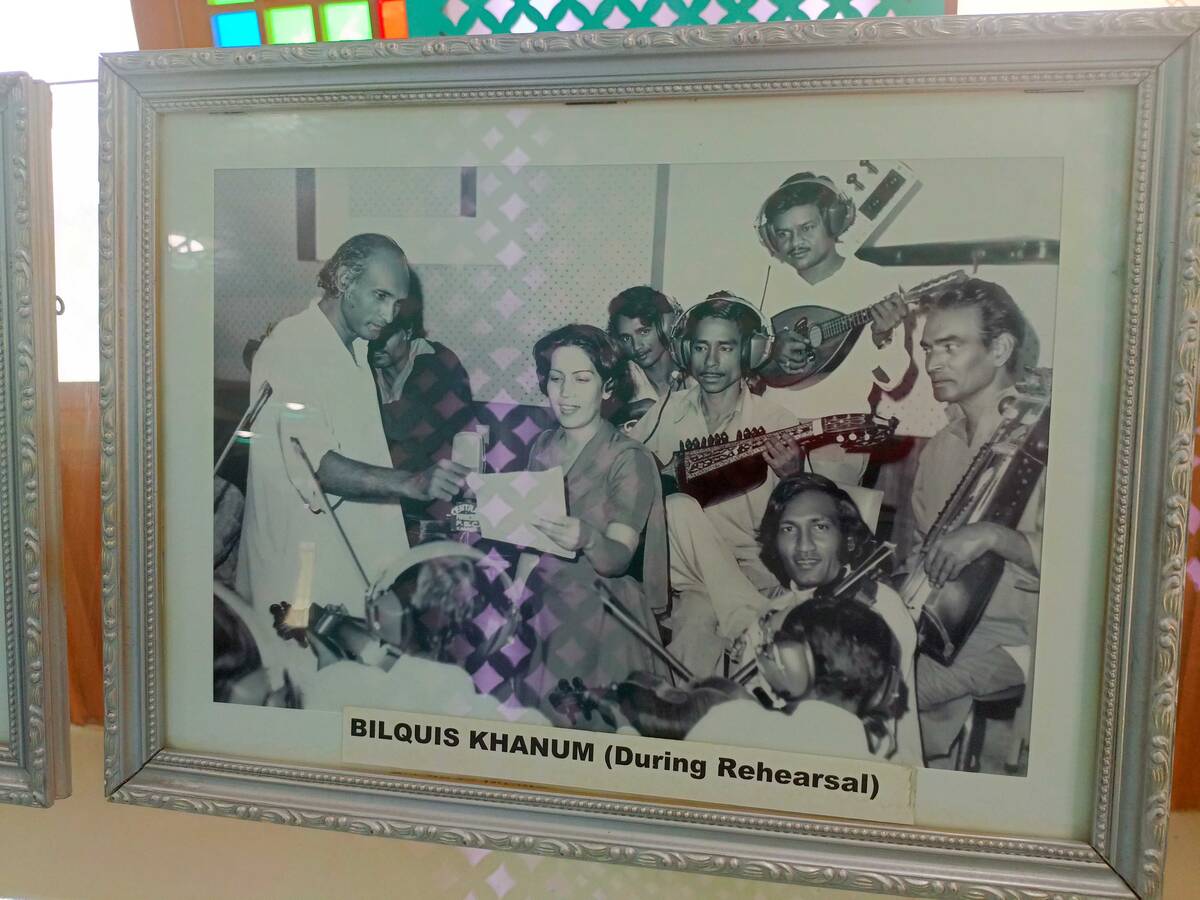
The photo taken on August 1, 2025, shows an old photograph displayed at the Radio Pakistan Museum of a rehearsal session by Pakistani legendry singer Bilquis Khanum. (AN Photo)
“It wasn’t just a broadcast,” Shaikh said. “It was the dawn of a new era.”
Restored in 2020, the transmitter is now the centerpiece of a museum that charts nearly a century of Pakistani broadcasting. The collection includes microphones, vinyl records, antique radios, classical music recordings, and the original Urdu and English scripts of landmark news bulletins.
Among the artifacts is the very microphone Hamdani used during his independence night announcement.
“We’re not just witnesses to history,” Shaikh added. “We’re its custodians. And we want our young generation to connect with that legacy.”
CRADLE OF MUSIC AND MEMORY
Founded in 1947, Radio Pakistan, also known as Pakistan Broadcasting Corporation, was not only the country’s first public broadcaster but also a formative platform for the country’s musical and cultural identity.
“If you ask the late Ustad Nusrat Fateh Ali Khan, he would tell you his first public performance was aired by Radio Pakistan. Same with Attaullah Khan Esakhelvi. These were voices we introduced to the world,” Shaikh said, naming giants of Pakistani music.
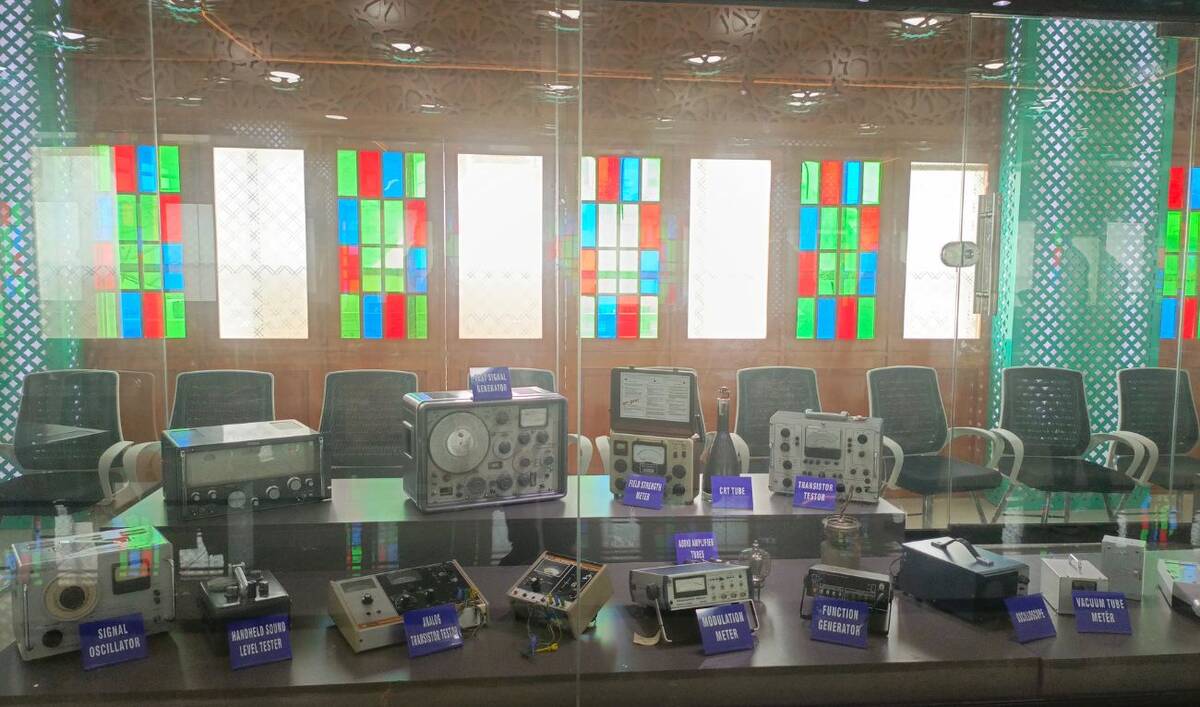
The photo taken on August 1, 2025, shows equipment desplayed at the Radio Pakistan Museum. (AN Photo)
Over the decades, Radio Pakistan aired everything from Sufi qawwalis to political speeches, public service announcements, and dramatic radio plays that reached millions. For many households, it was the soundtrack of a nation coming into its own.
DIGITAL ERA
Since assuming office as director-general in 2023, Shaikh has introduced reforms to bring the legacy broadcaster into the digital era. A major focus has been archiving and digitizing its vast music and speech recordings, some of which date back more than 70 years.
In partnership with a Chinese technology firm, Radio Pakistan is digitizing its full music archive, a collection scheduled to be accessible globally via platforms like Apple Music by September 2025.
“We’re moving fast,” Shaikh said. “Soon you’ll be able to access our music from anywhere, right on your phone.”
Already, the broadcaster boasts over a million followers on X, 2.7 million on Facebook, and a mobile app that streams live content from 53 stations across the country. Its digital reach spans far beyond Pakistan -to Gulf countries, Europe, and North America — connecting expatriates not just to news, but to familiar sounds and languages from home.
“[For us] the question is no longer, ‘How many people in Pakistan are listening?’” Shaikh said, when asked about a decline in radio audiences worldwide.
“The question now is: How many people worldwide are listening to Radio Pakistan?”


