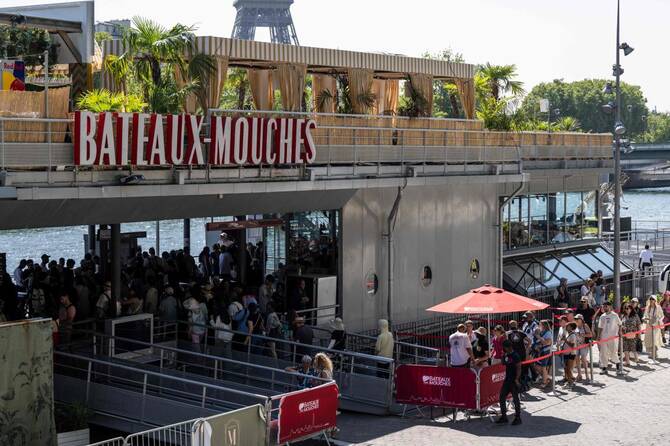
PARIS: Swimming in the Seine is an increasingly popular tourist attraction in the French capital — and a must-do for Parisians themselves. Thousands of people have enjoyed a dip in the river since three public bathing sites opened last month, the first in over a century.
The swimming areas are expected to get even more crowded as a heatwave arrives in the region on Tuesday. Paris has been placed under “high vigilance” by national weather service Meteo France, with temperatures up to 38 degrees Celsius (100 Fahrenheit) expected.
At the Grenelle site in the west of Paris, visitors swim and sunbathe with a unique view of the Eiffel Tower, with small fishes darting near the surface.
Water quality is tested daily to conform with European regulations. Swimming in the Seine had been illegal since 1923, with a few exceptions, due to pollution and risks posed by river navigation. The new bathing sites are possible following a 1.4 billion euro ($1.6 billion) cleanup that made it suitable for Olympic competitions last year.
“Imagine that,” said Constanze Martens, a tourist from Mexico. “Swimming with view of the Eiffel Tower and in pure natural water, clean, safe, and with all this lovely people too, you have every age here.”
On Monday, the water temperature in the Seine was 22 degrees Celsius (71 Fahrenheit).
“It’s quite warm, warmer than the sea, which was quite surprising, and is very pleasant,” said Elisabeth Lorin, from the Paris eastern suburb of Montreuil.
Until the end of August, bathing sites are open for free at scheduled times to anyone 10 or older or 14 or older, depending on the location. Details are in the Paris city hall website, in English as well. Each swimmer must be equipped with a yellow buoy, attached to their waist, for safety reasons. There are changing rooms with lockers.
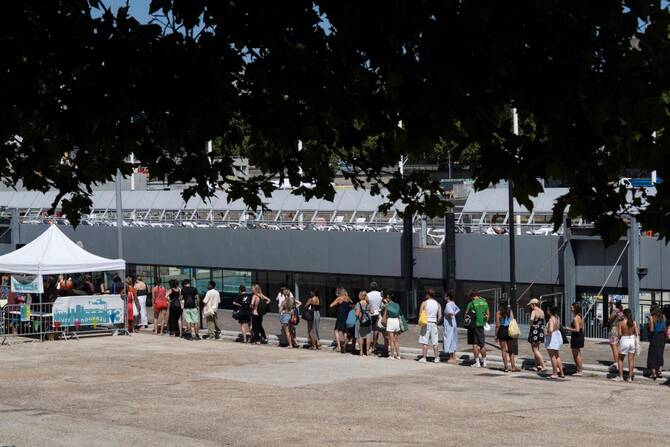
The site welcomes between 800 and 1,200 visitors per day, with a limit of 200 at any one time, said the manager of the Grenelle site, Yann Forêt.
Paris Deputy Mayor Pierre Rabadan last week said over 40,000 people had swum at the sites since they opened on July 5. That’s despite almost two weeks of closures largely due to rainy weather, which increases water pollution upstream.
“Right now, the water quality is excellent and we have optimal conditions with warm weather,” Rabadan told The Associated Press on Monday. He said the daily decision to open the sites depends on weather conditions and factors including water flow rate and any known pollution.
Several lifeguards monitor the sites, occasionally using their whistles to remind swimmers not to jump or leave the perimeter. No major incident has been reported, Rabadan said.
Marina Gicquel, a 22-year-old lifeguard at Grenelle, said the main difference from a swimming pool is the river current, along with the murky water.
“You can only see people’s heads sticking out. That’s why buoys are useful,” Gicquel said. “And it’s also quite deep. It’s three to five meters (10 to 16 feet) deep, so people find no foothold.”
Some visitors, like Australian Thurkka Jeyakumar, had been skeptical about swimming in the Seine, citing the river’s murky color and bacteria issues.
Unsafe levels of E. coli or other bacteria appear during prolonged periods of rain that overwhelm pipes, leading untreated wastewater to flow into the river instead of a treatment plant. Last year, some Olympic competitions were postponed for that reason.
In the end, Jeyakumar gave it a try because she lost a bet.
“For the moment, I have to say that it was much nicer and cleaner than I thought it would be,” she said. “So the bet worked out for the better!”


![]()
![]()

The Seine in Paris is open for swimming. Tourists and residents embrace it as temperatures soar
Short Url
https://arab.news/j6ha7
The Seine in Paris is open for swimming. Tourists and residents embrace it as temperatures soar
- At the Grenelle site in the west of Paris, visitors swim and sunbathe with a unique view of the Eiffel Tower, with small fishes darting near the surface
- The swimming areas are expected to get even more crowded as a heatwave arrives in the region on Tuesday


Latest updates




Recommended


© 2026 SAUDI RESEARCH & PUBLISHING COMPANY, All Rights Reserved And subject to Terms of Use Agreement.