

Pakistan warns key ministries of ‘severe’ ransomware attacks, urges security system upgrades

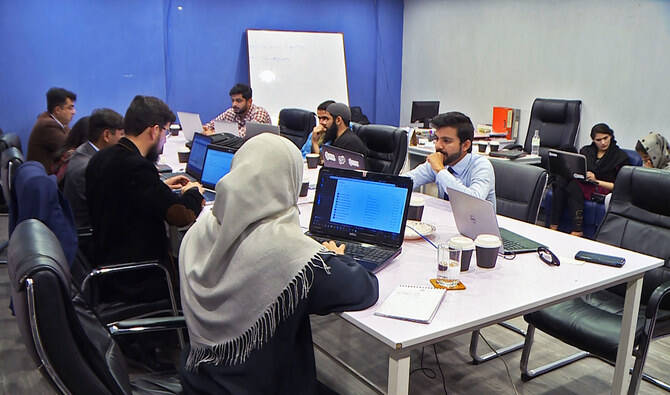
Members of a Computer Emergency Response Team (CERT) in Islamabad engaged in an international online drill on March 11, 2020 to test preparedness against cyber attacks. (AN photo/File)
Short Url
Updated 10 August 2025
Follow

Pakistan warns key ministries of ‘severe’ ransomware attacks, urges security system upgrades

  • The ransomware encrypts victim files, appends extension, and demands ransom in exchange for decryption keys
  • The advisory comes after the ransomware targeted some organizations, including the Pakistan Petroleum Limited

ISLAMABAD: Pakistan’s National Cyber Emergency Response Team (NCERT) has issued an advisory to 39 key ministries and institutions and warned them of a “severe risk” posed by the ongoing ‘Blue Locker’ malware attacks, an NCERT spokesperson said on Sunday, confirming that a few Pakistani organizations had already been affected by the ransomware.

NCERT, which handles cybersecurity threats, alerts and coordination for government ministries and institutions, advisory came after the ransomware targeted some organizations in the South Asian country, according NCERT spokesman Imran Haider.

“Pakistan Petroleum has been impacted severely and some other organizations were also attacked, but our deployed system is detecting and blocking it continuously,” he told Arab News.

Blue Locker ransomware can impact Windows-based desktops, laptops and servers as well as network shares, cloud-synced storage and backup systems accessible during the attack, according to an Aug. 9 NCERT advisory seen by Arab News.

“The Blue Locker ransomware encrypts victim files, appends the .blue (dot blue) extension, and demands ransom in exchange for decryption keys,” it said, adding that the attack may initiate through trojanized downloads, phishing emails, unsafe file-sharing platforms and compromised websites.

“It has the potential for severe data loss, operational disruption, and reputational harm.”

Once executed, the ransomware may disable antivirus software, spread laterally across the network, and exfiltrate sensitive information, according to the advisory.

As a precaution, organizations must keep all systems updated with the latest security patches, apply multi-factor authentication, filter malicious emails or web content, avoid downloading software from untrusted sources, train staff on threat detection, and monitor systems and maintain offline backups of critical data.

“Immediate isolation of any infected system and prompt reporting to the cybersecurity team are essential to prevent further spread,” NCERT said.

Independent cybersecurity experts say Pakistani government bodies lack structures, policies and constant vigilance needed to counter increasingly sophisticated cyber threats.

Tariq Malik, a cybersecurity expert and former Chief Technology Officer with Pakistan’s army, said the country’s ministries and government departments were “ill-prepared” to handle such attacks.

“They do not have such structure and clear policies to deal with such sophisticated attacks,” he told Arab News. “Government departments need to start using the technology as a whole not only as personal computers and need proper safety mechanisms and trainings.”

Ammar Jaffery, president of the Pakistan Information Security Association (PISA), said the nature of cybersecurity has changed from reactive to proactive, and organizations now need to continuously train their staff to deal with daily emerging challenges.

“Hackers are always ahead of experts, so it’s not just about capability but about continuous learning, where organizations must recognize that cyber threats are growing daily, weekly and monthly,” he told Arab News.

“Therefore, organizations should regularly check their systems and create ongoing awareness among their technical and general staff.”

Key ministries and departments should have their own cybersecurity teams, according to Jaffery.

“They should train their Security Operations Center (SOC) teams and ensure up-to-date Security Information and Event Management (SIEM) systems, and especially their own CERT which acts like a watchman guarding your home — are always on alert,” he said.


Pakistan transporters call off five-day strike after successful talks with Punjab government

Updated 12 December 2025
Follow

Pakistan transporters call off five-day strike after successful talks with Punjab government

  • Transporters went on strike against heavy fines, penalties imposed by Punjab over traffic violations
  • Punjab government sets up committee to resolve transporters issues, confirms provincial minister

ISLAMABAD: Pakistani goods transporters called off their five-day-long nationwide strike on Friday after successful talks with the Punjab government, officials and transporters confirmed, as the business community warned of an impending economic crisis if the dispute stayed unresolved. 

Transporters went on a nationwide strike on Dec. 8 against stringent traffic rules and heavy fines imposed by the Punjab government over traffic violations. These penalties were included in the Motor Vehicle Ordinance 2025 last month. 

The ordinance details hefty fines ranging from Rs2000 [$7] to Rs50,000 [$178] and mentions prison sentences going up to six months for various offenses committed by drivers, such as driving on the wrong side of the road or driving in vehicles with tinted windows. 

“Yes, the strike has been called off after our meeting with Senior Minister of Punjab Marriyum Aurangzeb,” Nabeel Tariq, president of the All Pakistan Goods Transport Association (APGTA), told Arab News. 

Tariq said fines ranging from Rs1000 ($3.6) to Rs1500 ($5.4) for traffic violations have been increased to around Rs20,000 ($71.3) as per the new rules. 

He said the APGTA has agreed to accept a 100 percent or even 200 percent hike in fines. However, he said an increase of 2000 percent was not “logical.”

“Our urgent demands have been accepted and a committee has been formed to review the ordinance and come up with recommendations,” Tariq said. 

Speaking to Arab News, Aurangzeb confirmed the strike had been called off after talks with the Punjab government and that a committee has been formed to resolve the transporters’ issues. 

The committee will be headed by Aurangzeb and will include representatives of goods transporters, a statement issued by her office said. 

“The government wants to protect human lives and make things better for all citizens,” the statement said. “We will resolve the issues (with transporters) amicably.” 

‘UNPRECEDENTED CRISIS’

Pakistan’s business and industrial community, meanwhile, warned of an impending crisis if the disputed was not resolved. 

The All Pakistan Textile Mills Association (APTMA) and the Karachi Chamber of Commerce and Industry (KCCI) have both appealed for immediate government intervention.

Imdad Hussain Naqvi, president of the Grand Transport Alliance Pakistan (GTAP), told Arab News that over 400,000 goods carriers had been stranded across Pakistan due to the strike, affecting supplies to millions of consumers.

Earlier, in a letter to Punjab Chief Minister Maryam Nawaz, APTMA Chairman Kamran Arshad said the strike has “critically impacted import and export operations which are backbone of the country’s economy.”

He said hundreds of cargo vehicles remain stranded across Punjab, creating “abnormal delays” in goods movement and triggering heavy demurrage, detention charges, missed vessels and production shutdowns due to the non-availability of raw materials.

Arshad warned the disruption poses “a serious risk of order cancelation of export orders by international buyers, which would have far-reaching consequences for Pakistan’s foreign exchange earnings.”

Meanwhile in Pakistan’s commercial hub Karachi, KCCI President Rehan Hanif issued an even stronger warning, saying the nationwide strike threatens to paralyze Pakistan’s economic lifeline. 

“The complete suspension of cargo movement is pushing Pakistan toward an unprecedented trade and industrial crisis,” Hanif said in a statement. 

He added that import and export consignments are now stranded at the city’s ports, highways and industrial zones.