

Folk music, culture and unity shine at Pakistan’s 79th Independence Day event in Dubai

1 / 2
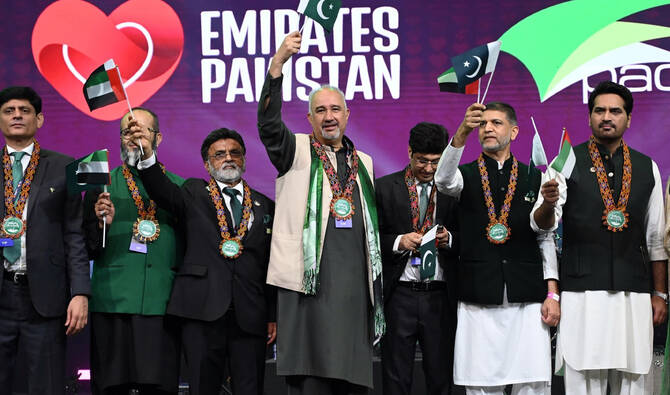
Pakistan’s envoy to the UAE, Faisal Niaz Tirmizi (center), waves flag at the Pakistan’s 79th Independence Day celebrations at the Dubai Exhibition Center in Expo City in Dubai, UAE, on August 10, 2025. (Pakistan Embassy UAE)
2 / 2
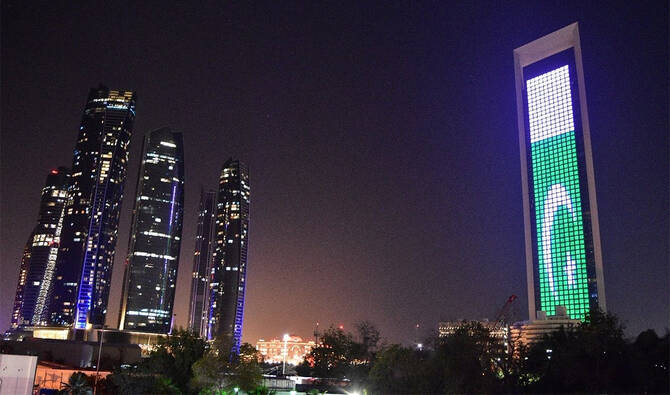
Adnoc tower lights up with the colours of the Pakistan flag in Abu Dhabi, UAE, on August 14, 2020, to mark the country's 74th Independence Day. (Radio Pakistan)
Short Url
Updated 11 August 2025
Follow

Folk music, culture and unity shine at Pakistan’s 79th Independence Day event in Dubai

  • The gathering included diplomats, Emirati dignitaries and members of vibrant Pakistani community
  • The UAE is Pakistan’s third-largest trading partner and home to over 1.8 million Pakistani expatriates

ISLAMABAD: Pakistan’s 79th Independence Day celebrations kicked off in a spectacular fashion at the Dubai Exhibition Center in Expo City on Sunday, drawing thousands from across the United Arab Emirates (UAE).

The mega event, titled ‘Emirates Loves Pakistan,’ was organized in collaboration with the Pakistan Association Dubai (PAD) and supported by Dubai Police, featured a colorful mix of music, dance, art, cuisine and community spirit.

Ambassador Faisal Niaz Tirmizi, Pakistan’s envoy to the United Arab Emirates, expressed his profound gratitude to the UAE authorities for their participation in the momentous occasion.

“This will be the biggest Pakistan Independence Day celebration in the world,” he said on Sunday evening, adding that more than 60,000 people had registered for participation in the event.

The gathering included diplomats, Emirati dignitaries and members of the vibrant Pakistani community in the UAE. It featured performances from national superstar Sahir Ali Bagga, Sufi rock singer Natasha Baig, and celebrated storyteller Yousuf Bashir Qureshi.

From the aroma of traditional food stalls to the energy of live music and the green-and-white flags, the event was a vibrant manifestation of Pakistan’s heritage, friendship and national pride.

Hussain Muhammad, Pakistan’s consul-general in Dubai, extended special thanks to PAD for its dedicated efforts in organizing the event.

“He praised the contributions of the Pakistani community to the UAE’s development and urged them to continue observing local laws, respecting the norms and policies of the host country,” the Pakistani embassy said.

The UAE is Pakistan’s third-largest trading partner after China and the US, and is considered a critical market due to its geographic proximity and logistical advantages.

The Gulf state is also Pakistan’s second-largest source of foreign remittances, after Saudi Arabia, with over 1.8 million Pakistani expatriates living and working there.

In his remarks, PAD President Dr. Faisal Ikram paid a tribute to the sacrifices made by the Muslims of the subcontinent in their struggle for an independent homeland, reaffirming the importance of unity, progress, and community spirit.

Pakistan marks its Independence Day each year on August 14 to celebrate the day it secured independence from British rule in Indian Subcontinent. Pakistani embassies across the world hold special events marking the significance of independence while special programs are held across the country to mark the occasion.


Rating firm S&P says it won’t rush Iran war downgrades, sees risks for countries like Pakistan

Updated 4 sec ago
Follow

Rating firm S&P says it won’t rush Iran war downgrades, sees risks for countries like Pakistan

  • Agency says it is monitoring indebted energy importers as higher oil prices strain finances
  • Gulf economies seen better placed to weather shock, though Bahrain flagged as vulnerable

LONDON: S&P Global ‌said it would not make any knee-jerk sovereign rating cuts following the outbreak of war in the ​Middle East, but warned on Thursday that soaring oil and gas prices were putting a number of already cash-strapped countries at risk.

The firm’s top analysts said in a webinar that the conflict, which has involved US and Israeli strikes ‌against Iran and Iranian ‌strikes against Israel, ​US ‌bases ⁠and Gulf ​states, ⁠was now moving from a low- to moderate-risk scenario.

Most Gulf countries had enough fiscal buffers, however, to weather the crisis for a while, with more lowly rated Bahrain the only clear exception.

Qatar’s banking sector could ⁠also struggle if there were significant ‌deposit outflows in ‌reaction to the conflict, although there ​was no evidence ‌of such strains at the moment, they ‌said.

“We don’t want to jump the gun and just say things are bad,” S&P’s head global sovereign analyst, Roberto Sifon-Arevalo, said.

The longer the crisis ‌was prolonged, though, “the more difficult it is going to be,” he ⁠added.

Sifon-Arevalo ⁠said Asia was the second-most exposed region, due to many of its countries being significant Gulf oil and gas importers.

India, Thailand and Indonesia have relatively lower reserves of oil, while the region also had already heavily indebted countries such as Pakistan, Bangladesh and Sri Lanka whose finances would be further hurt by rising energy prices.

“We ​are closely monitoring ​these (countries) to see how the credit stories evolve,” Sifon-Arevalo said.