

Pakistan Refinery to buy its first Nigerian Bonny Light oil from Vitol, sources say

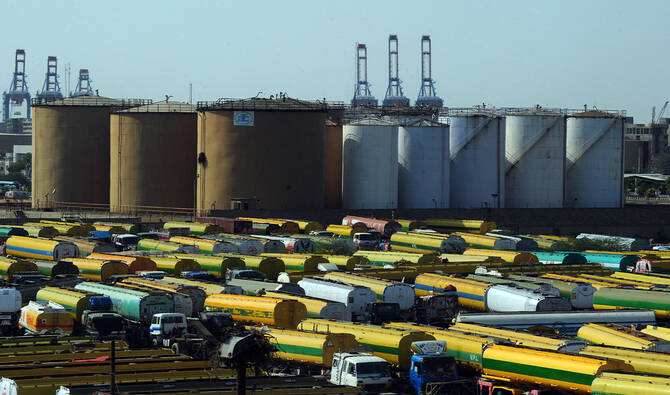
A general view of a local refinery shows tankers parked outside in Pakistan's port city of Karachi on February 22, 2011. (Reuters/File)
Short Url
Updated 07 August 2025
Follow

Pakistan Refinery to buy its first Nigerian Bonny Light oil from Vitol, sources say

  • 500,000-barrel light-sweet crude cargo is expected to arrive in Karachi by late September
  • Oil is Pakistan’s largest import, with crude and petroleum products totaling $11.3 billion in FY 25

KARACHI: Pakistan Refinery Limited will import its first cargo of Nigerian Bonny Light crude from Vitol in September, two sources familiar with the matter said, as Asian refiners shift toward cheaper alternatives to Middle Eastern oil.

The 500,000-barrel, light-sweet crude cargo is expected to load later this month and arrive in Karachi by late September, the sources said, declining to be named as the information is not yet public.

The price was not immediately known.

Vitol and PRL did not immediately respond to a request for comment.

The purchase follows Pakistan’s first deal to import US crude, also supplied by Vitol, by Cnergyico, which is scheduled to arrive in October.

Almost all of Pakistan’s crude imports are sourced from the Middle East, primarily Saudi Arabia and the United Arab Emirates.

However, along with other Asian refiners, Pakistan’s industry has shown increased interest in recent months in supplies from elsewhere, including US West Texas Intermediate and Kazakh CPC Blend, after Middle Eastern supplies became more expensive.

As early as 2014, Pakistan imported a Nigerian Yoho crude, according to data from Kpler, but the Bonny Light purchase is the country’s first known purchase of Bonny Light, which is valued for its high yields of gasoline and diesel.

Oil is Pakistan’s largest import item, with crude and petroleum products of $11.3 billion in the fiscal year ended June 30, 2025 representing nearly a fifth of the country’s total import bill.


Pakistan offloads three passengers bound for Saudi Arabia, UAE over forged documents

Updated 4 sec ago
Follow

Pakistan offloads three passengers bound for Saudi Arabia, UAE over forged documents

  • The passengers at Karachi airport were found carrying fake visas, a driver’s license and residency papers
  • Pakistan has arrested over 1,700 human smugglers, reported a 47 percent drop in illegal immigration to Europe

ISLAMABAD: Pakistan’s Federal Investigation Agency (FIA) on Tuesday said it offloaded three passengers at Karachi airport who were attempting to travel to Saudi Arabia and the United Arab Emirates (UAE) on forged documents.

The development is part of the continued crackdown undertaken by Pakistani authorities on illegal immigration and human smuggling. Pakistan reported a 47 percent drop in illegal immigration to Europe this year, with more than 1,700 human smugglers arrested.

The country intensified action against illegal migration in 2023 after hundreds of people, including its own nationals, lost their lives while trying to cross the Mediterranean to reach European shores in an overcrowded vessel that sank off the Greek coast.

“The passengers were identified as Aamir, Ali Hussain, and Ijaz,” the FIA spokesperson said in a statement.

“The passengers have been handed over to the FIA Anti-Human Trafficking Circle, Karachi, for further legal action.”

The FIA added that Aamir was attempting to travel to the UAE on a visit visa using a fake Ukrainian resident card he paid Rs1 million ($3,571) to obtain.

Hussain was traveling to Saudi Arabia on a work permit using a fake driving license he paid a huge sum of money for, it continued.

The agency added Ijaz was also traveling to Saudi Arabia with a fake Qatari visa on his passport for which he paid Rs300,000 ($1,071).

The issue of illegal immigration and its consequences have gained significant attention in Pakistan following the arrest of several Pakistani and foreign nationals at airports with forged documents in recent years.

In September, the FIA released a list of more than 100 of the country’s “most wanted” human smugglers and identified major trafficking hubs across the country’s most populous Punjab province and Islamabad.

Earlier in December, Pakistan announced it would roll out an Artificial Intelligence-based immigration screening system in Islamabad from January next year to detect forged travel documents and prevent illegal departures.