

Where We Are Going Today: Labash – Egyptian restaurant in Riyadh

1 / 3
Photo/Supplied
2 / 3
Photo/Supplied
3 / 3
Photo/Supplied
Short Url
Updated 04 August 2025
Follow

Where We Are Going Today: Labash – Egyptian restaurant in Riyadh

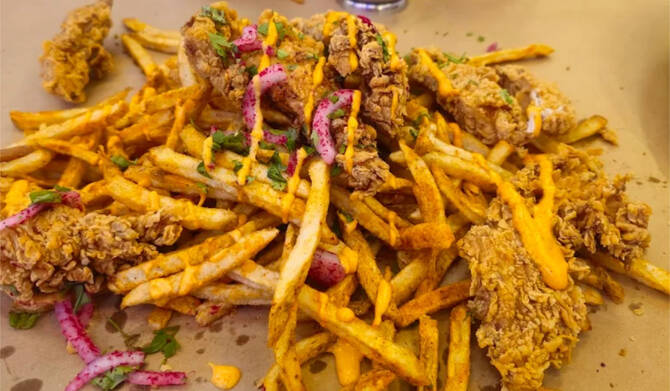
  • We tried the zinger meal with fries and drinks. It was flavorful and filling, though prices were on the high side

We recently visited Labash, a popular Egyptian restaurant in Riyadh known for its casual, no-plate dining style — serving food directly on the table for a fun and interactive experience.

The menu featured a variety of options like skewer-grilled chicken, beef skewers, and crispy chicken strips. One standout was The Works, which includes unlimited fries, drinks, pickles, and bread.

While ideal for groups, orders at the table lead to excessive portions and higher costs.

We tried the zinger meal with fries and drinks. It was flavorful and filling, though prices were on the high side. Seven different sauces added depth to each dish, but the quality of the meat did not fully justify the cost, especially compared to similar offerings elsewhere.

Service was decent, and the lively atmosphere added to the appeal — though the noise level may deter those seeking a quieter setting.

One downside was the amount of food wasted, both at our table and others. This highlighted the need for portion control or alternative serving options to reduce waste.

For more, visit @labash.ksa on Instagram.


Mini op-ed: Recognising a shift in how people relate to wellness, self-care

Updated 05 March 2026
Follow

Mini op-ed: Recognising a shift in how people relate to wellness, self-care

DUBAI: I have spent nearly a decade working in the beauty industry in Saudi Arabia and the UAE, and Ramadan always has a way of prompting change; in habits, in priorities, and in the routines people have been carrying without question. Speaking from my own corner of the industry, one of these habits is often hair removal.

Saudi Arabia’s beauty and personal care market was valued at about $7.56 billion in 2025 and is set to grow to an estimated $8.03 billion in 2026. Within that growth, personal care encompassing the daily (sometimes unglamorous) routines hold the largest share. But market size alone does not tell the full story. A study conducted at King Abdulaziz University Hospital, Jeddah, found that three quarters of Saudi women experienced complications from temporary hair removal methods, including skin irritation, in-grown hairs and hyperpigmentation. A separate 2025 study published in the Majmaah Journal of Health Sciences found that laser hair removal was both the most considered and most commonly undergone cosmetic procedure among Saudi respondents, yet dissatisfaction with cosmetic procedure outcomes was reported by nearly half of all participants. The numbers point to a gap not in demand, but in results. 

When I launched a specialized electrolysis practice in the UAE in 2016, it was with a clear gap in mind; safe, regulated, permanent hair removal for the region’s specific needs. The range of hair types here and the prevalence of conditions such as polycystic ovary syndrome, or PCOS, demanded a method that works across all of them.  Electrolysis is the only method recognized by the US Food and Drug Administration and American Marketing Association as achieving true permanent results, regardless of hair color or type. 

Despite this, awareness in Saudi Arabia remains limited. Part of this is familiarity, laser has dominated the conversation for years, and electrolysis, which requires more sessions and a licensed electrologist’s precision, has struggled to break through. Part of it is education. Many clients who come to us have never heard of electrolysis; they come because they have exhausted everything else. 

Right now, Saudi Arabia is in the middle of a genuine transformation in how people relate to wellness and self-care. The beauty market is maturing, consumers are asking harder questions of the brands they choose and Vision 2030 has not just shaped the economy, it has shaped how Saudis are showing up in their own lives. In that context, the idea of choosing permanence over repetition lands differently.
 
Mariela Marcantetti is a beauty industry entrepreneur based between Saudi Arabia and the UAE.