

GCC’s constant GDP grows 3.3% to $456.3bn in Q4 2024

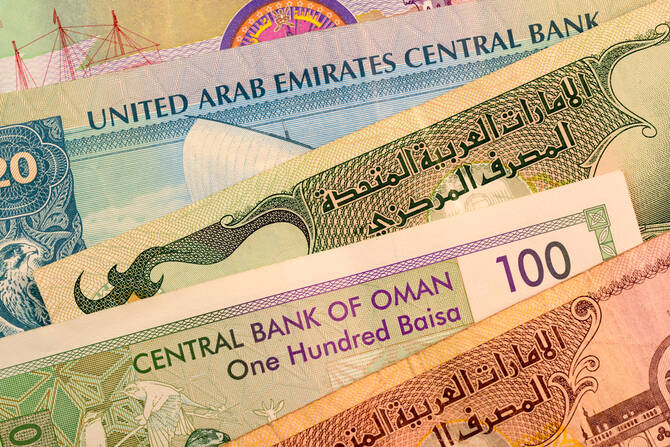
Real GDP across the GCC rose 2.4 percent in the final three months of 2024. Shutterstock
Short Url
Updated 03 August 2025
Follow

GCC’s constant GDP grows 3.3% to $456.3bn in Q4 2024

  • Non‑oil activities accounted for% of region’s GDP at constant prices
  • Oil activities contributed 29.4%

RIYADH: The gross domestic product of Gulf Cooperation Council countries rose 3.3 percent at constant prices to $456.3 billion by the end of 2024, according to a new report.

Non‑oil activities accounted for 70.6 percent of the region’s GDP at constant prices in the final quarter, while oil activities contributed 29.4 percent, Oman News Agency reported, citing the Gulf Statistical Center.

“The contribution of non‑oil activities to the GCC GDP at constant prices reached 70.6 percent by the end of the fourth quarter of 2024,” ONA said.

The GDP growth aligns with broader trends across the Gulf, where nominal GDP reached $587.8 billion, growing 1.5  percent year on year, with non-oil sectors contributing 77.9  percent of the total growth.

Qatar recorded the highest real GDP increase at 4.5  percent, followed by the UAE at 3.6  percent, and Saudi Arabia at 2.8  percent, highlighting non-oil expansion as the main driver across the bloc.

Real GDP across the GCC rose 2.4 percent, with non‑oil GDP expanding by 3.7 percent and oil GDP contracting by 0.9 percent due to voluntary OPEC+ production cuts.

Non‑oil sectors such as manufacturing, wholesale and retail trade, construction, finance, real estate, and public administration collectively underpinned this growth, with manufacturing alone contributing 12.5 percent and retail trade nearly 9.9 percent of nominal GDP.

Saudi Arabia’s economy grew 1.3 percent, with fourth‑quarter real growth of 4.4 percent compared to the same period in 2023. Non‑oil activities grew 4.6 percent, outpacing a 4.5 percent contraction in oil output as government spending increased by 2.6 percent, Reuters reported.

Strategic programs like the National Industrial Development and Logistics Program contributed SR986 billion ($262.8 billion) to non‑oil GDP in 2024, representing 39  percent of the nation’s non‑oil output, with overall non‑oil activities accounting for 55  percent of total GDP.

The GCC’s pivot away from hydrocarbon dependence is supported by major investments in tourism, logistics, manufacturing, and finance, combined with regulatory reforms and infrastructure expansion.

National reforms such as Saudi Vision 2030, the UAE’s Economic Vision, Qatar’s National Vision 2030, and Oman’s Vision 2040 are all central to this shift.


Saudi Aramco, ExxonMobil, Samref ink deal to study Yanbu refinery upgrade

Updated 08 December 2025
Follow

Saudi Aramco, ExxonMobil, Samref ink deal to study Yanbu refinery upgrade

RIYADH: Energy giants Saudi Aramco, ExxonMobil, and Samref have signed a venture framework agreement to upgrade the Yanbu refinery and expand it into an integrated petrochemical complex.

As a part of the deal, the companies will explore capital investments to upgrade and diversify production, including high-quality distillates that result in lower emissions and high-performance chemicals, according to a joint press statement.

The agreement will also see the parties explore opportunities to improve the refinery’s energy efficiency and reduce environmental impacts from operations through an integrated emissions-reduction strategy.

Samref is an equally owned joint venture between Aramco and Mobil Yanbu Refining Co. Inc., a wholly owned subsidiary of Exxon Mobil Corp.

The refinery currently has the capacity to process more than 400,000 barrels of crude oil per day, producing a diverse range of energy products, including propane, automotive diesel oil, marine heavy fuel oil, and sulfur.

“This next phase of Samref marks a step in our long-term strategic collaboration with ExxonMobil. Designed to increase the conversion of crude oil and petroleum liquids into high-value chemicals, this project reinforces our commitment to advancing Downstream value creation and our liquids-to-chemicals strategy,” said Aramco Downstream President, Mohammed Y. Al Qahtani.

He added that the deal will help position Samref as a key driver of the Kingdom’s petrochemical sector’s growth.

The press statement further said that companies will commence a preliminary front-end engineering and design phase for the proposed project, which would aim to maximize operational advantages, enhance Samref’s competitiveness, and help to meet growing demand for high-quality petrochemical products in Saudi Arabia.

The firms added that these plans are subject to market conditions, regulatory approvals, and final investment decisions by Aramco and ExxonMobil.

“We value our partnership with Aramco and our long history in Saudi Arabia. We look forward to evaluating this project, which aligns with our strategy to focus on investments that allow us to grow high-value products that meet society’s evolving energy needs and contribute to a lower-emission future,” said Jack Williams, senior vice president of Exxon Mobil Corp.