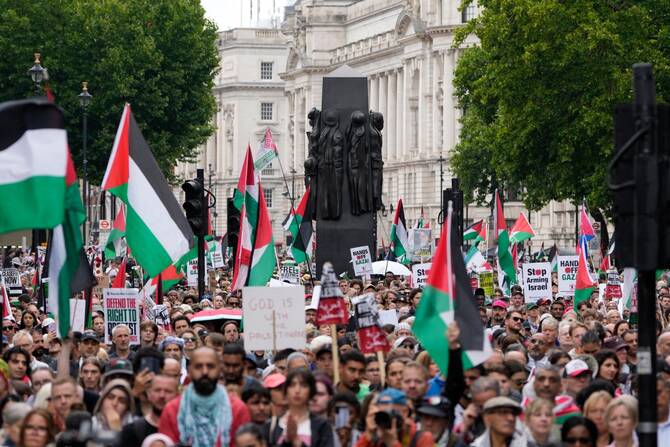

LONDON: Pro-Palestine online content in the UK could be censored through the twin threat of the Online Safety Act and banning of Palestine Action, human rights groups have warned.
Content in support of Palestinians published online could be misconstrued as supporting Palestine Action, a protest group that was proscribed under anti-terrorism laws on July 5, The Guardian reported on Saturday.
Index on Censorship, Open Rights Group and other organizations have written to Ofcom, the UK’s independent communications regulator, to request clarification on the matter.
Signatories to the letter also warned that online content objecting to Palestine Action’s banning could be misidentified as unlawful support for the group.
Open Rights Group’s Sara Chitseko, a pre-crime program manager, told The Guardian: “Crucial public debate about Gaza is being threatened by vague, overly broad laws that could lead to content about Palestine being removed or hidden online.
“There’s also a real danger that people will start self-censoring, worried they might be breaking the law just by sharing or liking posts related to Palestine and nonviolent direct action.
“This is a serious attack on freedom of expression and the right to protest in the UK. We need to ensure that people can share content about Palestine online without being afraid that they will be characterised as supportive of terrorism.”
Major online social media platforms such as Facebook, Instagram and TikTok have been advised by Ofcom that they can avoid concerns about meeting the requirements of the Online Safety Act if they are more stringent with censoring content than is mandated by the act.
The letter sent to Ofcom by the rights groups warned: “This approach risks encouraging automated moderation that disproportionately affects political speech, particularly from marginalised communities, including Palestinian voices.”
The UK, unlike the EU, lacks a mechanism through which users can appeal the censoring of their online content.
Signatories to the letter — which was also sent to Meta, Alphabet, X and ByteDance, owners of the world’s top social media platforms — called for the creation of a British dispute mechanism to discourage the censoring of lawful content.
The letter added: “We are concerned that the proscription of Palestine Action may result in an escalation of platforms removing content, using algorithms to hide Palestine solidarity posts and leave individuals and those reporting on events vulnerable to surveillance or even criminalisation for simply sharing or liking content that references nonviolent direct action.
“We are also concerned about what platforms understand by their legal duties regarding expressions of ‘support’ for Palestine Action.”
An Ofcom spokesperson said: “We have provided detailed guidance to platforms about how to identify the particular types of illegal and harmful material prohibited or restricted by the act, including how to determine whether content may have been posted by a proscribed organisation.
“There is no requirement on companies to restrict legal content for adult users. In fact, they must carefully consider how they protect users’ rights to freedom of expression while keeping people safe.”