

Pakistan says decision to roll back digital tax on foreign retailers to boost e-commerce sector

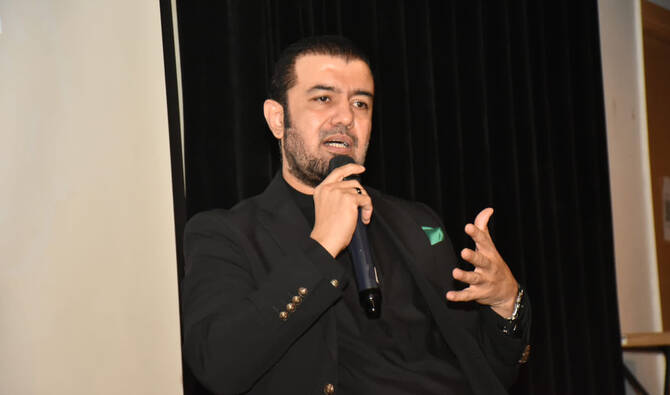
Khurram Schehzad, Adviser to the Minister for Finance & Revenue, speaks at the National Incubation Center in Karachi on July 30, 2025. (Handout/Finance Ministry/File)
Short Url
Updated 02 August 2025
Follow

Pakistan says decision to roll back digital tax on foreign retailers to boost e-commerce sector

  • Government introduced a five percent levy on foreign digital platforms in the federal budget
  • Local retailers link the tax reversal to US trade deal, say the decision favors global tech giants

KARACHI: A senior Pakistani finance official said on Friday the government had decided to roll back a recently imposed digital tax on foreign retailers in an effort to promote e-commerce in the country.

The Federal Board of Revenue (FBR), the government’s tax collection body, reversed this week a set of measures introduced in the federal budget that were aimed at regulating cross-border online purchases and affected international firms like China’s Temu, Shein and AliExpress.

These included a five percent fixed tax on digital platforms and a sharp reduction in the duty-free threshold for imported parcels, slashing it from Rs5,000 ($18) to Rs500 ($1.8).

“The government plans to continue expanding the e-commerce sector by keeping the market open to international players,” Finance Adviser Khurram Schehzad told Arab News.

The move has sparked backlash from local retailers, who argue that the policy puts them at a disadvantage.

“The removal of the five percent levy on foreign goods is likely to negatively affect domestic sellers, including small businesses and established retailers,” Asfandyar Farrukh, Chairman of the Chainstore Association of Pakistan (CAP), said.

According to CAP, foreign platforms, primarily those belonging to China, are sending as many as 30,000 parcels daily to Pakistani consumers, up from just 1,000 two years ago. Internal courier company data shared by CAP shows this as a nearly 2,900 percent surge in parcel volumes.

Farrukh also questioned the timing and motivation behind the policy reversal, linking it to Pakistan’s recent trade negotiations with the United States.

“The government’s decision to withdraw the digital proceeds levy appears to have been heavily influenced by the US trade deal,” he said, pointing out that American tech giants such as Google and Meta were also affected by the tax and are now exempt.

“The five percent levy should have been maintained on foreign goods, even if removed for services, where it arguably didn’t apply.”

Still, Farrukh acknowledged parallel budgetary measures, such as the reduction in the duty-free threshold and stricter customs enforcement, may temper some of the impact.

“Authorities are now more vigilant in ensuring that foreign e-commerce goods aren’t under-invoiced to evade taxes at import,” he added.

Economist Shankar Talreja echoed some of these concerns.

“This tax withdrawal encourages the use of imported products at the cost of domestic manufacturing,” he said. “It promotes a trading culture rather than production.”

Talreja, who heads research at Karachi-based Topline Securities, added the domestic industry is losing competitiveness as local products are taxed through sales and income levies, while foreign goods bypass the same regulatory burden.

He agreed with the CAP chairman about the circumstances of the tax withdrawal.

“The government, according to reports, reversed the tax under pressure from trade talks with the US,” he said.

Pakistan’s retail sector includes about five million shops generating an estimated Rs20 trillion ($71 billion) annually, but only 10 percent of this comes from the tax-compliant formal sector that CAP represents.

Temu did not respond to Arab News’s request for comment. Shein and AliExpress could not immediately be reached.


UN torture expert decries Pakistan ex-PM Khan’s detention

Updated 12 December 2025
Follow

UN torture expert decries Pakistan ex-PM Khan’s detention

  • Khan’s party alleges government is holding him in solitary confinement, barring prison visits
  • Pakistan’s government rejects allegations former premier is being denied basic rights in prison

GENEVA: Pakistan’s former prime minister Imran Khan is being held in conditions that could amount to torture and other inhuman or degrading treatment, the United Nations’ special rapporteur on torture warned Friday.

Alice Jill Edwards urged Pakistan to take immediate and effective action to address reports of the 73-year-old’s inhumane and undignified detention conditions.

“I call on Pakistani authorities to ensure that Khan’s conditions of detention fully comply with international norms and standards,” Edwards said in a statement.

“Since his transfer to Adiala Jail in Rawalpindi on September 26, 2023, Imran Khan has reportedly been held for excessive periods in solitary confinement, confined for 23 hours a day in his cell, and with highly restricted access to the outside world,” she said.

“His cell is reportedly under constant camera surveillance.”

Khan an all-rounder who captained Pakistan to victory in the 1992 Cricket World Cup, upended Pakistani politics by becoming the prime minister in 2018.

Edwards said prolonged or indefinite solitary confinement is prohibited under international human rights law and constitutes a form of psychological torture when it lasts longer than 15 days.

“Khan’s solitary confinement should be lifted without delay. Not only is it an unlawful measure, extended isolation can bring about very harmful consequences for his physical and mental health,” she said.

UN special rapporteurs are independent experts mandated by the Human Rights Council. They do not, therefore, speak for the United Nations itself.

Initially a strong backer of the country’s powerful military leadership, Khan was ousted in a no-confidence vote in 2022, and has since been jailed on a slew of corruption charges that he denies.

He has accused the military of orchestrating his downfall and pursuing his Tehreek-e-Insaf (PTI) party and its allies.

Khan’s supporters say he is being denied prison visits from lawyers and family after a fiery social media post this month accusing army leader Field Marshal Asim Munir of persecuting him.

According to information Edwards has received, visits from Khan’s lawyers and relatives are frequently interrupted or ended prematurely, while he is held in a small cell lacking natural light and adequate ventilation.

“Anyone deprived of liberty must be treated with humanity and dignity,” the UN expert said.

“Detention conditions must reflect the individual’s age and health situation, including appropriate sleeping arrangements, climatic protection, adequate space, lighting, heating, and ventilation.”

Edwards has raised Khan’s situation with the Pakistani government.