

Ramadan tests Pakistan’s daily wage workers but faith endures

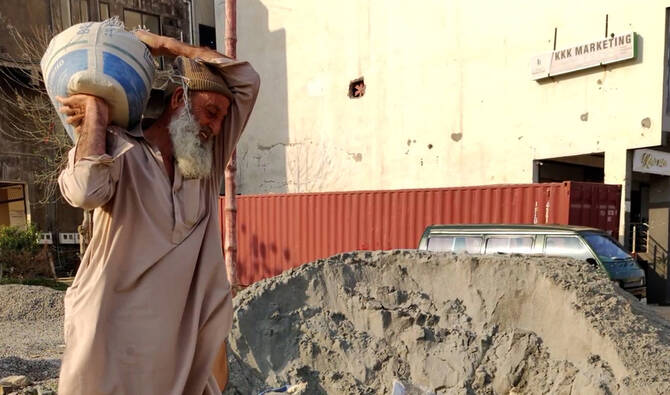
A laborer, Abdul Waqif, carries a bag of cement at a construction site while fasting during Ramadan (left) in Islamabad, Pakistan, February 25, 2026. (AN photo)
Short Url
Updated 05 March 2026
Follow

Ramadan tests Pakistan’s daily wage workers but faith endures

  • Reduced work hours during fasting month cut already fragile incomes
  • Charities, local businesses step in as laborers try to support families back home

ISLAMABAD: Abdul Waqif grips a worn-out shovel and digs into the earth beneath the harsh midday sun, his body bent with age but still moving steadily. Moments later, the 70-year-old hoists a heavy bag of cement onto his shoulders and carries it toward an under-construction house, all while fasting.

For Waqif and thousands of daily wage laborers across Pakistan, Ramadan is not just a month of spiritual devotion. It is also a month of shrinking incomes.

Waqif migrated from Mohmand tribal district in northwestern Pakistan to Islamabad two decades ago in search of work. Like many laborers from rural and former tribal areas, he left behind limited local opportunities to earn a living in larger cities such as Islamabad, Lahore and Karachi.

In Pakistan, daily wage workers, particularly in construction and manual labor, are among the most economically vulnerable. They are paid only for days worked, receive no job security or benefits, and often rely on informal arrangements. Any slowdown in economic activity directly affects their ability to feed their families.

Economic activity typically slows during Ramadan, when Muslims fast from dawn to sunset. Employers often reduce work hours or postpone physically demanding projects to ease the burden on fasting workers. While intended as a gesture of consideration, it means fewer working hours and fewer earnings.

For laborers such as Waqif, who earns between Rs1,000-1,200 [$3.59-4.31] per day, even a slight reduction in work can be devastating.

His suhoor, the pre-dawn meal before fasting begins, usually consists of a few chapatis from a nearby hotel. The hunger and thirst that follow him through the day are constant companions as he lifts bricks and mixes cement in the heat.

But so is his faith.

“Allah gives me courage. I am hungry and thirsty, but I keep working,” Waqif said while wiping the sweat off his brow.
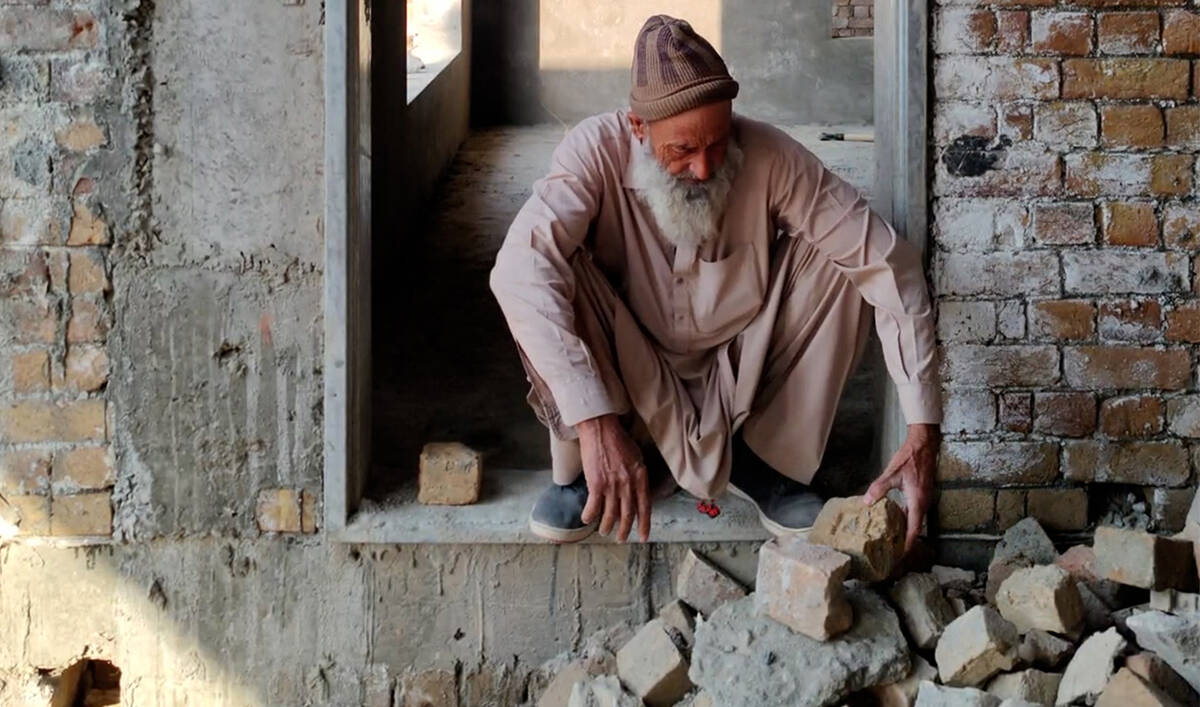


This picture, taken on February 25, 2026, shows Abdul Waqif working at a construction site while fasting in Islamabad, Pakistan. (AN photo)

Back in Mohmand district, his wife, four daughters and two sons depend on the money he sends home. Every rupee matters.

“I support them with this work,” Waqif said. “I eat three meals a day here and I also have to save money for my children and send it to them.”

The reduction in work during Ramadan weighs heavily on him.

“I don’t find much work in Ramadan, and I’m worried for my family,” Waqif said.

‘HONEST LIVING’

Finding food for suhoor is sometimes a challenge. On some mornings, someone offers him a piece of flatbread. Other times, he buys what little he can afford from a nearby eatery.

Muhammad Sajid, owner of Al-Hadi restaurant in Islamabad’s G-15 sector, says he tries to ease that burden by offering meals to laborers at half price.

“We don’t let anyone go hungry,” Sajid told Arab News. “We offer sehri and iftar as much as anyone can afford.”
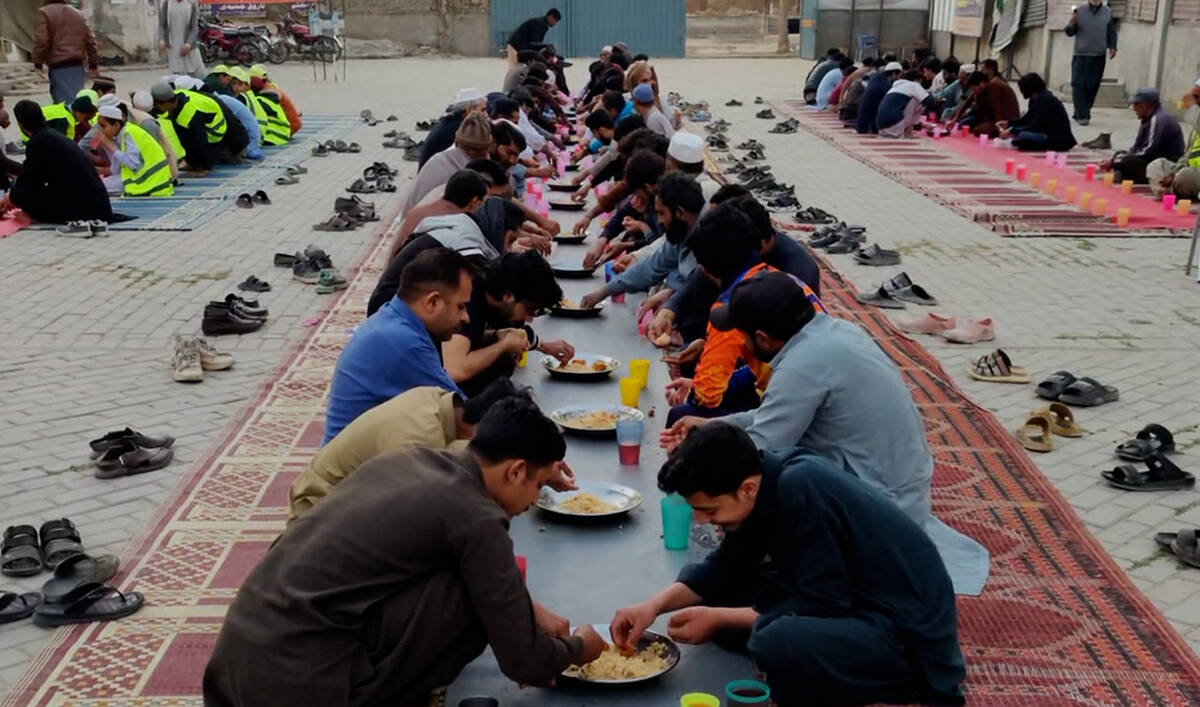


This picture, taken on February 25, 2026, shows people breaking their fast at iftar in Islamabad, Pakistan. (AN photo)

The restaurant serves tea, yogurt, several types of curries and parathas.

Charity groups also expand operations during Ramadan, when community support traditionally increases. The Junaid Welfare Foundation runs a roadside dastarkhwan, or communal meal spread, serving hundreds daily.

Haq Rawan Shareefi, a manager at the foundation, said around 500 people are provided iftar meals each day. The cost of one person’s iftar is Rs200 [$0.72].

“That means, on iftar and sehri, our expenses range from Rs150,000 [$538.97] to Rs200,000 [$718.63],” Shareefi said.

For Waqif, breaking his fast at sunset brings temporary relief from the physical strain of the day. But the financial uncertainty remains.

“I ask Allah for this,” he said. “May Allah give me strength to earn honest living for my children.”


Pakistan sends vessels to Saudi, UAE ports to secure crude supplies amid regional crisis

Updated 07 March 2026
Follow

Pakistan sends vessels to Saudi, UAE ports to secure crude supplies amid regional crisis

  • The development comes as countries scramble to secure energy supplies amid US-Israeli strikes on Iran and Tehran’s counterattacks
  • If Islamabad arranges, Aramco has assured a large crude carrier can be loaded at Yanbu and stationed near Pakistan, minister says

ISLAMABAD: Pakistan has sent vessels to ports in Saudi Arabia and the United Arab Emirates to secure crude oil supplies, the Pakistani petroleum minister said late Friday, as tensions in the Middle East continue to threaten global energy flows.

Global oil markets have been rattled since the United States and Israeli began pounding Iran last week, prompting retaliatory strikes from Tehran across the region. The conflict has raised fears of disruptions in energy supplies, particularly through the Strait of Hormuz, and pushed petroleum prices.

Pakistani Petroleum Minister Ali Pervaiz Malik and others said Islamabad was monitoring international energy markets and domestic supply conditions as they announced a hike of Rs55 ($0.20) per liter in petrol and diesel prices, promising to bring down the prices as soon as the conflict is resolved.

Describing the situation as “extraordinary,” Malik said they did not know how long the Middle East crisis would last and it was important to stretch Pakistan’s available petroleum reserves as much as they could to ensure a steady supply to consumers during the crisis.

“At the regional and global level, you can clearly see that countries are scrambling to secure energy supplies. Pakistan is also part of this effort because a significant portion of our energy supplies comes through the Strait of Hormuz,” he said, adding that Prime Minister Shehbaz Sharif has engaged the Saudi government to secure alternative sources.

“With the help of the Foreign Office, two Pakistan National Shipping Corporation (PNSC) vessels are currently on their way, one toward Yanbu port and the other toward Fujairah port, to bring crude oil from outside the Hormuz region in order to meet Pakistan’s energy needs.”

In addition, he said, Aramco had assured that if Pakistan arranged, a Very Large Crude Carrier (VLCC) can be loaded at Yanbu and stationed near the Pakistani waters.

“From there, PNSC (Pakistan National Shipping Corporation) feeder vessels will ensure a continuous supply of crude oil to our refineries, so that even during this difficult phase Pakistan’s energy requirements continue to be met,” Malik shared.

The statement came as long queues of vehicles were seen outside petrol stations nationwide as Islamabad moved to raise petroleum prices to keep the supplies in check.

Pakistan, which relies heavily on imported fuel to meet its energy needs, is particularly vulnerable to global oil price shocks that can quickly feed into inflation and pressure the country’s external accounts.

Officials at Friday’s presser said Pakistan, which reviews petroleum prices fortnightly, will be considering them more frequently, potentially on a weekly basis, and any reduction in global oil prices would be passed on to consumers.

Finance Minister Aurangzeb said a high-level government committee formed by PM Sharif had been meeting daily to review developments in global petroleum markets and their potential impact on Pakistan’s economy.

“Pakistan currently maintains adequate energy stocks and macroeconomic stability,” Aurangzeb said, adding that the government’s response was based on preparedness rather than panic.