Pakistan’s annual inflation accelerates to 4.1% in July

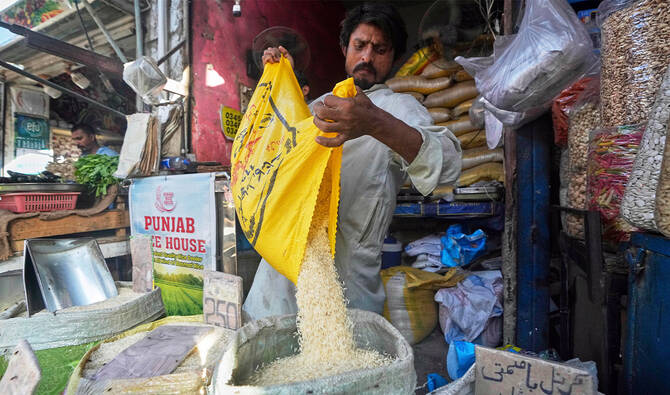
A vendor fills a sack with rice in a wholesale shop at a market in Karachi, Pakistan, on April 3, 2025. (AP/File)
Short Url
Updated 01 August 2025
Follow

Pakistan’s annual inflation accelerates to 4.1% in July

  • The central bank left the key interest rate unchanged at 11% this week
  • The SBP said the policy rate would keep inflation between 5%-7% range

ISLAMABAD: Pakistan’s consumer inflation accelerated to 4.1% year-on-year in July, up from 3.2% in June, driven by rising prices for food items, fuels and medicines, the statistics bureau said on Friday.

July’s consumer price inflation month-on-month was 2.9%, the bureau said.

The higher inflation reading follows the State Bank of Pakistan’s assessment of a deteriorating inflation outlook, leading it to leave the key interest rate unchanged at 11%.

The bank’s monetary policy committee said on Wednesday that energy prices, particularly for gas, had risen more than expected, and it considered the real policy rate should be adequately positive to keep inflation in the 5%-7% target range.

Pakistan is pushing through a series of economic reforms under a $7 billion International Monetary Fund program, including a contractionary government budget passed in June that slashes spending to curb the fiscal deficit.



Pakistan says $50 million meat export deal with Tajikistan nearing finalization

Updated 09 December 2025
Follow

Pakistan says $50 million meat export deal with Tajikistan nearing finalization

  • Islamabad expects to finalize agreement soon after Dushanbe signals demand for 100,000 tons
  • Pakistan is seeking to expand agricultural trade beyond rice, citrus and mango exports

ISLAMABAD: Tajikistan has expressed interest in importing 100,000 tons of Pakistani meat worth more than $50 million, with both governments expected to finalize a supply agreement soon, Pakistan’s food security ministry said on Tuesday.

Pakistan is trying to grow agriculture-based exports as it seeks regional markets for livestock and food commodities, while Tajikistan, a landlocked Central Asian state, has been expanding food imports to support domestic demand. Pakistan currently exports rice, citrus and mangoes to Dushanbe, though volumes remain small compared to national production, according to official figures.

The development came during a meeting in Islamabad between Pakistan’s Federal Minister for National Food Security and Research Rana Tanveer Hussain and Ambassador of Tajikistan Yusuf Sharifzoda, where agricultural trade, livestock supply and food-security cooperation were discussed.

“Tajikistan intends to purchase 100,000 tons of meat from Pakistan, an import valued at over USD 50 million,” the ambassador said, according to the ministry’s statement, assuring full facilitation and that Islamabad was prepared to meet the demand.

The statement said the two sides agreed to expand cooperation in meat and livestock, fresh fruit, vegetables, staple crops, agricultural research, pest management and standards compliance. Pakistan also proposed strengthening coordination on phytosanitary rules and establishing pest-free production zones to support long-term exports.

Pakistan and Tajikistan have long maintained political ties but bilateral food trade remains below potential: Pakistan produces 1.8 million tons of mangoes annually but exported just 0.7 metric tons to Tajikistan in 2024, while rice exports amounted to only 240 metric tons in 2022 out of national output of 9.3 million tons. Pakistan imports mainly ginned cotton from Tajikistan.