

Madinah wins new WHO ‘healthy city’ accreditation

1 / 3
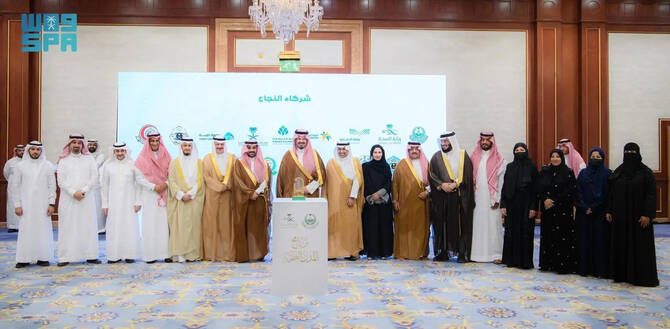
With the new accreditation, Madinah has solidified its position as the second-largest healthy city in the Middle East, next to Jeddah. (SPA photo)
2 / 3
With the new accreditation, Madinah has solidified its position as the second-largest healthy city in the Middle East, next to Jeddah. (SPA photo)
3 / 3
With the new accreditation, Madinah has solidified its position as the second-largest healthy city in the Middle East, next to Jeddah. (SPA photo)
Short Url
Updated 01 August 2025
Follow

Madinah wins new WHO ‘healthy city’ accreditation

  • Middle East’s second-largest ‘healthy city’ after Jeddah
  • 15 other cities in Saudi Arabia included in WHO list

MADINAH: The World Health Organization has renewed its accreditation of Madinah as a “healthy city,” with Islam’s second-holiest location scoring an impressive 80 points, the Saudi Press Agency reported.

Prince Salman bin Sultan, governor of Madinah region, received the WHO accreditation certificate from Minister of Health Fahad AlJalajel during a ceremony on Thursday.

Prince Salman said Madinah’s renewed accreditation exemplifies the leadership’s dedication to enhancing quality of life for the Kingdom’s people in urban centers.


With the new accreditation, Madinah has solidified its position as the second-largest healthy city in the Middle East, next to Jeddah. (SPA photo)

He emphasized Madinah’s ongoing transformation as a leading development model regionally and internationally, aligning with the Kingdom’s Vision 2030 goals.

Madinah has solidified its position as the second-largest healthy city in the Middle East, after Jeddah, the SPA reported.

To win the WHO’s nod, an entrant must meet 80 criteria, including parks, walking areas, and the promotion of health through primary care centers and schools.

The WHO has also recognized 14 other healthy cities in Saudi Arabia. These include Taif, Tabuk, Ad-Diriyah, Unaizah, Jalajel, Al-Mandaq, Al-Jumum, Riyadh Al-Khubra and Sharurah, according to Leaders MENA Magazine.


With the new accreditation, Madinah has solidified its position as the second-largest healthy city in the Middle East, next to Jeddah. (SPA photo)


The founding economy: A blueprint for stability in the First Saudi State

Updated 23 February 2026
Follow

The founding economy: A blueprint for stability in the First Saudi State

  • The establishment of the First Saudi State created a secure environment that facilitated the arrival of caravans, secured vast trade routes, and revived commerce across the Arabian Peninsula

RIYADH: The economy during the founding stage of the First Saudi State served as a fundamental pillar in building the nation, consolidating its influence, and ensuring its stability. This early economic growth was inextricably linked to achieving security, unifying regions, and organizing society—factors that directly stimulated trade, stabilized markets, and enhanced the foundations of daily life in Diriyah and its surrounding areas.
According to Dr. Abdullah Al-Saleh Al-Othaimeen's "Diriyah: Origins and Development during the First Saudi State," published by the King Abdulaziz Foundation for Research and Archives (Darah), the founding economy stands as a historical model reflecting the reciprocal relationship between political stability and early economic prosperity.

Beyond its political and intellectual prominence, Diriyah emerged as a vibrant economic hub. (SPA)

The establishment of the First Saudi State created a secure environment that facilitated the arrival of caravans, secured vast trade routes, and revived commerce across the Arabian Peninsula.
Beyond its political and intellectual prominence, Diriyah emerged as a vibrant economic hub. Its active markets attracted merchants and students from across the region, all of whom benefited from the state-provided stability. The local society relied on diverse activities for its livelihood, including trade, agriculture, and livestock breeding, with horses and camels playing crucial roles in transportation, commerce, and securing roads.
The social and administrative organization upon which the state was founded ensured the continuous availability of goods and sustained market stability. Ultimately, the close relationship between public security and economic growth during this founding phase solidified Diriyah's position as a premier political and commercial center in the Arabian Peninsula.