Pakistan approves AI Policy 2025 to create jobs for youth, enhance public services

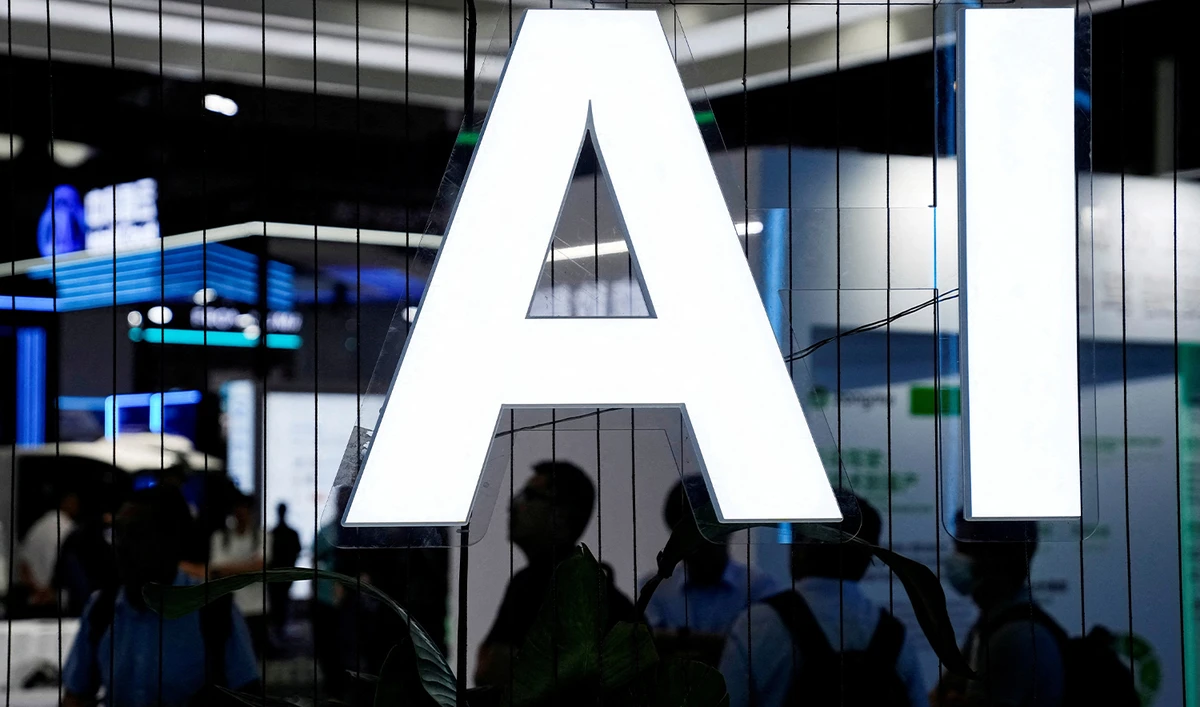
An AI (Artificial Intelligence) sign is seen at the World Artificial Intelligence Conference (WAIC) in Shanghai, China, on July 6, 2023. (REUTERS/File)
Short Url
Updated 31 July 2025
Follow

Pakistan approves AI Policy 2025 to create jobs for youth, enhance public services

  • Policy aims to train one million AI professionals by 2030, set up an AI Innovation Fund and venture fund to boost private sector involvement
  • AI will not only modernize economy but also enhance productivity in agriculture, public services and governance, says PM Sharif

ISLAMABAD: Pakistan’s federal cabinet this week approved the National AI Policy 2025 to democratize artificial intelligence, state-run media said, aiming to enhance public services and generate employment opportunities for the youth. 

Pakistan has recently undertaken initiatives to digitize its economy and employ the use of artificial intelligence to improve services. Through its ‘Digital Pakistan’ initiative, the government has attempted to focus on expanding broadband and 5G infrastructure, promoting digital literacy, youth engagement and innovation, developing e‑governance services for citizens and supporting investment in tech startups, IT zones and export-driven IT firms.

The AI policy was approved during a meeting of the cabinet chaired by Prime Minister Shehbaz Sharif on Wednesday, the state-run Associated Press of Pakistan (APP) said in a report. 

“The policy aims to democratize access to artificial intelligence, enhance public services, and open up new employment and innovation avenues,” APP said. 

The AI policy aims to train one million AI professionals by 2030, establish an AI Innovation Fund and AI Venture Fund to boost private sector involvement in artificial intelligence, APP reported. 

The national policy also aims to create 50,000 AI-driven civic projects and 1,000 local AI products in the next five years. The government intends to make the use of artificial intelligence inclusive through the distribution of 3,000 annual AI scholarships and facilitate 1,000 research projects, the state media said.

The policy also aims to ensure the inclusion of women and persons with disabilities through accessible education and financing, strengthening cybersecurity and national data security protocols, promoting global partnerships and compliance with international AI regulations, APP said. 

Sharif said his government aimed to provide the youth opportunities in the field of AI.

“Our youth are Pakistan’s greatest asset,” he was quoted as saying by the APP. “Providing them with education, skills, and equal opportunities in AI is a top priority.”

An AI Council and a comprehensive Master Plan & Action Matrix will oversee the AI policy’s implementation, APP said.

“AI will not only modernize our economy but also enhance productivity across agriculture, public services, and governance,” Sharif said. 

UN torture expert decries Pakistan ex-PM Khan’s detention

Updated 12 December 2025
Follow

UN torture expert decries Pakistan ex-PM Khan’s detention

  • Khan’s party alleges government is holding him in solitary confinement, barring prison visits
  • Pakistan’s government rejects allegations former premier is being denied basic rights in prison

GENEVA: Pakistan’s former prime minister Imran Khan is being held in conditions that could amount to torture and other inhuman or degrading treatment, the United Nations’ special rapporteur on torture warned Friday.

Alice Jill Edwards urged Pakistan to take immediate and effective action to address reports of the 73-year-old’s inhumane and undignified detention conditions.

“I call on Pakistani authorities to ensure that Khan’s conditions of detention fully comply with international norms and standards,” Edwards said in a statement.

“Since his transfer to Adiala Jail in Rawalpindi on September 26, 2023, Imran Khan has reportedly been held for excessive periods in solitary confinement, confined for 23 hours a day in his cell, and with highly restricted access to the outside world,” she said.

“His cell is reportedly under constant camera surveillance.”

Khan an all-rounder who captained Pakistan to victory in the 1992 Cricket World Cup, upended Pakistani politics by becoming the prime minister in 2018.

Edwards said prolonged or indefinite solitary confinement is prohibited under international human rights law and constitutes a form of psychological torture when it lasts longer than 15 days.

“Khan’s solitary confinement should be lifted without delay. Not only is it an unlawful measure, extended isolation can bring about very harmful consequences for his physical and mental health,” she said.

UN special rapporteurs are independent experts mandated by the Human Rights Council. They do not, therefore, speak for the United Nations itself.

Initially a strong backer of the country’s powerful military leadership, Khan was ousted in a no-confidence vote in 2022, and has since been jailed on a slew of corruption charges that he denies.

He has accused the military of orchestrating his downfall and pursuing his Tehreek-e-Insaf (PTI) party and its allies.

Khan’s supporters say he is being denied prison visits from lawyers and family after a fiery social media post this month accusing army leader Field Marshal Asim Munir of persecuting him.

According to information Edwards has received, visits from Khan’s lawyers and relatives are frequently interrupted or ended prematurely, while he is held in a small cell lacking natural light and adequate ventilation.

“Anyone deprived of liberty must be treated with humanity and dignity,” the UN expert said.

“Detention conditions must reflect the individual’s age and health situation, including appropriate sleeping arrangements, climatic protection, adequate space, lighting, heating, and ventilation.”

Edwards has raised Khan’s situation with the Pakistani government.