

Oil Updates — prices rise on US-EU trade deal, Trump’s shorter deadline for Russia

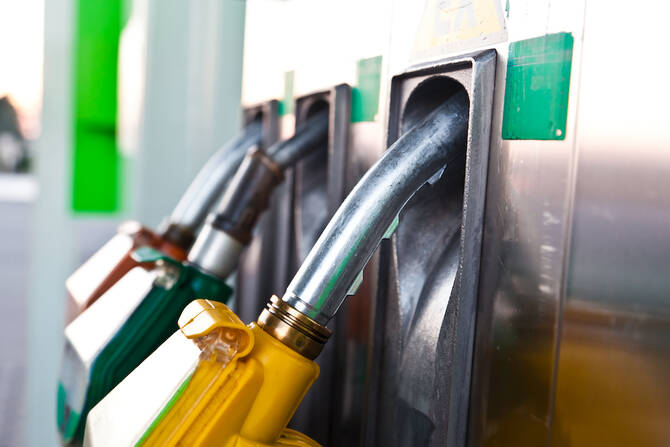
Oil prices settled on Friday at their lowest in three weeks, weighed down by global trade concerns and expectations of more oil supply from Venezuela. Shutterstock
Short Url
Updated 28 July 2025
Follow

Oil Updates — prices rise on US-EU trade deal, Trump’s shorter deadline for Russia

  • US, EU avert trade war with 15% tariff deal
  • Trump reduces deadline for Russia to end war in Ukraine to 10-12 days
  • OPEC+ panel likely to keep oil policy steady, sources say

LONDON: Oil prices rose on Monday after a trade deal between the US and the EU and US President Donald Trump’s announcement that he would shorten the deadline set for Russia to end its war in Ukraine or face severe tariffs.

Brent crude futures were up $1.63, or 2.4 percent, at $70.07 a barrel by 3:17 Saudi time, while US West Texas Intermediate crude rose $1.62, or 2.5 percent, at $66.78. 

Brent was trading close to its highest price in nearly 10 days after Trump said he was reducing the 50-day deadline he gave Russia over its war in Ukraine to 10-12 days. 

The deal between the US and EU and a possible extension of the US-China tariff pause are also supporting global financial markets and oil prices, said Tony Sycamore, a market analyst at IG.

The framework trade pact with the EU that was announced on Sunday sets a 15 percent US import tariff on most EU goods. 

Trump also said it called for $750 billion of EU purchases of US energy in the coming years. Senior US and Chinese officials are meeting in Stockholm on Monday to try to extend their tariff truce before an Aug. 12 deadline.

The US-EU deal removed another layer of uncertainty and the focus seems to be shifting back toward fundamentals, said Tamas Varga, an analyst at PVM, adding that a strong dollar and falling Indian oil imports have weighed on crude prices.

On the supply side, an OPEC+ panel is unlikely to alter existing plans to raise oil output when it meets on Monday, four OPEC+ delegates told Reuters on July 25. 

ING expects OPEC+, the group that includes the Organization of the Petroleum Exporting Countries and allies like Russia, to at least complete the full return of 2.2 million barrels per day of additional voluntary supply cuts by the end of September. 


Education spending surges 251% as students return from autumn break: SAMA

Updated 12 December 2025
Follow

Education spending surges 251% as students return from autumn break: SAMA

RIYADH: Education spending in Saudi Arabia surged 251.3 percent in the week ending Dec. 6, reflecting the sharp uptick in purchases as students returned from the autumn break.

According to the latest data from the Saudi Central Bank, expenditure in the sector reached SR218.73 million ($58.2 million), with the number of transactions increasing by 61 percent to 233,000.

Despite this surge, overall point-of-sale spending fell 4.3 percent to SR14.45 billion, while the number of transactions dipped 1.7 percent to 236.18 million week on week.

The week saw mixed changes between the sectors. Spending on freight transport, postal and courier services saw the second-biggest uptick at 33.3 percent to SR60.93 million, followed by medical services, which saw an 8.1 percent increase to SR505.35 million.

Expenditure on apparel and clothing saw a decrease of 16.3 percent, followed by a 2 percent reduction in spending on telecommunication.

Jewelry outlays witnessed an 8.1 percent decline to reach SR325.90 million. Data revealed decreases across many other sectors, led by hotels, which saw the largest dip at 24.5 percent to reach SR335.98 million. 

Spending on car rentals in the Kingdom fell by 12.6 percent, while airlines saw a 3.7 percent increase to SR46.28 million.

Expenditure on food and beverages saw a 1.7 percent increase to SR2.35 billion, claiming the largest share of the POS. Restaurants and cafes retained the second position despite a 12.6 percent dip to SR1.66 billion.

Saudi Arabia’s key urban centers mirrored the national decline. Riyadh, which accounted for the largest share of total POS spending, saw a 3.9 percent dip to SR4.89 billion, down from SR5.08 billion the previous week.

The number of transactions in the capital settled at 74.16 million, down 1.4 percent week on week.

In Jeddah, transaction values decreased by 5.9 percent to SR1.91 billion, while Dammam reported a 0.8 percent surge to SR713.71 million.

POS data, tracked weekly by SAMA, provides an indicator of consumer spending trends and the ongoing growth of digital payments in Saudi Arabia. 

The data also highlights the expanding reach of POS infrastructure, extending beyond major retail hubs to smaller cities and service sectors, supporting broader digital inclusion initiatives. 

The growth of digital payment technologies aligns with the Kingdom’s Vision 2030 objectives, promoting electronic transactions and contributing to the nation’s broader digital economy.