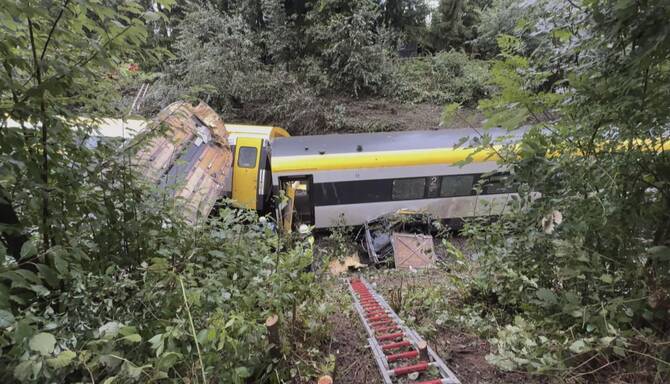
FRANKFURT: A train derailment in a wooded area of southwestern Germany that killed three people on Sunday may have been caused by an overflowing sewer, local police and prosecutors said Monday.
“It is believed that heavy rain in the area of the accident caused a sewage shaft to overflow,” Ulm police and Ravensburg prosecutors said in a joint statement.
“The water triggered a landslide on the embankment next to the tracks, which in turn caused the derailment,” they added.
About 100 passengers were aboard the train when the accident occurred at around 6:10 p.m. (1610 GMT) near the town of Riedlingen in Baden-Wuerttemberg state.
Severe storms swept through the region at the time of the accident, according to weather services.
Three people died in the accident, police and prosecutors said, including the train’s driver and a member of staff onboard.
At least 41 people were injured, some of them severely, they added.
Traffic is still suspended on the affected railway line and cleanup work will begin tomorrow, the statement said.
The investigation is still ongoing and there is no indication of any foul play or interference with the line, authorities said.


![]()

Overflowing sewer tied to deadly Germany train derailment: authorities
Short Url
https://arab.news/btf2c
Overflowing sewer tied to deadly Germany train derailment: authorities
- A train derailment in a wooded area of southwestern Germany that killed three people on Sunday may have been caused by an overflowing sewer, local police and prosecutors said Monday


Latest updates




© 2026 SAUDI RESEARCH & PUBLISHING COMPANY, All Rights Reserved And subject to Terms of Use Agreement.