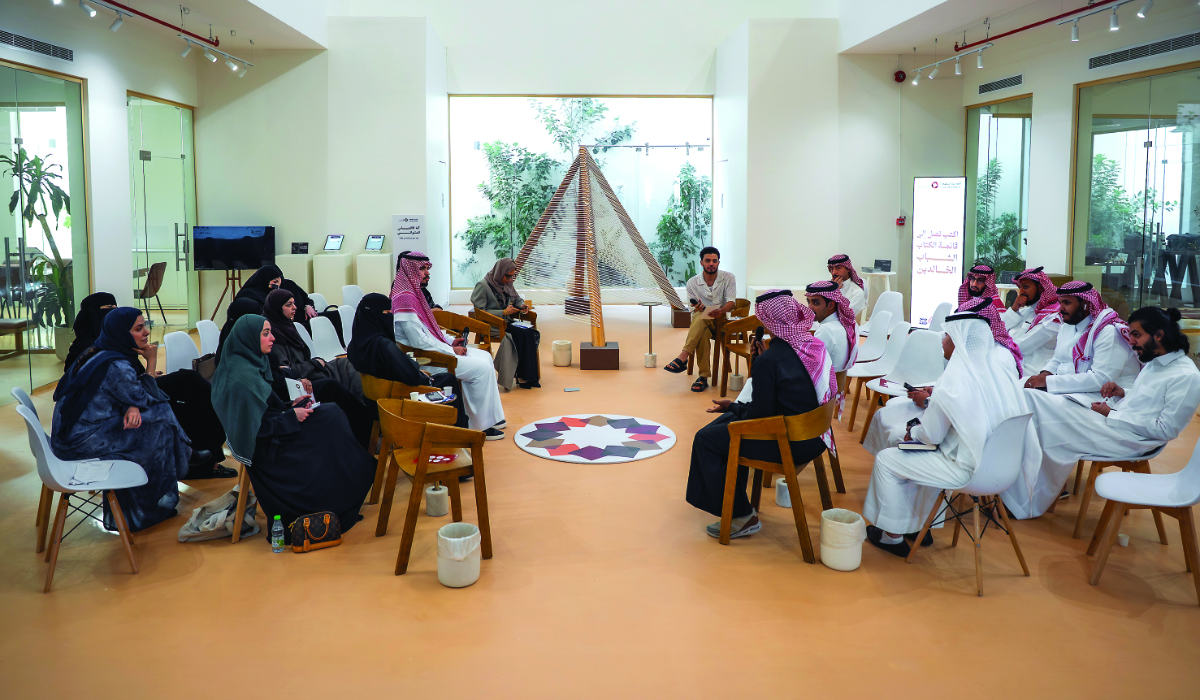
Young Saudi authors reshape Kingdom’s literary landscape

1 / 5
Young Saudi authors gather to discuss their work and the transformation of KSA’s literature. (Supplied)
2 / 5
Young Saudi authors gather to discuss their work and the transformation of KSA’s literature. (Supplied)
3 / 5
Young Saudi authors gather to discuss their work and the transformation of KSA’s literature. (Supplied)
4 / 5
Young Saudi authors gather to discuss their work and the transformation of KSA’s literature. (Supplied)
5 / 5
Young Saudi authors gather to discuss their work and the transformation of KSA’s literature. (Supplied)
Short Url
Updated 27 July 2025
Follow

Young Saudi authors reshape Kingdom’s literary landscape

  • Writers point to a ‘golden age’ in publishing, but call for legal protections, clearer regulations to support emerging talent

RIYADH: As Saudi Arabia undergoes a cultural transformation under Vision 2030, a new generation of writers is reshaping the country’s literary scene.

One of the most notable developments has been the rise of Saudi authors under the age of 35, many of whom are finding new pathways. These writers are contributing to a literary landscape that increasingly embraces genres such as science, fiction, and fantasy.

Speaking to Arab News on the sidelines of the Saudi Young Writers Forum, Linah Alshaalan, a Saudi author, said the Kingdom’s literary scene today offers a ripe environment full of opportunities for emerging voices.

HIGHLIGHTS

• One of the most notable developments has been the rise of Saudi authors under the age of 35, many of whom are finding new pathways.

• Raad Aleid, founder of the Saudi Young Writers Forum, underscored the need for stronger structural support, particularly when it comes to international recognition, translation efforts, and adapting to emerging technologies such as AI.

“This is a golden age for authors and creatives to come about and to try to find their way and find their path in this field, because it’s full of opportunities for newcomers and also older people,” she told Arab News.

Alshaalan published her first novel in 2024 through a Ministry of Culture initiative focused on supporting literary genres, such as science fiction. 

Her book was later nominated for cinematic adaptation. She described this moment as encouraging for new writers seeking to establish themselves in a rapidly evolving scene.
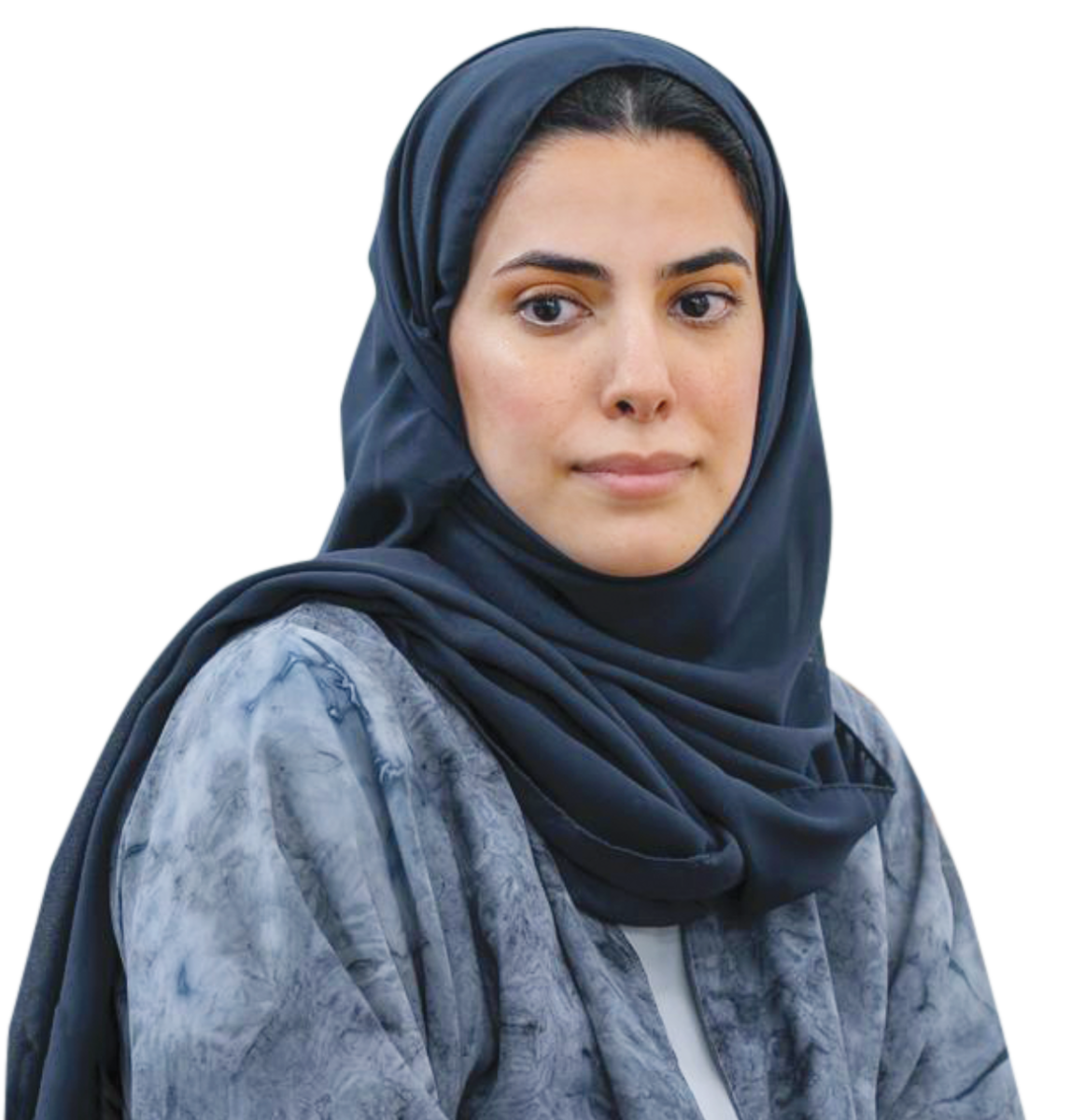


Linah Alshaalan, Saudi author

Alshaalan said the broader transformation underway in the Kingdom is changing how Saudi literature is perceived and consumed.

“Today, authors have the ability to produce stories that are placing Saudi cultural symbols in the future. So we’re saying we don’t only exist in the past, next to a camel and a palm tree. No, our camel and our palm tree exist in the future as well. And we are thriving in that future,” she said.

Alshaalan also pointed to Gen Z as a key force shaping literary trends in Saudi Arabia, particularly through their rejection of elitism, and embrace of direct, honest storytelling.

Today, authors have the ability to produce stories that are placing Saudi cultural symbols in the future. So we’re saying we don’t only exist in the past, next to a camel and a palm tree. No, our camel and our palm tree exist in the future as well. And we are thriving in that future.

Linah Alshaalan, Saudi author

“One thing that I really appreciate about Gen Z is that they are kind of undermining this idea that a literary critic or a literary person is somebody who lives in an ivory tower, very high up,” she said.
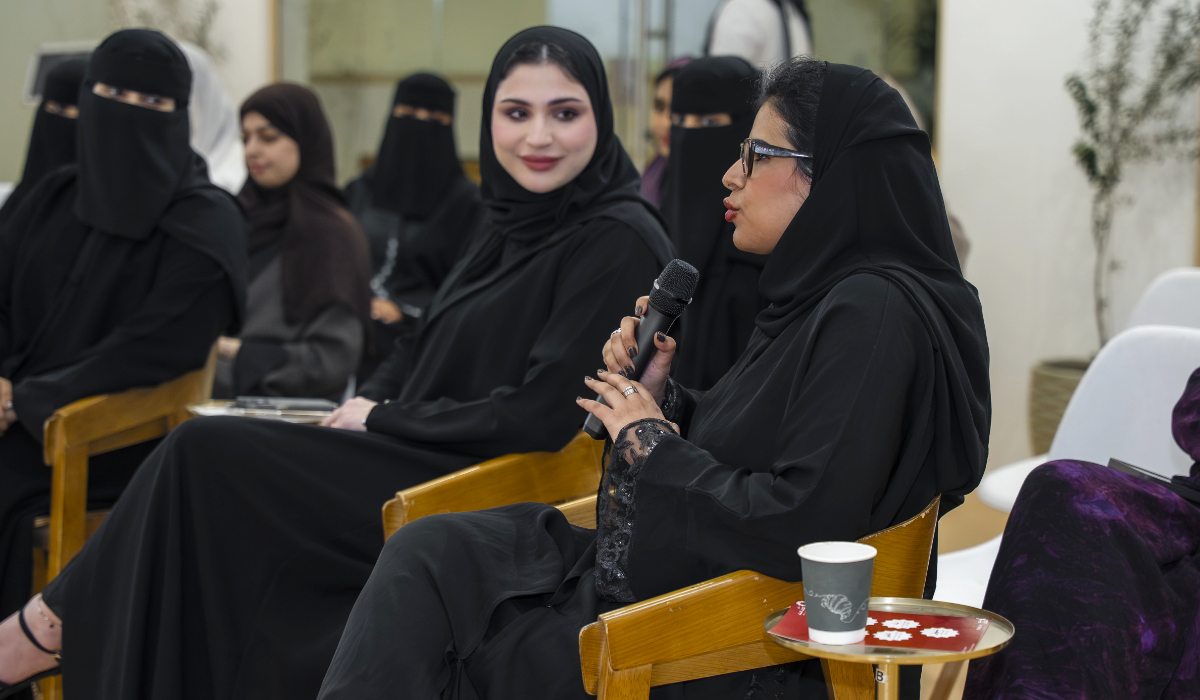


Today, authors have the ability to produce stories that are placing Saudi cultural symbols in the future. (Supplied)

She noted that younger readers have become powerful tastemakers in the digital age. “They have a very strong online presence, which means that they have a very loud voice and very strong influence,” she added.

“Gen Zers resonate the most with authentic voices,” Alshaalan said. “People who are speaking from the heart, people who are not trying to hide behind or whatever it is. They are trying to be authentic, and I think authenticity is the number one tool for authors.”

Despite the progress, Alshaalan said there is a need for legal protections and clearer regulations in the publishing industry to support new authors and protect their rights.
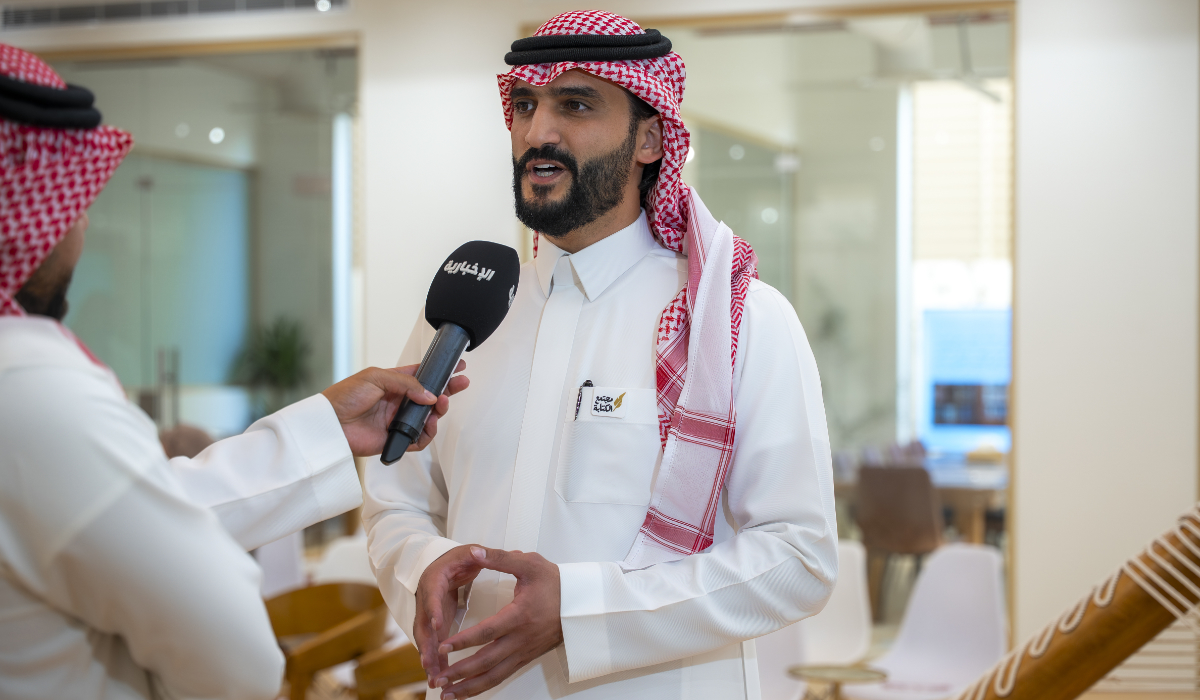


Young Saudi authors gather to discuss their work and the transformation of KSA’s literature. (Supplied)

“I think maybe regulating the industry a little bit more to make and implement some rules and some regulation to protect the individual … because (for) an individual writer, an individual author, the biggest challenge is not having legal literacy when it comes to the contracts that you sign with a publisher or whoever,” she said.

“We need to outline the responsibility of the publisher that justifies their percentage of the book,” she added.

Artificial intelligence is another factor shaping the creative landscape. Alshaalan, whose novel centers on a rogue AI, said the technology can be helpful, but not in replacing the human core of storytelling.
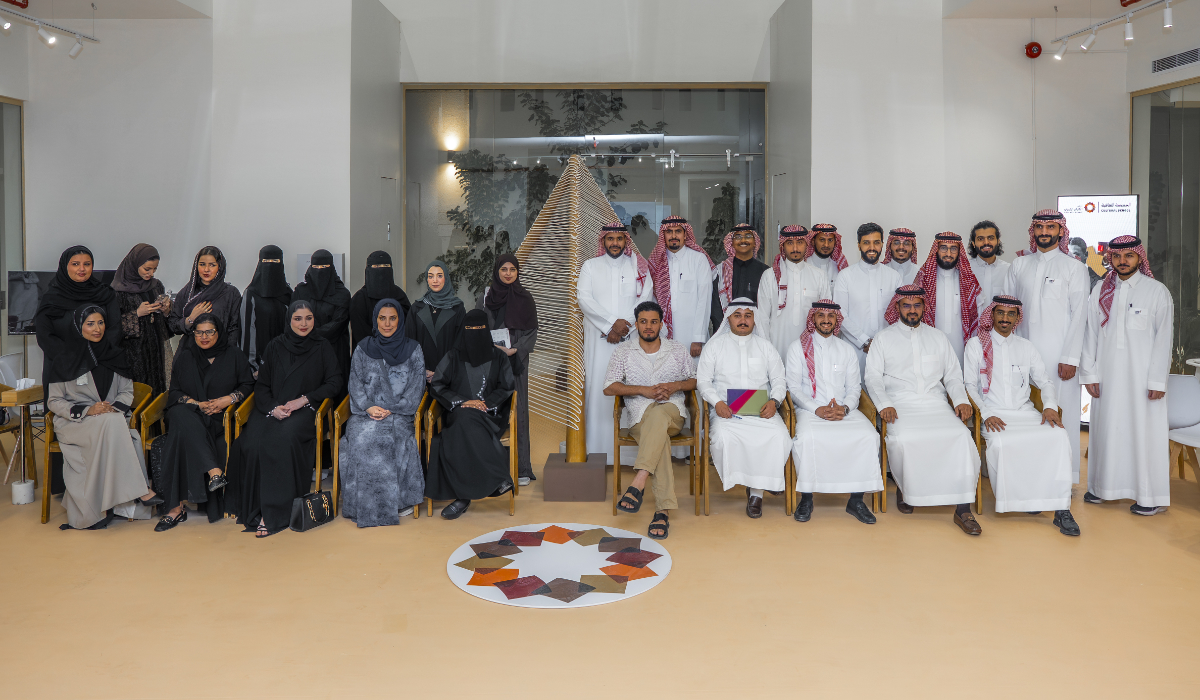


Young Saudi authors gather to discuss their work and the transformation of KSA’s literature. (Supplied)

“Now, to write anything, if you just have a concept or an idea, you can just feed it into the AI and see it more fleshed out. It helps people. But a good author that cares about their own integrity would probably not rely on it too much,” she said. “I don’t think it’s ready yet to offer something with meaningful substance.”

Raad Aleid, founder of the Saudi Young Writers Forum, underscored the need for stronger structural support, particularly when it comes to international recognition, translation efforts, and adapting to emerging technologies such as AI.

“I believe promoting Saudi Arabia’s presence through writing still requires significant effort. There is still a need for more empowerment,” Aleid told Arab News.

He said translation initiatives are a positive step, but more needs to be done. “The Literature Commission is currently working through the translation initiative to translate Saudi works into other languages, but I think there are additional options, such as encouraging foreign authors to write about Saudi Arabia and publishing new Saudi books in other languages, not just translating older titles,” he added.

Aleid also called for greater representation of young Saudi writers at global forums and highlighted the need for legislation to regulate AI in creative fields.


City of London delegation to promote investment on pioneering Saudi trip

Updated 7 sec ago
Follow

City of London delegation to promote investment on pioneering Saudi trip

  • Kingdom has ‘astonishing ambition’ when it comes to development, official tells Arab News
  • Square Mile hopes to learn lessons from Vision 2030 funding for culture, sport, entertainment

LONDON: A delegation from the City of London — the UK capital’s oldest financial district, and a center for trade and commerce since Roman times — will use a visit to Saudi Arabia this week as an opportunity to learn about the very latest in modern infrastructure and city-building.

Tom Sleigh, chair of the City’s Planning and Transportation Committee, told Arab News in an interview on Thursday that the tour will also provide substantial opportunities to develop investments in real estate, cultural projects, and entertainment.

“I think it is very clear for everyone that Saudi Arabia has just got astonishing ambition when it comes to the built environment, when it comes to the development of cities, when it comes to investment in culture and sport and entertainment,” he said.

“That level of ambition, of course, helps when you have substantial funding behind it, but that ambition is really impressive. And I think other cities, and I would include London, need to remember that ambition really matters.”

The City’s two-person team, which departs for the Kingdom on Saturday, is part of a wider delegation represented by Opportunity London, an inward investment scheme for the capital.

Members of authorities across the UK capital are taking part in the visit, as well as representatives from “energy companies, developers and investment firms,” representing a cross-section of interested parties, Sleigh said.

The committee chair is no stranger to the Kingdom, having worked in Al-Jubail about 20 years ago.

Yet the rapid changes brought on by Vision 2030 in Saudi Arabia have not gone unnoticed in the City, leaving Sleigh eager to return, and, among other things, see the “incredible” changes in Riyadh.

He will focus on two areas of major importance to the Kingdom: gigaprojects and the cultural sphere.

A visit to Diriyah, the historic development project on the outskirts of the Saudi capital, will demonstrate shared trends with the City of London, Sleigh said.

“It’s a pedestrianized city, but with three subterranean basements for cars, so it’s really interesting. And there are loads of commonalities between Diriyah and us in the sense that we’re promoting pedestrianization and moving people onto the roads and the traffic off.”

Saudi Arabia’s investment in boosting its cultural output is also attracting attention.

“I have a strong interest in culture. I used to chair the Barbican Center, Europe’s biggest arts center,” Sleigh said. “I chair a theater and I advise the mayor of London on culture. So, we’re going to spend some time visiting (Riyadh’s) Sports Boulevard, visiting some of the cultural assets, and seeing how culture and the arts are expressed and funded, and showcased in Riyadh. I think that will be really cool for us.”

Another focus of the delegation is Cityscape, a Riyadh conference taking place next week to explore city-building opportunities.

“We’re really interested in just how much is happening in Saudi at the moment and how much ambition the Kingdom has. And I would love to see if we can exchange more ideas … these conferences are all about knowledge exchange and knowledge sharing,” Sleigh said.

In his capacity as committee chair, Sleigh will also focus on promoting foreign investment in the Square Mile.

For the Planning and Transportation Committee, much of that goal involves long-term property planning — the City is home to most of London’s tallest buildings — and promoting business-friendly regulation.

“I think the equation is simple. You need to have commercial real estate and housing to be a successful city. That has to be funded by investors, but they only want to put their money if the place they’re investing in has a stable regulatory regime, and has a good legal system that you can trust through disputes and contract law,” Sleigh said.

“In our case in the UK, I think it helps that we speak English and we have Greenwich Mean Time. We sit between different financial zones.”

English common law and the City’s trustworthy planning system, built on centuries of careful decision-making, mean that “of all the places on the planet, if you want to build commercial real estate, the City of London is the most benevolent environment to come and do that,” Sleigh said.

“We’ve been doing this for 2,000 years,” he added. “We still have chunks of the Roman wall lying around and bits of the city. Planning is our most long-term function; we think very long term.”

But the successful, global cities of the future will focus on more than buildings, Sleigh believes.

“It’s about people. It’s about culture. It’s about community. So, we want to have cultural assets. We want to celebrate the archaeology. And it’s about clean, healthy, sustainable buildings and clean, healthy streets — focusing on pedestrianization and a really fantastic public transport network.”

Prospective Saudi investors in London will have access to an array of assets in the Square Mile that are among the city’s most iconic sites, including Smithfield market, the Barbican and around the new Museum of London, set to open next year.

Sleigh said: “We kind of get how busy cities need to have a cultural life. You can’t just be sterile, glass, steel buildings; you need other things.

“I think we recognize the importance of it in creating something more than just a place. It’s a place with people, a place with culture. I would love to see where there might be opportunities (with Saudi Arabia) to either share ideas or investment opportunities.”