- Kingdom positioning itself as hub for advanced AI applications across the Middle East and beyond
JEDDAH: Saudi Arabia is ramping up its artificial intelligence ambitions with the launch of HUMAIN, a flagship initiative backed by the Public Investment Fund, as part of its broader drive to become a global AI powerhouse.
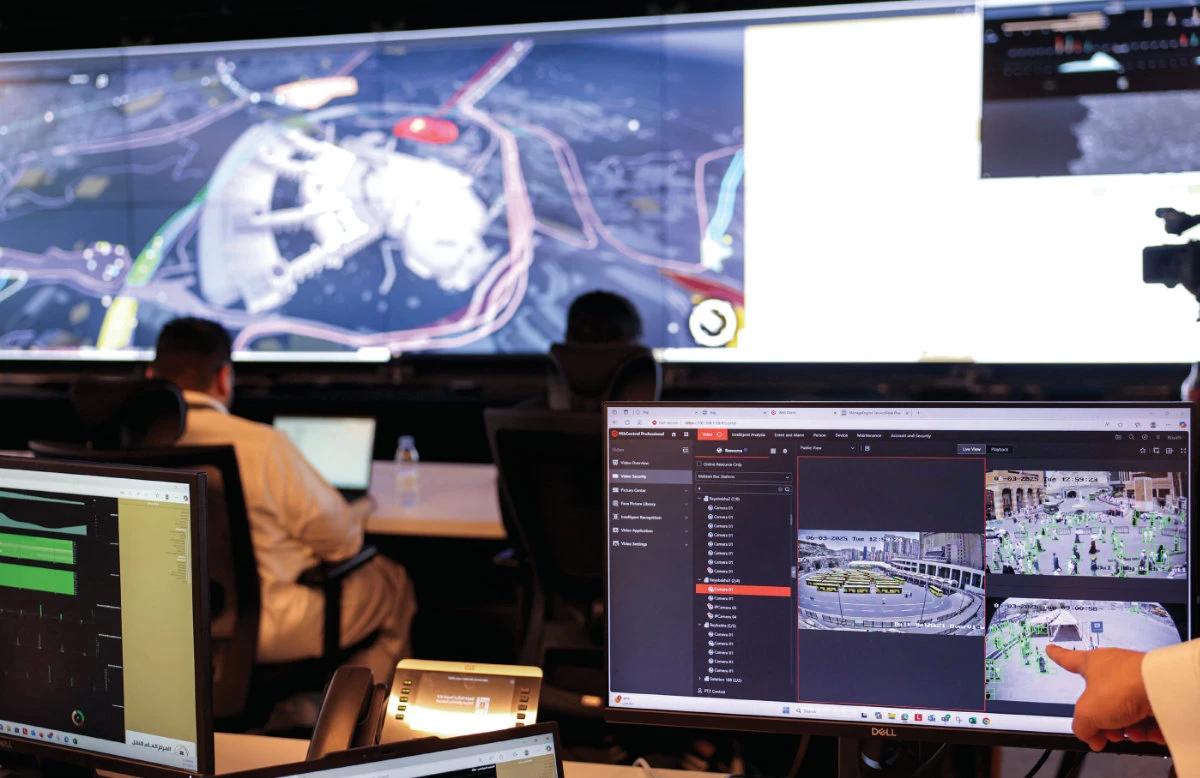
With more than $40 billion earmarked for AI-related investments under Vision 2030, the Kingdom is scaling up infrastructure, forging global tech partnerships, and positioning itself as a hub for advanced AI applications across the Middle East and beyond.
“Artificial intelligence has become a strategic priority for the Kingdom of Saudi Arabia as it aligns strongly with the country’s economic transformation goals and enhances governance,” Youssef Saidi, an economic expert and research fellow at the Economic Research Forum, told Arab News.
He added that the Kingdom’s AI strategy aims to position the country as a global AI leader by the end of the decade.
“Saudi Arabia is leveraging AI to drive innovation and economic growth across various sectors, including healthcare, finance, and logistics, helping the country’s transition into a knowledge-based economy. Saudi Arabia is investing heavily in AI research and development to become a regional leader in this field,” he added.
HUMAIN launch
Wholly owned by PIF, HUMAIN was launched in May by Crown Prince Mohammed bin Salman to develop advanced Arabic language models and establish Saudi Arabia as a global leader in AI infrastructure and innovation.
The initiative is expected to support local innovation, develop intellectual property, and attract top global AI talent and investment.
“HUMAIN is due to offer one of the world’s most powerful multimodal Arabic language models, advanced AI tools, and next-generation data centers,” said Saidi.
He added: “HUMAIN is expected to contribute to Saudi Arabia’s AI ecosystem by fostering human-centered AI innovation, encouraging the design of AI systems that are ethical, inclusive, transparent, and accountable.”
The company aims to enhance human capabilities, improve quality of life, and address real-world challenges relevant to Saudi society. Its focus spans strategic sectors including energy, healthcare, manufacturing, and financial services.
Building talent
To ensure long-term sustainability of its AI sector, Saudi Arabia is also prioritizing talent development and creating an attractive environment for global expertise.
Speaking to Arab News, Yaseen Ghulam, associate professor of economics and director of research at Riyadh-based Al-Yamamah University, said the Kingdom aims to train 20,000 data and AI experts by 2030 through investor-friendly regulations and public-private partnerships.
He cited initiatives such as the ATHKA AI Olympiad and Elevate AI training program as key contributors to public education and skills development. “Microsoft, Huawei, Accenture, Atomcamp, and Oracle are also establishing AI academy programs,” Ghulam added.
He added that the Kingdom is gaining global traction as a destination for skilled professionals, noting that it ranks third globally in AI hiring growth, with women leading in skills penetration.
“The country pays AI experts 20 percent more than the world average, along with additional incentives,” said Ghulam.
Tech partnerships
Saudi Arabia’s AI ambitions are being bolstered by collaborations with global tech giants, particularly in semiconductors and advanced computing.
“NVIDIA and AMD, two major players in the graphics processing unit market, are playing a key role in Saudi Arabia’s AI infrastructure development,” said Saidi.
He noted that NVIDIA is partnering with the Kingdom to build AI factories powered by its Grace Blackwell supercomputers, with a projected capacity of 500 megawatts. “The partnership between Saudi Arabia and NVIDIA aims to establish hyperscale AI data centers, enabling Saudi Arabia to train and deploy sovereign AI models at scale,” the research fellow added.
NVIDIA is also working with the Saudi Data and Artificial Intelligence Authority to train thousands of developers in accelerated computing and AI.
Saidi highlighted the key role of global tech giants like California-based semiconductor firm Advanced Micro Devices in supporting Saudi Arabia’s AI ecosystem and driving its digital transformation agenda.
“AMD is investing up to $10 billion to deploy 500 megawatts of AI compute capacity over the next five years and collaborating with Saudi organizations to develop AI enterprise platforms, supporting digital transformation across industries,” he said, adding that the NVIDIA and AMD investments will have a great benefit in developing human capital and shaping the future of AI-driven activities in Gulf Cooperation Council countries.
Strategic edge
Ghulam pointed to several factors that position the Kingdom as a strong global AI contender, including its recognition as the world leader in government strategy in the sector in the 2024 Global AI Index.
“The country has a significant advantage in hosting data centers and training AI models due to its strategic location, financial might, excess energy, expanding private sector, and digitization push,” he said.
The Kingdom is home to over 240 AI-focused businesses and has seen a fivefold increase in its AI patent portfolio since 2019. Heavy investment in digital infrastructure is also enhancing global connectivity and AI dataset capabilities.
Ghulam added that Saudi Arabia has one of the strongest AI-related physical infrastructure footprints in the region, with 10 supercomputers and the highest number of colocation data centers in the Middle East.
“The Arabic language AI models that are to be developed by HUMAIN are expected to serve more than 450 million people worldwide who speak Arabic around the world,” said Ghulam.
With foundational work well underway, Ghulam said the Kingdom has set an ambitious benchmark for the years ahead.
“Saudi Arabia aims to become one of the top 15 AI prepared countries by 2030, investing heavily in energy, data centers, semiconductors, and connectivity,” he said.
He added that the Kingdom’s public AI spending commitments — both current and projected — surpass those of the US and China.
“HUMAIN plans to build 1.9 gigawatts of data center capacity by 2030 and collaborate with NVIDIA to ship cutting-edge GPUs to Saudi Arabia,” he concluded.