

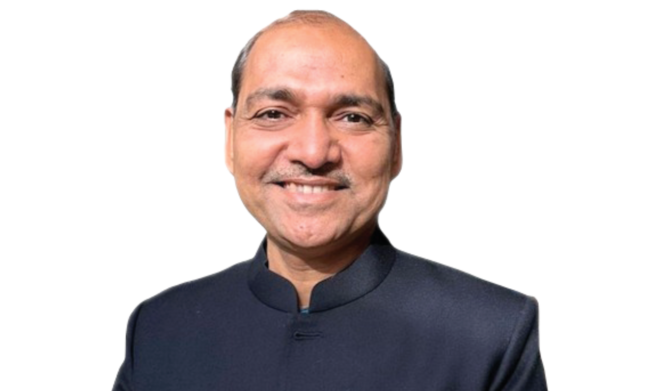
Rajasthan Foundation announces Riyadh chapter

Vijay Soni is the president of the Rajasthan Foundation’s Riyadh chapter.
Short Url
Updated 26 July 2025
Follow

Rajasthan Foundation announces Riyadh chapter

  • Rajasthan Foundation actively assists non-resident Rajasthanis in resolving any grievances or issues related to their home districts

In a significant move to connect with the global Rajasthani diaspora, the Rajasthan Foundation, an initiative of the government of Rajasthan under the chairmanship of the chief minister, has announced the establishment of its Riyadh-Saudi Arabia Chapter. This initiative will bring together non-resident Rajasthanis on a common platform to promote cultural, business, and educational cooperation and extend a helping hand in times of need.
To ensure smooth functioning and coordinated efforts, a 10-member executive committee was formed under the leadership of Vijay Soni. This committee comprises active and committed members of the Rajasthani community residing in Saudi Arabia.
Dr. Manisha Arora, director of Rajasthan Foundation, held a virtual meeting with the newly appointed chapter presidents. Soni briefed the team on the importance and contribution of the foundation to non-resident Rajasthanis, calling it a true gift to Rajasthanis living in Saudi Arabia from the government of Rajasthan.
Rajasthan Foundation actively assists non-resident Rajasthanis in resolving any grievances or issues related to their home districts. Additional District Magistrates have been appointed as nodal officers in each district to ensure all necessary help and coordination.
Key highlights of the meeting
1.Business opportunities: 
Discussions were held on fostering trade, investment, and business partnerships between Rajasthan and Saudi Arabia.
2. Cultural exchange: 
A mutual commitment was made to promote initiatives in tourism, education, and the Rajasthani (Marwari) language.
3.Networking: 
Focus on building collaborative networks among professionals, entrepreneurs, and officials from both regions.

Future roadmap
•Joint implementation of mutually beneficial projects between Rajasthan and Saudi Arabia.
•Launch of a membership campaign to connect more non-resident Rajasthanis with the foundation.
•Establishment of a shared platform to promote Rajasthan’s heritage, language, and education globally.
Members of the executive committee of the Riyadh chapter include: Soni, Laxman Singh Parmar, Gauri Shankar Pareek, Anil Malpani, Rajeev Kumar, Gaurav Mehta, Prem Purushottam Purohit, Kshirod Kumar Kalyani, Rais Ahmed Syed, and Mohammad Ghulam Khan.
This initiative by the Rajasthan Foundation marks a vital step in uniting non-resident Rajasthanis and strengthening cultural, educational, and economic ties with Saudi Arabia. Through the Riyadh chapter, efforts have now begun to take Rajasthan’s rich culture, language, and entrepreneurial spirit to the global stage.


World Defense Show 2026: KPMG highlights human capital as strategic defense asset

Updated 03 February 2026
Follow

World Defense Show 2026: KPMG highlights human capital as strategic defense asset

KPMG published a series of four white papers as official knowledge partner for the World Defense Show 2026, reinforcing its commitment to supporting Saudi Arabia’s Vision 2030 and the Kingdom’s ambition to build a sovereign, future-ready defense ecosystem grounded in integrated capability development, localization, and digital readiness.

As global defense priorities evolve from procurement-led models toward capability-driven ecosystems, one of the papers in the defense integration series highlights a clear inflection point for the sector. According to KPMG analysis, defense localization in Saudi Arabia has increased from around 4 percent in 2018 to 24.9 percent in 2024, with the Kingdom targeting 50 percent localization by 2030. At the same time, local content across the defense sector has reached 40.7 percent, up from 38.4 percent in 2023, reflecting deeper integration across procurement, industrial participation, technology adoption, and workforce development.

KPMG’s findings emphasize that modern defense power is no longer defined by platforms and equipment alone, but by the ability to design, operate, integrate, and sustain advanced systems at scale. While technology, infrastructure, and capital investment remain critical enablers, the firm’s WDS position paper highlights that defense transformation has a significant human-capital focus, recognizing that skills, data literacy, and local expertise are essential to maximizing the performance, resilience, and sovereignty of advanced defense capabilities.

Christopher Moore, head of defense and security, said: “Saudi Arabia’s defense transformation has a significant human-capital focus, alongside major investments in technology, equipment, and industrial capacity. The progress we are seeing in localization and local content demonstrates that the Kingdom is not only acquiring advanced systems, but also building the skills, institutions, and operating models required to sustain them. Through our partnership with the World Defense Show, KPMG is proud to contribute insight and frameworks that help translate Vision 2030 ambition into operational readiness.”

This human-capital perspective forms part of a broader KPMG defense thought-leadership series developed for WDS 2026, which examines defense transformation through multiple, interconnected pillars. These include accelerating sovereign defense ecosystems, integrating business and technology infrastructure, financing future deterrence through public-private partnerships, strengthening industrial and technological autonomy, and building a future-ready defense workforce — reflecting KPMG’s holistic view of defense as an integrated national ecosystem.

KPMG’s research also situates Saudi Arabia’s progress within a global economic context. International benchmarks cited in the firm’s WDS analysis show that every $1 billion in defense manufacturing output in the US supports approximately 5,700 jobs, while the UK defense sector contributes around £25 billion ($34.2 billion) to GDP and sustains 260,000 skilled jobs. Across the EU, defense industries employ more than 1.6 million people and generate approximately 70 billion euros ($82.9 billion) in annual value. KPMG notes that similar dynamics are beginning to emerge in Saudi Arabia as localization accelerates and private-sector participation expands.

To support measurable progress, KPMG has proposed a Defense Workforce Capability Index — a framework that links workforce outcomes directly to operational readiness. The index tracks localization rates, technical qualification levels in advanced and digital systems, and the share of maintenance and sustainment conducted domestically, aligning human-capital metrics with broader defense performance objectives.

Taking place in Riyadh from Feb. 8 to 12, the World Defense Show will bring together senior government leaders, defense manufacturers, and technology innovators from around the world. The other three papers in the defense integration series focus on sovereignty, financing and technology.