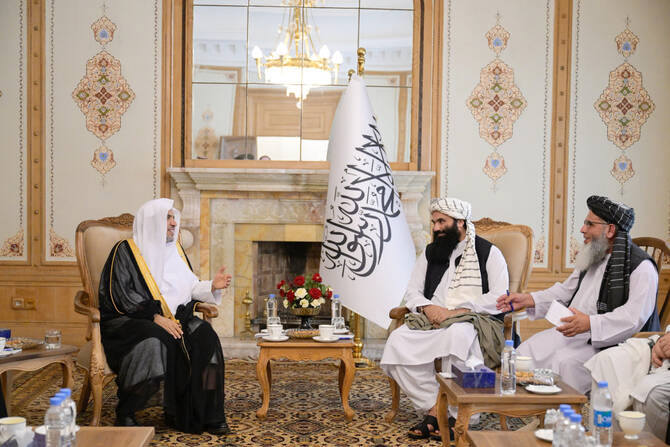

KABUL: Dr. Mohammed bin Abdulkarim Al-Issa, secretary-general of the Muslim World League and chairman of the Organization of Muslim Scholars, conducted high-level meetings with senior Afghan officials during his visit to Kabul.
Al-Issa met Afghan Foreign Minister Mawlawi Amir Khan Muttaqi. Discussions centered on strengthening solidarity and promoting Islamic values worldwide. Key topics included the imperative to present Islam’s true character through its principles of justice, rights protection, moderation and universal compassion.
The officials emphasized that religious tolerance, as outlined in the Qur’an, Sunnah and prophetic traditions, must be reflected in Muslim conduct at both individual and community levels.
The dialogue addressed contemporary challenges facing these objectives, particularly conflicting scholarly interpretations on critical issues that should unite the Muslim community.
Officials referenced the significance of the “Makkah Document” and the “Document for Building Bridges Between Islamic Schools of Thought,” while highlighting the crucial role of the league’s Islamic Fiqh Council as the premier jurisprudential body serving the Islamic nation’s muftis and senior scholars.
The meeting stressed the importance of promoting religious awareness through wisdom and sound guidance, while preventing those who exploit such discrepancies — whether deliberately or through ignorance — from damaging Islam’s image and fueling Islamophobic sentiments.
Al-Issa commended the Afghan government’s counter-terrorism efforts during the talks.
In a separate meeting, Al-Issa held discussions with Afghan Interior Minister Khalifa Sirajuddin Haqqani, focusing specifically on Afghanistan’s fight against terrorist organizations.
Both officials underscored that Islamic unity carries profound significance, while division and discord threaten Muslim solidarity and tarnish Islam’s reputation. They agreed that such damage far outweighs any perceived benefits some scholars might identify in jurisprudential matters that rank below this paramount Islamic goal, adhering to the established principles of weighing benefits against potential harm recognized across all Islamic schools of thought.