DOHA: Mediators have been shuttling between Israeli and Hamas negotiators since July 6 as they scramble to end nearly two years of war in Gaza where fears of mass starvation are growing.
Through 21 months of fighting both sides have clung to long-held positions preventing two short-lived truces being converted into a lasting ceasefire.
The stakes are higher now with growing numbers of malnutrition deaths in the Palestinian territory casting a spotlight Israel’s refusal to allow in more aid.
With pressure for a breakthrough mounting, Washington said top envoy Steve Witkoff will travel to Europe this week for talks on a Gaza ceasefire and aid corridor.
US officials said he might head on to the Middle East.
As the humanitarian situation in Gaza deteriorates drastically, are the two sides closer to reaching an agreement?
After more than two weeks of back and forth, efforts by mediators Qatar, Egypt and the United States are at a standstill.
The proposal on the table involves a 60-day ceasefire and the release of 10 living hostages in exchange for hundreds of Palestinian prisoners.
Hamas insists any agreement must include guarantees for a lasting end to the war.
Israel rejects any such guarantees, insisting that Hamas must give up its capacity to fight or govern as a prerequisite for peace.
“The cold hard truth is that for domestic political considerations neither (Israeli Prime Minister) Benjamin Netanyahu nor Hamas leaders in Gaza have an interest in seeing a swift outcome and a comprehensive ceasefire,” said Karim Bitar, a lecturer in Middle Eastern studies at Paris’s Sciences Po university.
“Both would have to answer serious questions from their own constituencies,” he added.
While Israeli officials have said they are open to compromise, troops have expanded their operations this week into areas of Gaza that had largely been spared any ground offensives since the war began in October 2023.
Israeli media have reported that Hamas negotiators in Doha have been unable to communicate directly with the military leadership in Gaza to approve Israeli pullback maps.
Logistical issues compound existing rifts within the militant group.
There are “technical aspects which are quite difficult to overcome because there is a growing disconnect between Hamas leadership in Gaza and the negotiators in Doha,” Bitar said.
For Andreas Krieg, a Middle East analyst at King’s College London, “the talks are technically progressing, but in practical terms, they are approaching a stalemate.”
“What is on the table now is effectively just another prisoner swap deal, not a real ceasefire deal,” he said.
Hamas faces a dilemma: it is under pressure to secure some Israeli concessions but “on the other hand, it faces an increasingly desperate humanitarian situation.”
“The leadership may be debating how far it can compromise without appearing to surrender politically,” he said.
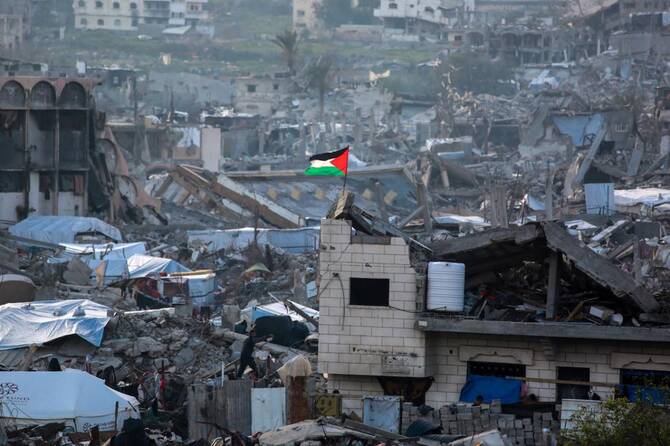
More than two million people in Gaza are facing severe food shortages, with more than 100 NGOs warning of “mass starvation.”
On Tuesday, the head of Gaza’s largest hospital said 21 children died of malnutrition and starvation in three days.
“Humanitarian pressure is mounting fast,” Krieg said, with Hamas facing “rising desperation among the population, which could force it to accept an interim deal to alleviate suffering.”
But even if Hamas makes concessions, Israel has the upper hand and there can be no lasting ceasefire unless it wants one.
“Unless the United States and Qatar... increase significantly their pressure on Israel, I am afraid that this round of negotiations will fail like the previous rounds,” Bitar said.


![]()

As Gaza hunger crisis deepens, where do truce talks stand?
Short Url
https://arab.news/8d5t2
As Gaza hunger crisis deepens, where do truce talks stand?
- Mediators have been shuttling between Israeli and Hamas negotiators since July 6 as they scramble to end nearly two years of war in Gaza where fears of mass starvation are growing


Latest updates


© 2026 SAUDI RESEARCH & PUBLISHING COMPANY, All Rights Reserved And subject to Terms of Use Agreement.