

Saudi Arabia approves new Dammam-based budget airline backed by Air Arabia

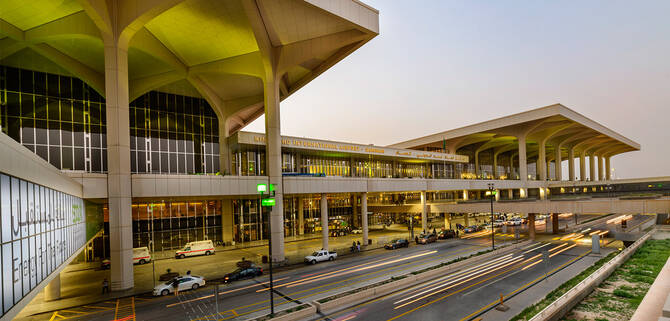
The new carrier, a joint venture between the UAE-based budget airline, KUN Investment Holding, and Nesma, will be headquartered at Dammam’s King Fahd International Airport. File
Short Url
Updated 20 July 2025
Follow

Saudi Arabia approves new Dammam-based budget airline backed by Air Arabia

  • Eastern Province governor unveils $426 million aviation development package

RIYADH: Saudi Arabia has granted a low-cost airline license to an Air Arabia-led consortium, aiming to boost air connectivity, create jobs, and upgrade transport in the Eastern Province. 

The new carrier, a joint venture between the UAE-based budget airline, KUN Investment Holding, and Nesma, will be headquartered at Dammam’s King Fahd International Airport. It is expected to operate both domestic and international routes, helping expand access and competition in the Kingdom’s growing aviation market. 

According to the General Authority of Civil Aviation, the new airline aims to serve 24 domestic and 57 international destinations, transporting around 10 million passengers annually. Its operations will be supported by a fleet of 45 aircraft and are projected to create more than 2,400 direct jobs, aligning with Saudi Arabia’s Vision 2030 goals to boost the non-oil economy and local employment. 

In a statement, GACA stated: “This move aims to enhance air connectivity in the Eastern Province, increase seat capacity, and provide passengers with competitive options.”  

The announcement comes as part of broader efforts to transform Saudi Arabia into a regional aviation hub. The country plans to handle 330 million passengers and transport 4.5 million tons of air cargo annually by 2030, under the National Strategy for Transport and Logistics Services. 

As part of this strategy, Eastern Province Gov. Prince Saud bin Naif bin Abdulaziz also inaugurated the master plans for King Fahd International, Al-Ahsa, and Al-Qaisumah airports, alongside a new corporate identity for Dammam Airports Co. The governor also launched a SR1.6 billion ($426 million) development package covering 77 infrastructure projects to improve passenger experience and airport services.   

King Fahd International Airport handled 12 million passengers in 2024, up 15 percent from the previous year, with over 99,000 flights recorded, according to data from Dammam Airports Co. The airport also set a daily passenger traffic record, surpassing 50,000 travelers in a single day for the first time.  

With air traffic steadily rising and infrastructure rapidly expanding, the introduction of a new budget airline based in Dammam is expected to solidify the region’s position as a key aviation gateway and support Saudi Arabia’s ambitions to lead the Middle East civil aviation sector by the end of the decade. 


Education spending surges 251% as students return from autumn break: SAMA

Updated 12 December 2025
Follow

Education spending surges 251% as students return from autumn break: SAMA

RIYADH: Education spending in Saudi Arabia surged 251.3 percent in the week ending Dec. 6, reflecting the sharp uptick in purchases as students returned from the autumn break.

According to the latest data from the Saudi Central Bank, expenditure in the sector reached SR218.73 million ($58.2 million), with the number of transactions increasing by 61 percent to 233,000.

Despite this surge, overall point-of-sale spending fell 4.3 percent to SR14.45 billion, while the number of transactions dipped 1.7 percent to 236.18 million week on week.

The week saw mixed changes between the sectors. Spending on freight transport, postal and courier services saw the second-biggest uptick at 33.3 percent to SR60.93 million, followed by medical services, which saw an 8.1 percent increase to SR505.35 million.

Expenditure on apparel and clothing saw a decrease of 16.3 percent, followed by a 2 percent reduction in spending on telecommunication.

Jewelry outlays witnessed an 8.1 percent decline to reach SR325.90 million. Data revealed decreases across many other sectors, led by hotels, which saw the largest dip at 24.5 percent to reach SR335.98 million. 

Spending on car rentals in the Kingdom fell by 12.6 percent, while airlines saw a 3.7 percent increase to SR46.28 million.

Expenditure on food and beverages saw a 1.7 percent increase to SR2.35 billion, claiming the largest share of the POS. Restaurants and cafes retained the second position despite a 12.6 percent dip to SR1.66 billion.

Saudi Arabia’s key urban centers mirrored the national decline. Riyadh, which accounted for the largest share of total POS spending, saw a 3.9 percent dip to SR4.89 billion, down from SR5.08 billion the previous week.

The number of transactions in the capital settled at 74.16 million, down 1.4 percent week on week.

In Jeddah, transaction values decreased by 5.9 percent to SR1.91 billion, while Dammam reported a 0.8 percent surge to SR713.71 million.

POS data, tracked weekly by SAMA, provides an indicator of consumer spending trends and the ongoing growth of digital payments in Saudi Arabia. 

The data also highlights the expanding reach of POS infrastructure, extending beyond major retail hubs to smaller cities and service sectors, supporting broader digital inclusion initiatives. 

The growth of digital payment technologies aligns with the Kingdom’s Vision 2030 objectives, promoting electronic transactions and contributing to the nation’s broader digital economy.