

Saudi Arabia approves new Dammam-based budget airline backed by Air Arabia

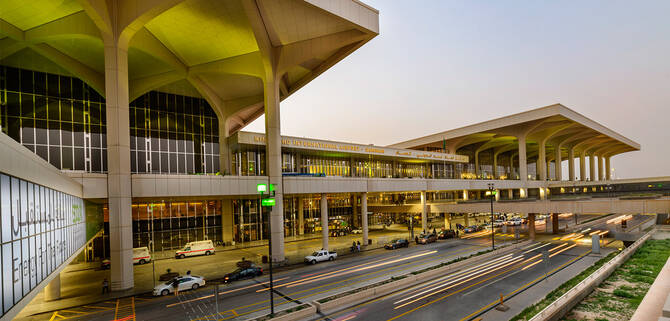
The new carrier, a joint venture between the UAE-based budget airline, KUN Investment Holding, and Nesma, will be headquartered at Dammam’s King Fahd International Airport. File
Short Url
Updated 20 July 2025
Follow

Saudi Arabia approves new Dammam-based budget airline backed by Air Arabia

  • Eastern Province governor unveils $426 million aviation development package

RIYADH: Saudi Arabia has granted a low-cost airline license to an Air Arabia-led consortium, aiming to boost air connectivity, create jobs, and upgrade transport in the Eastern Province. 

The new carrier, a joint venture between the UAE-based budget airline, KUN Investment Holding, and Nesma, will be headquartered at Dammam’s King Fahd International Airport. It is expected to operate both domestic and international routes, helping expand access and competition in the Kingdom’s growing aviation market. 

According to the General Authority of Civil Aviation, the new airline aims to serve 24 domestic and 57 international destinations, transporting around 10 million passengers annually. Its operations will be supported by a fleet of 45 aircraft and are projected to create more than 2,400 direct jobs, aligning with Saudi Arabia’s Vision 2030 goals to boost the non-oil economy and local employment. 

In a statement, GACA stated: “This move aims to enhance air connectivity in the Eastern Province, increase seat capacity, and provide passengers with competitive options.”  

The announcement comes as part of broader efforts to transform Saudi Arabia into a regional aviation hub. The country plans to handle 330 million passengers and transport 4.5 million tons of air cargo annually by 2030, under the National Strategy for Transport and Logistics Services. 

As part of this strategy, Eastern Province Gov. Prince Saud bin Naif bin Abdulaziz also inaugurated the master plans for King Fahd International, Al-Ahsa, and Al-Qaisumah airports, alongside a new corporate identity for Dammam Airports Co. The governor also launched a SR1.6 billion ($426 million) development package covering 77 infrastructure projects to improve passenger experience and airport services.   

King Fahd International Airport handled 12 million passengers in 2024, up 15 percent from the previous year, with over 99,000 flights recorded, according to data from Dammam Airports Co. The airport also set a daily passenger traffic record, surpassing 50,000 travelers in a single day for the first time.  

With air traffic steadily rising and infrastructure rapidly expanding, the introduction of a new budget airline based in Dammam is expected to solidify the region’s position as a key aviation gateway and support Saudi Arabia’s ambitions to lead the Middle East civil aviation sector by the end of the decade. 


IEA’s 400m oil barrel reserve release unlikely to provide much relief to markets, analysts warn

Updated 7 sec ago
Follow

IEA’s 400m oil barrel reserve release unlikely to provide much relief to markets, analysts warn

RIYADH: The historic decision by the International Energy Agency to release 400 million barrels of oil from strategic reserve stockpiles, the largest such move in its history, is unlikely to provide significant relief to markets, analysts say.

The agency announced the measure on March 11 as tanker traffic through the Strait of Hormuz continued to be in a state of paralysis as the US-Israel conflict with Iran continues.

The markets immediate reaction to the much-trailed decision was lukewarm, although oil did stay below the $119-a-barrel price seen on March 9, the highest level since mid-2022.

At 1:20 p.m. GMT on March 12 – about 24 hours after the announcement – Brent crude was trading at $98.26 a barrel, a daily increase of $6.28, while West Texas Intermediate was up $5.84 to $93.09 a barrel.

Ipek Ozkardeskaya, senior analyst at Swissquote, said the IEA decision was at the top end of expectations, adding: “Some say that the size of the release actually increased worries that the war could last longer. Again, the math is simple: 400 million barrels would only be enough to meet the IEA’s oil demand for roughly 9-10 days.

“After that? The IEA system is estimated to hold around 1.2 billion barrels. It goes fast. Its head, Fatih Birol, said that only the resumption of normal trade through the Strait of Hormuz would help. Well, that’s not on the menu du jour.” 

The senior analyst warned that oil will not return to levels that would tame inflation expectations until geopolitical tensions materially ease.

A note from energy and commodities broker PVM also raised skeptism over the IEA's annoucement, saying in a note that that actual release “is not imminent.” 

It added: “Details need to be worked out and agreed upon. An objection from even one member country could cause a delay in implementing the plan. It is worth keeping in mind that should the emergency stockpiles be used to alleviate the impact of supply and output disruptions, they will have to be replenished further down the line.”

Norbert Rucker, head of economics and next generation research at Julius Baer, struck a more optimistic note about the state of the oil market, pointing out that “meaningful infrastructure damage remains absent.”

He added: “Markets seem to be trading somewhere between our base and bear case scenarios. In the former and more likely pathway, we foresee shut-ins to reach their maximum later this week, followed by the beginning of a gradual normalization toward the end of the month.

“The assumed supply disruption would be more than compensated by the promised storage releases.

“Thus, the conflict in the Middle East should not lead to significant deficits, at least in those countries that have well-established and developed energy infrastructures.” 

Rucker added that current oil prices largely reflect uncertainty, with markets pricing in a significant risk premium alongside higher logistics costs.

“Prices would need to incentivize supply growth or demand destruction only if the conflict brings meaningful and lasting infrastructure damage. Thus, the releases from strategic reserves are rightly interpreted as a calming message, a rather homeopathic tranquilizer curing the symptoms,” he said.

Oil price forecasts

Goldman Sachs raised its forecasts for oil prices in the fourth quarter of 2026, citing expectations that disruptions to crude flows through the Strait of Hormuz will persist for a longer period amid the US-Israeli war on Iran.

The US bank now expects Brent crude to reach $71 per barrel in the last three months of 2026, up from its previous forecast of $66, while it raised its estimate for West Texas Intermediate crude to $67 per barrel from $62.

Fitch Ratings also raised its 2026 Brent oil price assumption to $70 per barrel from $63 per barrel due to the effective closure of the Strait of Hormuz.

“We expect the current spike in prices to be followed by a drop to levels driven by market fundamentals once the strait reopens. However, the geopolitical risk premium is substantial, and there is uncertainty over the duration of the conflict and transit disruption. A more prolonged closure could drive our annual average oil and European gas prices higher,” the credit rating agency said in a statement.