

Paramilitary shelling on camp kills 8 in Sudan’s Darfur: rescuers

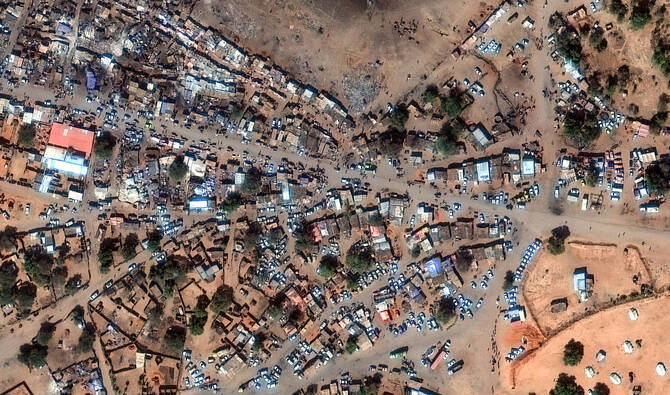
Paramilitary forces shelled a displacement camp in Sudan's Darfur region on Thursday, killing eight civilians and injuring others, a local rescue group said. (AFP/File)
Short Url
Updated 17 July 2025
Follow

Paramilitary shelling on camp kills 8 in Sudan’s Darfur: rescuers

  • The bombardment hit Abu Shouk camp, which hosts tens of thousands of displaced people
  • Thursday’s offensive comes just days after a series of attacks by the RSF targeted another battleground region of Sudan

PORT SUDAN: Paramilitary forces shelled a displacement camp in Sudan’s Darfur region on Thursday, killing eight civilians and injuring others, a local rescue group said.

The bombardment hit Abu Shouk camp, which hosts tens of thousands of displaced people on the outskirts of El Fasher, the besieged capital of North Darfur.

El-Fasher remains the last major stronghold in Sudan’s western Darfur region not under the control of the Rapid Support Forces (RSF), who have been at war with the regular army since April 2023.

“The Abu Shouk camp witnessed heavy artillery bombardment by the RSF... killing eight people,” the camp’s Emergency Response Room said in a statement.

In recent weeks, El-Fasher, which has been under paramilitary siege since last year, has been locked in intense fighting between warring sides in a region also gripped by famine.

Thursday’s offensive comes just days after a series of attacks by the RSF targeted another battleground region of Sudan.

More than 450 people, including 35 children, were killed in several villages of North Kordofan, southwest of the capital Khartoum, according to a statement released this week by the UN’s children agency.

“No child should ever experience such horrors,” said UNICEF Executive Director Catherine Russell. “Violence against children is unconscionable and must end now.”

On Sunday, the RSF claimed to have killed more than 470 army personnel near the town of El-Obeid, also in North Kordofan, in a statement posted to its Telegram channel.

Independent verification of casualties in Sudan remains difficult due to restricted access to its conflict zones.

Now in its third year, the conflict has killed tens of thousands and forced millions to flee, creating what the United Nations describes as the world’s largest displacement crisis.

In December last year, famine was officially declared in three displacement camps near El-Fasher, namely Zamzam, Abu Shouk and Al-Salam, according to the UN.

Since the Sudanese army regained control of the capital Khartoum in March, the RSF has shifted its operations westward, focusing on Darfur and Kordofan in a bid to consolidate territorial gains.

In April, RSF fighters seized the Zamzam displacement camp, located near Abu Shouk.

The assault forced nearly 400,000 people to flee, according to UN figures, effectively emptying one of the country’s largest camps for the displaced.

Sudanese analyst Mohaned el-Nour told AFP the RSF aims to redefine its role in the conflict.

“Their goal is no longer to be seen as a militia, but as an alternative government in western Sudan, undermining the legitimacy of the authorities in Port Sudan.”

He added that the recent surge in violence in North Kordofan was likely intended to divert the army’s attention from El Fasher, where the military is trying “at all costs” to maintain.


Lebanon urges UNSC delegation to press Israel to respect ceasefire

Updated 57 min 56 sec ago
Follow

Lebanon urges UNSC delegation to press Israel to respect ceasefire

  • Israel has kept up strikes on Lebanon and has also maintained troops in five south Lebanon areas it deems strategic

BEIRUT: Lebanese President Joseph Aoun urged a United Nations Security Council delegation on Friday to pressure Israel to respect a year-old ceasefire and to support his army’s efforts to disarm Hezbollah.
Despite a November 2024 ceasefire that was supposed to end more than a year of hostilities between Israel and the Iran-backed militant group, Israel has kept up strikes on Lebanon and has also maintained troops in five south Lebanon areas it deems strategic.
Aoun “stressed the need to pressure the Israeli side to implement the ceasefire and withdraw, and expressed his hope for pressure from the delegation,” according to a statement from the presidency.
He also noted “Lebanon’s commitment to implementing international resolutions” and asked the envoys to support the Lebanese army’s efforts to disarm non-government groups.
The Lebanese government ordered its military to fully disarm Hezbollah in August, and the army expects to complete the first phase of its plan by the end of the year.
The UN delegation visited Damascus on Thursday and after its meeting with Aoun was due to inspect the border area in southern Lebanon on Saturday, accompanied by US envoy Morgan Ortagus.
The visit comes as Lebanese and Israeli civilian representatives held their first direct talks in decades.
On Thursday, Information Minister Paul Morcos quoted Aoun calling the initial negotiations “positive” and stressing “the need for the language of negotiation — not the language of war — to prevail.”
That same day, Israel struck four southern Lebanese towns, saying it was targeting Hezbollah infrastructure including weapons depots to stop the group from rearming.
UN peacekeepers called the strikes “clear violations of Security Council resolution 1701,” which ended the 2006 war between Hezbollah and Israel.
The peacekeepers also said their vehicles were fired on by six men on three mopeds near Bint Jbeil on Thursday. There were no injuries in the incident.
“Attacks on peacekeepers are unacceptable and serious violations of resolution 1701,” the international force added.
Hezbollah refuses to disarm but has not responded to Israeli attacks since the ceasefire. It has, however, promised a response to the killing of its military chief in a strike on Beirut’s southern suburbs last month.