

Dubai real estate booms with 50k homes sold in Q2

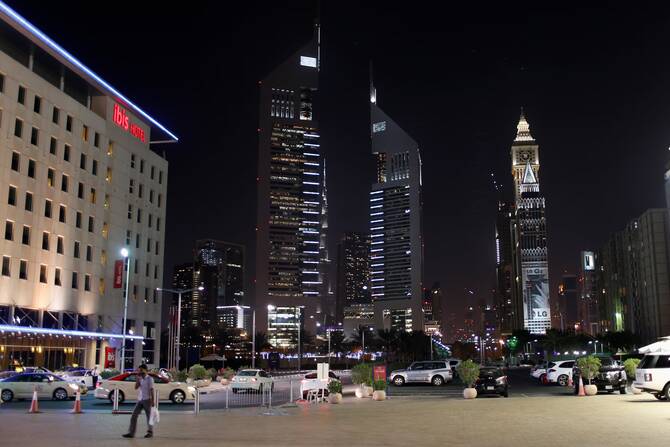
The figures also mark an 82 percent jump from Q2 2023, underscoring the emirate’s growing appeal as a global real estate hub. Reuters/File
Short Url
Updated 15 July 2025
Follow

Dubai real estate booms with 50k homes sold in Q2

  • Investor confidence lifts market to record highs, says report

JEDDAH: Dubai’s residential property market posted a 22 percent year-on-year rise in sales during the second quarter of 2025, reaching 49,606 transactions, driven by strong demand from both domestic and international investors, particularly in the off-plan and resale segments.

According to a new report by Provident Estate, the figures also mark an 82 percent jump from Q2 2023, underscoring the emirate’s growing appeal as a global real estate hub.

The second-quarter uptick builds on a robust start to the year. In Q1, Dubai saw over 42,000 residential deals worth 114.15 billion dirhams, with an average sale price of 2.7 million dirhams. Off-plan properties continued to dominate, while the ready-home segment also showed strong performance, the report noted.

The momentum reflects broader regional trends across the Gulf Cooperation Council, where economic diversification, pro-investment reforms — such as relaxed foreign ownership rules and long-term residency options — are reshaping real estate dynamics. Similar demand growth is being observed in Saudi Arabia, Qatar, Oman, Bahrain, and Kuwait.

“These numbers are more than just market growth; they represent a shift in how the world views Dubai real estate. Buyers are not just investing in properties; they’re investing in a lifestyle, in security, in the future of one of the fastest-growing cities globally,” said Laura Adams, secondary sales director at Provident Estate.

Dubai’s total property transaction value climbed to 147.6 billion dirhams in Q2 2025, up from 103.9 billion dirhams a year earlier and 70.2 billion dirhams in Q2 2023. The average sale price rose to 2.97 million dirhams, while the price per square foot increased to 1,823 dirhams — further signaling buyer confidence in the emirate’s long-term real estate prospects.

Provident Estate attributed the market’s performance to sustained interest in both new developments and completed properties, supported by Dubai’s investor-friendly climate, advanced infrastructure, and tax-efficient environment.

The firm noted that Dubai continues to be a preferred destination for investors seeking global exposure and lasting value.

Compiled from proprietary data and in-depth analysis, Provident’s quarterly report aims to provide a comprehensive snapshot of current market trends.

“We are not just reporting data — we are shaping strategy. This insight empowers investors, developers, and homeowners to make smarter decisions in one of the most competitive markets globally,” Adams added.

With favorable regulations, lifestyle-driven demand, and continued economic transformation under UAE Vision 2031, the report forecasts sustained growth in Dubai’s property market through the remainder of 2025.


Saudi Arabia’s foreign reserves rise to a 6-year high of $475bn

Updated 10 sec ago
Follow

Saudi Arabia’s foreign reserves rise to a 6-year high of $475bn

RIYADH: Saudi Arabia’s foreign reserves climbed 3 percent month on month in January to SR1.78 trillion, up SR58.7 billion ($15.6 billion) from December and marking a six-year high.

On an annual basis, the Saudi Central Bank’s net foreign assets rose by 10 percent, equivalent to SR155.8 billion, according to data from the Saudi Central Bank, Argaam reported.

The reserve assets, a crucial indicator of economic stability and external financial strength, comprise several key components.

According to the central bank, also known as SAMA, the Kingdom’s reserves include foreign securities, foreign currency, and bank deposits, as well as its reserve position at the International Monetary Fund, Special Drawing Rights, and monetary gold.

The rise in reserves underscores the strength and liquidity of the Kingdom’s financial position and aligns with Saudi Arabia’s goal of strengthening its financial safety net as it advances economic diversification under Vision 2030.

The value of foreign currency reserves, which represent approximately 95 percent of the total holdings, increased by about 10 percent during January 2026 compared to the same month in 2025, reaching SR1.68 trillion.

The value of the reserve at the IMF increased by 9 percent to reach SR13.1 billion.

Meanwhile, SDRs rose by 5 percent during the period to reach SR80.5 billion.

The Kingdom’s gold reserves remained stable at SR1.62 billion, the same level it has maintained since January 2008.

Saudi Arabia’s foreign reserve assets saw a monthly rise of 5 percent in November, climbing to SR1.74 trillion, according to the Kingdom’s central bank.

Overall, the continued advancement in reserve assets highlights the strength of Saudi Arabia’s fiscal and monetary buffers. These resources support the national currency, help maintain financial system stability, and enhance the country’s ability to navigate global economic volatility.

The sustained accumulation of foreign reserves is a critical pillar of the Kingdom’s economic stability. It directly reinforces investor confidence in the riyal’s peg to the US dollar, a foundational monetary policy, by providing SAMA with ample resources to defend the currency if needed.

Furthermore, this financial buffer enhances the nation’s sovereign credit profile, lowers national borrowing costs, and provides essential fiscal space to navigate global economic volatility while continuing to fund its ambitious Vision 2030 transformation agenda.
