

Pakistan targets Gulf remittances with new PayPak digital solution for overseas workers

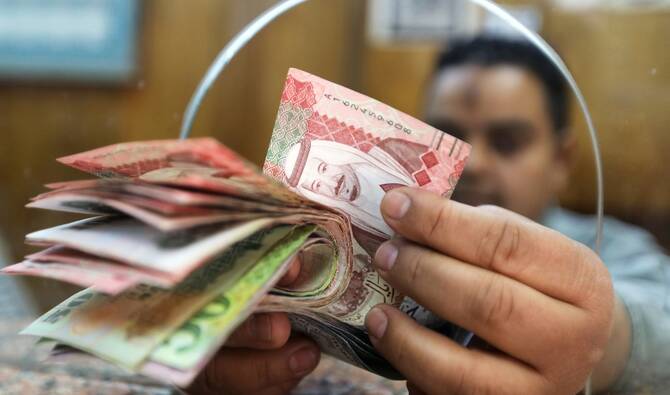
An employee counts Saudi Riyals bills at a money exchange office in central Cairo, Egypt, March 20, 2019. (REUTERS/ file)
Short Url
Updated 14 July 2025
Follow

Pakistan targets Gulf remittances with new PayPak digital solution for overseas workers

  • The initiative aims to facilitate secure and structured remittance flows from non-resident Pakistani workers who are based abroad
  • Pakistan received over $38.3 billion remittances in last fiscal year, with Pakistanis residing in Gulf contributing a major share

KARACHI: The Pakistani government is planning to facilitate overseas Pakistanis, particularly those in Gulf countries, by providing a technological solution that would enable them to send remittances through a domestic payment scheme, PayPak, the 1Link payment gateway system said on Monday, citing the Prime Minister Youth Programme (PMYP) chief said on Monday.

PMYP Chairman Rana Mashhood Ahmad Khan said this in a recent meeting with stakeholders, including 1Link CEO Najeeb Agrawalla and Pakistan Freelancers Association (PAFLA) Chairman Ibrahim Amin, in the country’s commercial capital of Karachi.

Pakistan received over $38.3 billion in remittances from different countries in the financial year ending in June, with Pakistanis residing in Gulf countries contributing a major share to this amount.

Khan said the government was working extensively to serve Pakistanis in the country and overseas by addressing their core issues through innovative, technological and affordable means.

“The government is keen to explore strategic collaboration on empowering overseas Pakistani youth through digital remittance services and expanding PayPak’s reach under the Prime Minister’s Youth Programme,” he was quoted as saying by 1Link.

Khan said Pakistanis living abroad were playing commendable role in contributing to the economy and the PM Digital Youth Hub was exploring various options to honor their services with dedicated facilities and offerings.

Launched in 2016 by 1Link, PayPak is Pakistan’s first and the only domestic payment scheme (DPS), making Pakistan the 28th country in the world to have its own domestic payment system. It aims to spur financial inclusion and digitization across the country.

“We aim to take initiatives to facilitate secure and structured remittance flows from non-resident Pakistani workers, especially those based in Saudi Arabia, UAE and other Gulf countries, while also promoting the use of PayPak for Hajj, Umrah, and other cross-border transactions including 1Bill service for non-resident Pakistanis,” 1Link CEO Agrawalla said.

As a major payment service provider, he said, 1Link proposed extending its technological expertise and platform capabilities to support the development and implementation of both initiatives.

PAFLA Chairman Amin said there were over 4 million Pakistanis residing in Gulf countries who had been contributing to the economy through their hard-earned income, adding that many of them lacked access to reliable, user-friendly technological payment solutions.

“PAFLA, in collaboration with Pakistani diplomatic missions, Pakistan’s banks, and different agencies, will do its best efforts to approach freelancers, blue- and white-collar Pakistani workers through outreach and engagement efforts across Gulf countries,” he said.


Pakistan launches final nationwide polio drive of 2025 to vaccinate 45 million children

Updated 4 sec ago
Follow

Pakistan launches final nationwide polio drive of 2025 to vaccinate 45 million children

  • Campaign comes as Pakistan records 30 polio cases this year, one of only two countries where virus is endemic
  • Health minister urges parents to welcome vaccinators as insecurity, misinformation hinder eradication efforts

ISLAMABAD: Pakistan on Thursday launched its final polio vaccination campaign of the year, with Health Minister Mustafa Kamal administering drops to children under five as part of a nationwide effort to reach 45 million children, the country’s polio program said.

The Dec. 15–21 drive is part of Pakistan’s decades-long struggle to eliminate wild poliovirus. Pakistan and neighboring Afghanistan are the only two countries where the virus remains endemic, keeping global eradication efforts at risk.

Pakistan has reported 30 polio cases so far this year. The incurable and highly infectious virus can cause lifelong paralysis and can only be prevented through repeated oral vaccinations and routine immunization, health officials say.

“I want to take this opportunity to speak directly to parents and caregivers. When our polio vaccinator knocks at your door, I urge you to welcome them in and ensure that every child under five in your house receives two drops of this essential vaccine,” the polio program quoted Health Minister Kamal as saying.

“I also urge you to advocate for vaccination in your families and communities and create a welcoming environment for our vaccinators.”

The new campaign comes days after Pakistan conducted a nationwide measles, rubella and polio vaccination drive from Nov. 17–29, which targeted 22.9 million children across 89 high-risk districts.

Pakistan recorded 74 polio cases in 2024, a steep rise from six in 2023 and just one in 2021, underscoring the volatility of eradication efforts in a country where misinformation, vaccine hesitancy and political instability have repeatedly disrupted progress.

Violence has also hampered the program. Polio teams and their security escorts have been attacked frequently by militants and religious hard-liners in parts of northwestern Khyber Pakhtunkhwa and southwestern Balochistan. Officials say continued security threats, coupled with natural disasters such as recent flooding, pose major obstacles to reaching every child.

Pakistan has drastically reduced polio prevalence since the 1990s, when annual cases exceeded 20,000. By 2018, the number had fallen to eight. But health authorities warn that without consistent access to children, particularly in high-risk, underserved region, eradication will remain out of reach.