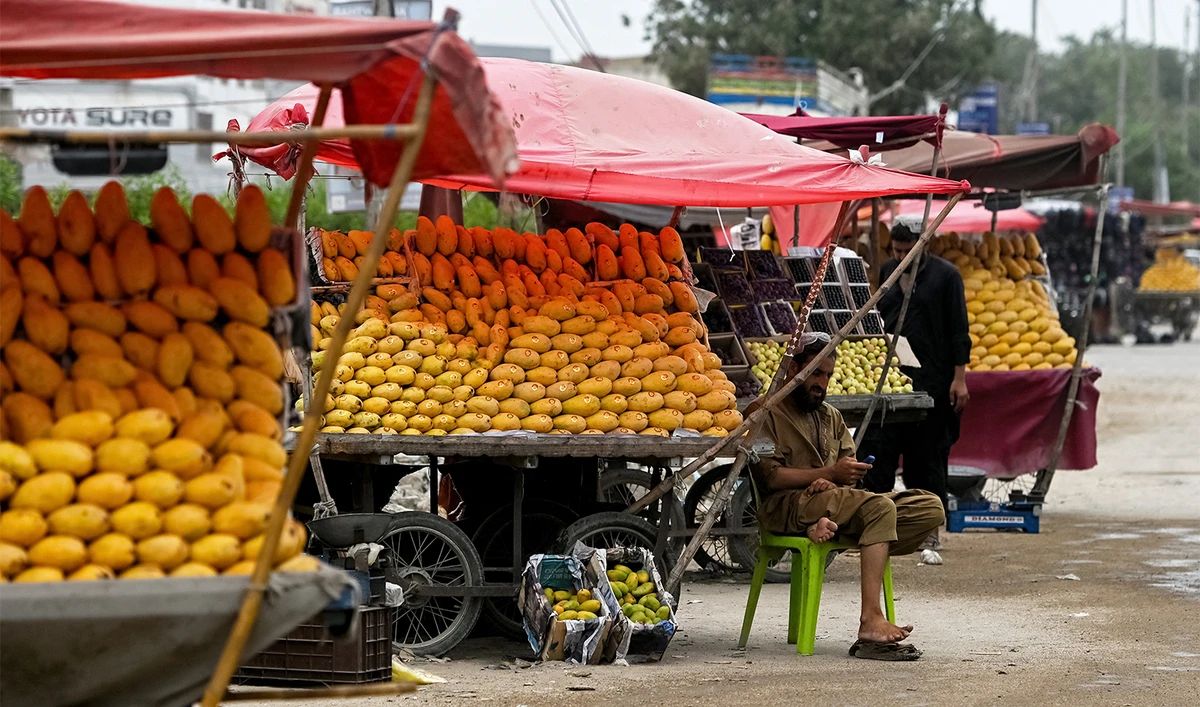
- NAFSA aims to modernize agriculture, reduce chemical use, and boost trade transparency
- Initiative comes under Special Investment Facilitation Council overseeing economic reforms
ISLAMABAD: Pakistan has established a new regulatory body to reform its agriculture sector and bring domestic food safety standards in line with international requirements, state-run Associated Press of Pakistan (APP) reported on Monday.
The new National Agri-Trade and Food Safety Authority (NAFSA) has been set up under a reform drive led by the Special Investment Facilitation Council (SIFC), a civil-military hybrid body formed in 2023 to fast-track foreign investment and economic reform in strategic sectors, including agriculture, mining, IT and defense production.
NAFSA consolidates the Department of Plant Protection (DPP) and the Animal Quarantine Department into a single authority aimed at promoting modern agricultural practices, reducing excessive chemical use and facilitating trade in agricultural products.
“The establishment of the new body, by merging DPP and Animal Quarantine, is an important milestone toward development of agriculture sector,” the APP report stated.
The report did not provide further details on NAFSA’s governance, regulatory powers and rollout timeline.
Agriculture remains a cornerstone of Pakistan’s economy, employing nearly 38 percent of the workforce and contributing around 19 percent to the country’s GDP. However, the sector has long faced challenges, including outdated practices, poor regulatory oversight, low export competitiveness and barriers in meeting international sanitary and phytosanitary (SPS) standards.
By centralizing regulatory oversight and compliance, the government hopes NAFSA will address long-standing inefficiencies and support value-added agricultural exports.
“NAFSA is aimed at introducing modern agricultural systems according to global standards,” the APP said. “It will help reduce unnecessary use of Methyl Bromide, saving up to forty thousand rupees per container.”
Methyl Bromide, a fumigant used to control pests during export processing, has been heavily restricted under global environmental protocols due to its ozone-depleting properties. NAFSA’s efforts to limit its use are expected to improve both environmental sustainability and export cost efficiency.
The move aligns with broader reforms spearheaded by the SIFC, which was formed through a civil-military consensus to fast-track investment decisions, cut bureaucratic delays and attract foreign capital, especially from Gulf and Chinese partners, to priority sectors.
“Transparency and innovation is being promoted in the agriculture sector with the support of the SIFC,” the APP report said.