


HONG KONG: A Hong Kong court began hearing appeals on Monday from 12 democracy campaigners who were jailed for subversion last year during the city’s largest national security trial.
They were among 45 opposition figures, including some of Hong Kong’s best-known democracy activists, who were sentenced in November over a 2020 informal primary election that authorities deemed a subversive plot.
Critics including the United States, Britain and the European Union said the case showed how a Beijing-imposed national security law has eroded freedoms and quashed peaceful opposition in Hong Kong.
Ex-lawmakers “Long Hair” Leung Kwok-hung, Lam Cheuk-ting, Helena Wong and Raymond Chan are among those contesting their convictions and sentences in hearings that are scheduled to last 10 days.
Owen Chow, a 28-year-old activist who was sentenced to seven years and nine months in jail – the harshest penalty among the dozen – has also lodged an appeal.
Former district councilor Michael Pang withdrew his appeal application on Monday morning, leaving a total of 12 appellants.
Some of them have already spent more than four years behind bars.
Amnesty International’s China director Sarah Brooks said the appeal will be a “pivotal test” for free expression in the Chinese finance hub.
“Only by overturning these convictions can Hong Kong’s courts begin to restore the city’s global standing as a place where rights are respected and where people are allowed to peacefully express their views without fear of arrest,” Brooks said.
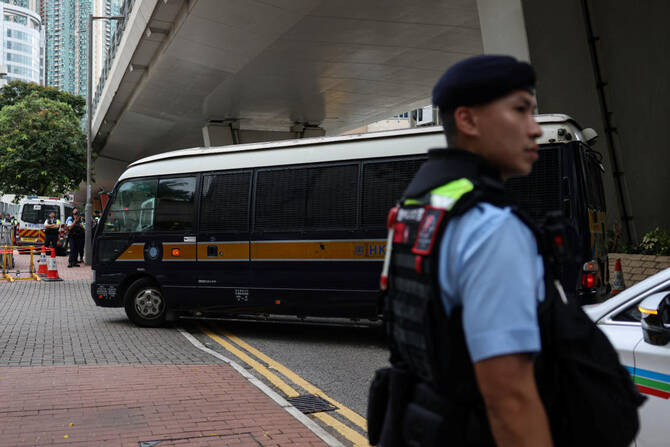
Dozens of police officers were deployed outside the West Kowloon court building on Monday morning as people queued to attend the hearing.
“They made a sacrifice... I hope they understand that Hongkongers have not forgotten them,” said a public hospital worker in his thirties surnamed Chow.
A 66-year-old retiree surnamed Chan said the case made him feel “helpless,” adding that fewer people were paying attention as court proceedings dragged on.
“I don’t expect any (positive) outcome, but I still want to support them.”
Prosecutors began Monday’s session by challenging the acquittal of lawyer Lawrence Lau, one of two people found not guilty in May 2024 from an original group of 47 accused.
Lau’s “overall conduct” showed that he was party to the conspiracy and he should be tried again because the lower court made the wrong factual finding, the prosecution argued.
Lau, representing himself, replied that the trial court’s findings should not be “casually interfered” with.
“… I have never advocated for the resignation of the chief executive, I have never advocated the indiscriminate vetoing of the financial budget,” Lau told the court, referring to core tenets of the alleged conspiracy.
Beijing has remolded Hong Kong in its authoritarian image after imposing a sweeping national security law in 2020 following months of huge, and sometimes violent, pro-democracy demonstrations.
Authorities arrested figures from a broad cross-section of the city’s opposition in morning raids in 2021, a group later dubbed the “Hong Kong 47.”
The group, aged between 27 and 69, included democratically elected lawmakers and district councilors, as well as unionists, academics and others with political stances ranging from modest reformists to radical localists.
They were accused of organizing or taking part in an unofficial primary election, which aimed to improve the chances of pro-democracy parties of winning a majority in the legislature.
The activists had hoped to force the government to accede to demands such as universal suffrage by threatening to indiscriminately veto the budget.
Three senior judges handpicked by the government to try security cases said the plan would have caused a “constitutional crisis.”


