


HAKKARI, Turkiye: Southeast Turkiye, where the army has battled Kurdish militants for decades, is not yet convinced that lasting peace is at hand.
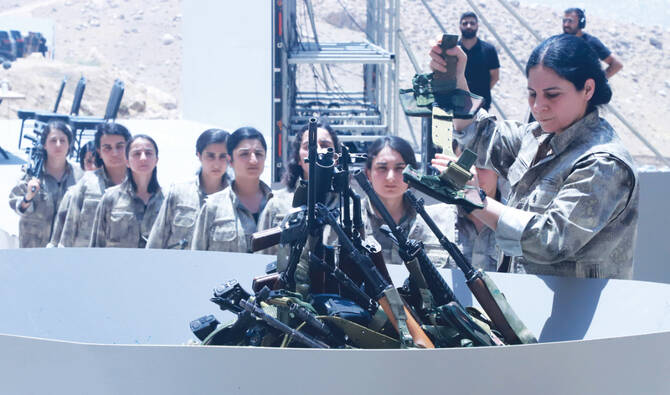
In a slickly managed ceremony recently held across the border in Iraq, members of the Kurdish rebel group PKK destroyed their weapons as part of a peace process underway with the Turkish state.
But on the streets and in the tea houses of Hakkari, a Kurdish-majority town some 50 kilometers from the Iraqi border, few people express much hope that the deadly conflict is over.
One tea drinker who was willing to speak asked not to be filmed. “We don’t talk about it,” he said.
The conflict has caused 50,000 deaths among civilians and 2,000 among soldiers, according to Turkiye’s President Recep Tayyip Erdogan.
Mehmet Duman, a local, said: “The state must take a step” to match the symbolic operation to destroy PKK weapons in Iraq.
“Turkiye has won,” Erdogan said Saturday, a day after the PKK’s symbolic destruction of weapons signaling the start of the disarmament process. “Eighty-six million citizens have won,” he added.
While he has opened a peace process with the PKK, or Kurdistan Workers’ Party, he has also continued his crackdown on opposition parties.
The government has arrested hundreds of members of the CHP, a social-democratic, secular party. The main opposition force to Erdogan, it is rising in the polls.
Those arrested include the mayor of Istanbul, Ekrem Imamoglu, the party’s likely candidate in the next presidential elections, and the mayors of other major cities who took power when CHP made major gains in March 2024 local elections.
Accused of “corruption,” they deny the charges against them. The crackdown has also hit opposition media outlets, such as the Sozcu channel.
On Saturday morning, before the plenary session of his AKP party, Erdogan sought to be reassuring.
“We know what we are doing. No one should worry, be afraid, or question anything. Everything we are doing is for Turkiye, for our future and our independence,” he insisted.
The PKK announced in May that it would disband and renounce armed conflict. The move came after PKK leader Abdullah Ocalan, who has been imprisoned on an island near Istanbul since 1999, urged his group in February to convene a congress, and formally disband and disarm.
Ocalan renewed his call in a video message broadcast on Wednesday, saying, “I believe in the power of politics and social peace, not weapons.”
The PKK issued a statement from the fighters who were laying down their weapons, saying that they had disarmed “as a gesture of goodwill and a commitment to the practical success” of the peace process.
“We will henceforth continue our struggle for freedom, democracy, and socialism through democratic politics and legal means,” the statement said.
Turkish parliamentary Speaker Numan Kurtulmus said that the initial disarmament step had proceeded “as planned,” but cautioned that the process was far from complete.
“There’s still a long way to go in collecting many more weapons,” Kurtulmus said. “What matters is ending the armed era in a way that ensures weapons are never taken up again.”
The official noted that the Turkish parliament was close to setting up a commission to oversee the peace process.
Devlet Bahceli, Erdogan’s nationalist ally who initiated the peace process, welcomed the ceremony, saying it marks “historic developments that signal the end of a dark era.”


