- FSDP annual report highlights booming fintech, capital market growth, and strengthened investor confidence
- Foreign investor holdings surge 501 percent since 2017, while financial literacy and inclusion gain ground
RIYADH: Saudi Arabia’s financial ecosystem reached a record SR1 trillion ($267 billion) in locally managed assets in 2024, marking a significant milestone in its transformation under Vision 2030.
This achievement, highlighted in the Financial Sector Development Program’s annual report, underscores the Kingdom’s accelerating shift toward a diversified, innovation-driven economy.
The Kingdom’s financial sector recorded exceptional growth in 2024, with fintech firms reaching 261, venture capital investment in the sector exceeding SR7.6 billion, and gross written premiums in insurance climbing to SR76.1 billion.
Saudi Finance Minister Mohammed Al-Jadaan, also chairman of the Financial Sector Development Program Committee, emphasized that the program continues to deliver on its promise of sustainable success.
He said the FSDP is building an economic future that solidifies Saudi Arabia’s regional and international standing while reflecting the rapid development across all sectors in this prosperous era.
The FSDP has implemented a wide range of reforms and initiatives to build a robust, diversified, and inclusive financial system. The program has helped to strengthen the Kingdom’s regional and global economic standing while enabling innovation, job creation, and investment growth.
Fintech emerged as a key success story in 2024, with the number of operating companies surpassing initial targets and contributing to the creation of over 11,000 direct jobs. The Saudi Central Bank licensed D360 Bank to begin operations, and electronic payments accounted for 79 percent of total retail transactions — underscoring the shift toward a cashless economy. The year also saw the launch of FinTech2024, the Kingdom’s first international fintech conference.
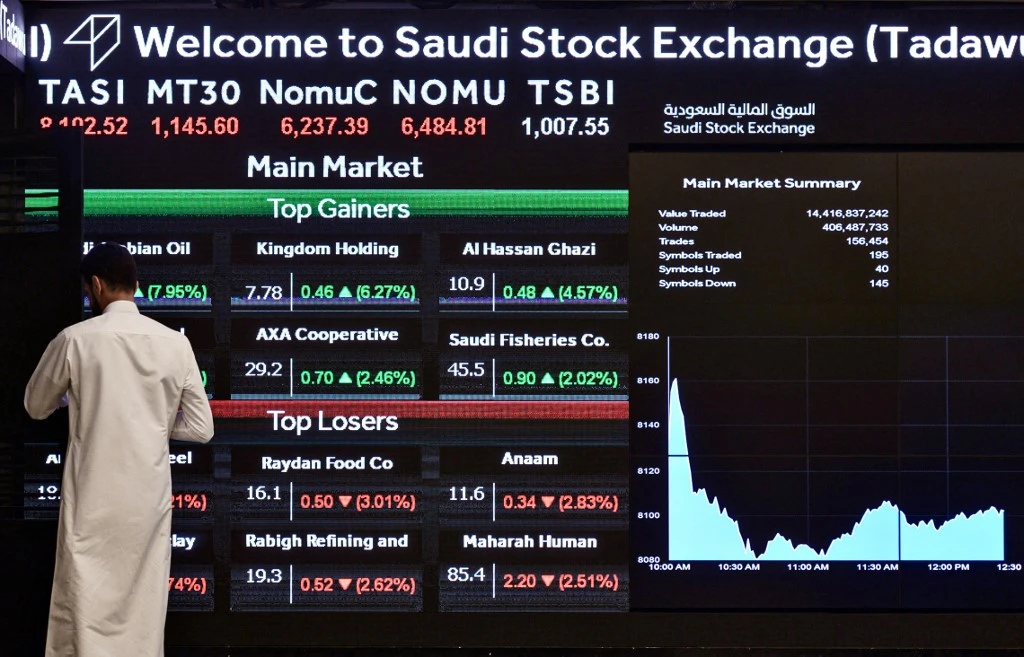
Capital markets continued their upward trajectory. With 44 new listings, the number of publicly traded companies reached 353. Locally managed assets grew 169 percent compared to 2017, reaching SR1 trillion, while foreign investor holdings jumped by 501 percent over the same period to SR420 billion.
Notable developments included the introduction of the TASI 50 index, single-stock options, Real Estate Investment Certificates, and the listing of Saudi ETFs in Tokyo, Shanghai, and Shenzhen. The Capital Market Authority also launched the Kingdom’s Green Finance Framework to encourage sustainable investment.
In the debt capital market, the CMA unveiled a strategic roadmap and issued the first license for an alternative trading system. The Kingdom successfully conducted its first international dollar bond issuance under the Government’s Global Bond Program, attracting approximately $30 billion in orders.
Meanwhile, the government introduced “Sah,” a savings product aimed at fostering a culture of personal saving. Credit rating agencies Moody’s, Fitch, and S&P issued upward revisions to Saudi Arabia’s sovereign credit ratings in response to the country’s fiscal discipline and financial reforms.
The insurance sector also posted strong performance. Gross written premiums rose 16.3 percent from 2023 to reach SR76.1 billion, while net profits increased by 12.5 percent to SR3.6 billion. The Insurance Authority mandated the Saudization of all insurance product sales roles and launched a Regulatory Sandbox to support startup innovation. The number of licensed InsurTech firms rose by 56 percent. New digital services included automated motor insurance, simplified claims processes, and TELEMATICS—a unified platform for tracking driver behavior.
The finance minister noted that the progress reflected in the report underscores the Kingdom’s broader development efforts under the leadership of King Salman and Crown Prince Mohammed bin Salman.
Support for small and medium enterprises remained a cornerstone of financial sector development. Saudi startups attracted SR2.8 billion ($750 million) in venture capital, maintaining the Kingdom’s lead in the MENA region. The share of bank credit to SMEs increased from 8.4 percent in late 2023 to 9.4 percent by the end of 2024.
The SME Bank disbursed over SR1.5 billion in financing to 1,029 enterprises, while the Kafalah program facilitated SR107.2 billion in financing guarantees—advancing the Vision 2030 target for SMEs to contribute 35 percent of GDP.
On the regulatory front, the FSDP advanced significant legislative reforms to enhance transparency, competitiveness, and investor protection. Updates included new principles for finance and real estate refinance companies, revisions to debt crowdfunding rules, and regulatory changes to real estate financing. The CMA also approved omnibus accounts and relaxed conditions for debt offerings, further liberalizing capital markets.
Financial literacy and capability development remained a key focus. The Financial Academy trained more than 59,000 participants through its programs since inception. The third edition of the Gulf Smart Investor Award continued to raise awareness of personal finance, while the “Malee” program began measuring and promoting financial literacy among children aged 8 to 12.
Looking ahead, the Financial Sector Development Program aims to build on this momentum in 2025 by aligning with global standards, expanding financing options, increasing financial inclusion, and deepening capital market participation. As outlined in its annual report, the FSDP remains committed to fostering innovation, enhancing regulatory efficiency, and driving sustainable growth to realize the full ambitions of Saudi Vision 2030.