MWL introduces updated strategy and framework

1 / 5
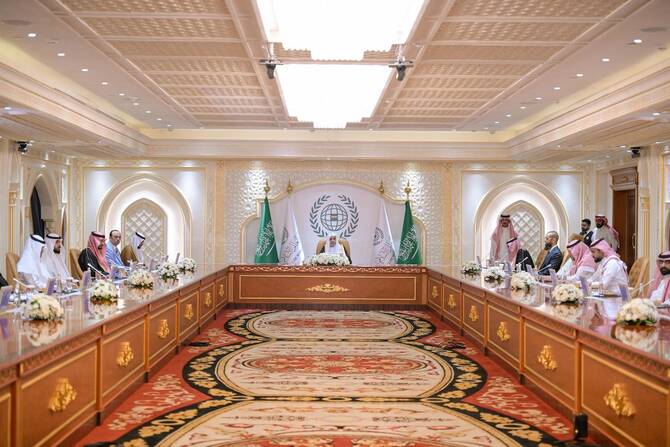
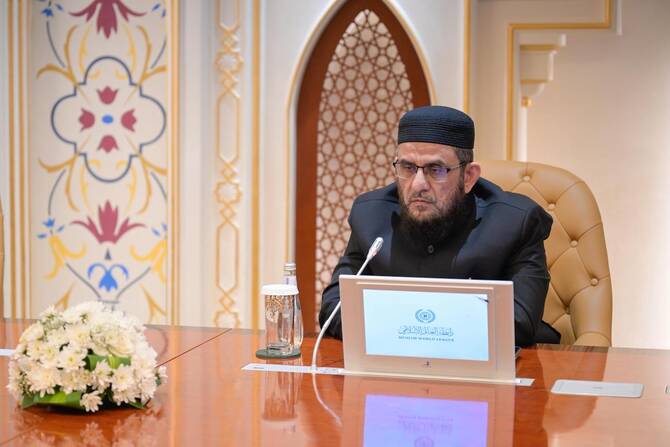
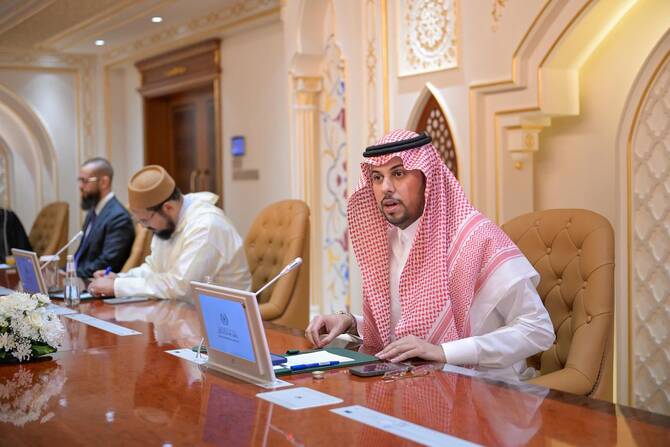
The MWL event, held at the league’s headquarters in Makkah, was attended by prominent Islamic figures, according to a recent report. (Supplied)
2 / 5
The MWL event, held at the league’s headquarters in Makkah, was attended by prominent Islamic figures, according to a recent report. (Supplied)
3 / 5
The MWL event, held at the league’s headquarters in Makkah, was attended by prominent Islamic figures, according to a recent report. (Supplied)
4 / 5
The MWL event, held at the league’s headquarters in Makkah, was attended by prominent Islamic figures, according to a recent report. (Supplied)
5 / 5
The MWL event, held at the league’s headquarters in Makkah, was attended by prominent Islamic figures, according to a recent report. (Supplied)
Short Url
Updated 13 July 2025
Follow

MWL introduces updated strategy and framework

  • The event, held at the league’s headquarters in Makkah, was attended by prominent Islamic figures
  • Modernization initiative reflects league’s commitment to adapting to the evolving global landscape

MAKKAH: Muslim World League Secretary-General Dr. Mohammed bin Abdulkarim Al-Issa presided over the inauguration of the league’s enhanced strategic plan and updated governance framework.

The event, held at the league’s headquarters in Makkah, was attended by prominent Islamic figures, according to a recent report.

This comprehensive modernization initiative reflects the league’s commitment to adapting to the evolving global landscape and expanding the scope of its mission.

The plan particularly emphasizes expanding international programs to promote the “Charter of Makkah” and the “Charter for Building Bridges Between Islamic Schools of Thought and Sects.”

Al-Issa said the initiative advances the league’s vision, mission, goals, and values through a forward-looking strategy and governance model.

He also reaffirmed that the league’s founding principles, as set out in its statutes, remain steadfast and continue to guide its efforts to develop and modernize in service of the global Muslim community.


Hail’s Madafa guesthouses open doors to friends and strangers throughout Ramadan

Updated 20 sec ago
Follow

Hail’s Madafa guesthouses open doors to friends and strangers throughout Ramadan

  • There are many madafas in Hail, which is the home of Hatem Al-Tai, the historical ruler of the area whose name has become a byword in Arabic for generosity
  • Events held during the month include group iftar dinners, guest speakers who talk about Ramadan values, prayer sessions, and various charitable initiatives

RIYADH: Madafas, or guesthouses, in the northern Saudi city of Hail begin to welcome visitors of all ages and walks of life after Isha prayer during Ramadan.

Many of them may not even be invited, yet they attend knowing that the host’s doors are open to everyone.

There are many madafas in Hail, which is the home of Hatem Al-Tai, the historical ruler of the area whose name has become a byword in Arabic for generosity.

Among the most prominent of them are the madafas of Al-Na’am and Al-Ebedah.

The gate of the madafa is typically large and remains open most hours of the day, except during Ramadan when it opens just before the Maghrib afternoon prayer and remains open until the Fajr prayer in the early hours of the morning.

Supervisor Mohammed Al-Na’am spoke to Arab News about his preparations for hosting guests during the holy month.

He has set up soft lighting and a special corner for the Qur’an and Dhikr (remembrance) so that the madafa is perfectly prepared to offer comfort and tranquility, welcoming guests into a distinctive Ramadan atmosphere.

He believes that the madafa contributes to promoting a spirit of solidarity by being open to everyone without discrimination and encouraging simple initiatives such as donating, helping those in need or adopting a collective charitable cause.

Events held during the month include group iftar dinners, guest speakers who talk about Ramadan values, prayer sessions, and various charitable initiatives.

When the weather is mild, guests sit in the courtyard around the fire on wooden chairs adorned with traditional cotton-stuffed fabric.

In cases of extreme cold or hot weather, guests sit on floor cushions inside a richly-decorated majlis or a large tent.

The guest usually eats one or two dates, after which the coffee server approaches, offering a cup of coffee filled enough for about three sips.

It is considered rude for a guest to refuse coffee, and it is socially unacceptable to stop after just one cup.

Guests must drink at least two cups, and when they have finished, they shake the cup to indicate that they have had enough.

If the visitor is a stranger to the host’s family, the host will insist that they drink more coffee, and the guest has the choice to accept or decline.

The coffee maker then returns to his secluded spot at the end of the majlis behind several coffee pots, teapots, and at least one plate of dates.

He then returns carrying the teapot and an empty teacup until he approaches the guest, allowing the guest to refuse the tea or remain silent, indicating his agreement to drink the tea.

The walls of the madafa are usually decorated with pictures of the host’s ancestors, and the hall is usually decorated with motifs reflecting the local Hail character.

Those present make sure that the guest, especially a stranger, sits next to the marka or armrest so he may recline comfortably.

During Ramadan, it is customary for the conversation to focus on spiritual topics, charity, and stories of patience and concern for the poor, the needy and those who are struggling to pay their debts.