

Pakistani man deported after boarding wrong flight to Jeddah serves legal notice to airline

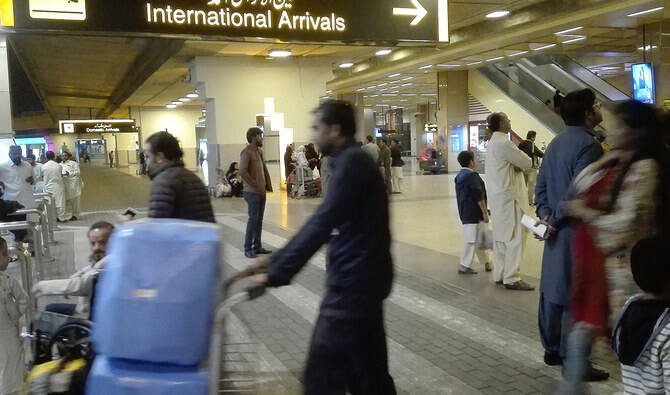
Passengers walk after their arrival at the Jinnah International Airport in Karachi, Pakistan, on January 31, 2020. (AFP/File)
Short Url
Updated 13 July 2025
Follow

Pakistani man deported after boarding wrong flight to Jeddah serves legal notice to airline

  • Civil aviation regulator urged to impose ‘heavy fine’ on the private airline over security lapse
  • Malik Shahzain Ahmed ‘mistakenly’ boarded Jeddah flight instead of Lahore–Karachi route

KARACHI: A Pakistani man who was mistakenly flown to Saudi Arabia earlier this week has issued a legal notice to Air Sial, seeking compensation for “gross negligence,” his lawyer said on Saturday.

Malik Shahzain Ahmed, a resident of Karachi, was scheduled to fly from Lahore to Karachi on July 8 on the private airline’s flight PF-146. However, he boarded an international flight to Jeddah without any visa or passport and was subsequently detained and deported by Saudi immigration authorities.

A legal notice sent by Ahmed’s counsel to Air Sial’s chief executive reads the airline’s “gross dereliction of duty, reckless conduct and operational failure” had led to the wrongful boarding of his client on the international flight.

“We have served the airline a notice, and if they fail to compensate my client, we will file a petition,” Advocate Muhammad Nawaz Dahri told Arab News.

The legal notice says Ahmed was denied assistance by the airline and subjected to humiliation, distress. He also faced severe mental trauma and had to purchase another ticket to return to Karachi.

The notice accuses the airline of violating the Sindh Consumer Protection Act, 2014, citing “defective” service, lack of identity verification and “misleading representations regarding safety and professionalism.”

It also alleges breaches of Pakistan’s Civil Aviation Rules, 1994, the Pakistan Immigration Ordinance, 1979, and international air travel conventions, including the Montreal Convention of 1999.

“Your airline’s failure to perform this basic due diligence endangered passenger security and violated air travel norms,” the notice added.

In a statement on Friday, the Pakistan Airport Authority said it had taken notice of the lapse and written letters to the civil aviation regulator and the station manager.

“In the letter, the civil aviation regulator has been requested to impose a heavy fine on the airline that is guilty of negligence,” PAA spokesman Saifullah, who goes by a single name, told Arab News.

In a video clip circulating online, Ahmed said he went to Lahore airport to board the Karachi-bound flight on July 8 but “mistakenly” sat in the Jeddah-bound flight after collecting his boarding pass.

“After two hours, I asked [myself], ‘This plane doesn’t seem to be landing,’” he said. “Then I got to know that I had boarded the wrong plane.”

The legal notice demands a written response within two days alongside compensatory damages.

It warns of legal proceedings if the airline fails to comply, including a constitutional petition and complaints to Pakistan’s aviation and human rights authorities.

Air Sial is yet to comment publicly on the matter.


Pakistan warns of strict action against hoarding petroleum products amid Iran crisis

Updated 4 sec ago
Follow

Pakistan warns of strict action against hoarding petroleum products amid Iran crisis

  • OGRA says reports indicate “certain elements” may attempt to hoard petroleum products for profiteering
  • Oil and Gas Regulatory Authority says Pakistan’s petroleum reserves stocks adequate, no need for panic buying

ISLAMABAD: Pakistan’s Oil and Gas Regulatory Authority (OGRA) warned on Thursday that the government will take strict action against anyone found illegally hoarding petroleum products for profiteering, amid fears of a shortage of energy supplies due to the ongoing conflict in the Middle East. 

Pakistan has formed a government committee to monitor the country’s stock of petroleum products amid ongoing hostilities between the US and Israel against Iran. The committee is also reviewing supply chains, price movements and assessing broader implications for inflation, external accounts, and financial stability due to the crisis. 

OGRA has repeatedly urged that Pakistan’s stock of petroleum products is adequate and urged the masses not to take part in panic buying. On Wednesday, it allowed oil marketing companies to regulate supplies to their retail outlets so as to discourage hoarding.

“It has been emphasized that strict action will be taken against any individual or entity found involved in illegal hoarding or storage of petroleum products at unauthorized locations,” OGRA spokesperson Imran Ghaznavi said in a statement.

“Particularly at places other than duly licensed oil depots and retail outlets of Oil Marketing Companies (OMCs).”

The OGRA spokesperson said reports indicate certain elements may attempt to hoard petroleum products for profiteering. It said that provincial chief secretaries have been requested to direct deputy commissioners to conduct inspections in their jurisdictions. 

“Any premises found involved in illegal storage of petroleum products will be sealed and action will be taken in accordance with the law,” OGRA warned. 

The spokesperson said OGRA was monitoring energy supplies in Pakistan, adding that inspections are being conducted at oil depots and retail outlets to ensure smooth supply of petroleum products.

“The public is advised not to pay attention to rumors and to continue normal consumption patterns, as the petroleum supply situation in the country remains stable,” it added. 

Pakistan this week asked Saudi Arabia to help Islamabad secure crude oil supplies through the Red Sea port of Yanbu, as the Strait of Hormuz’s closure threatens the country’s energy supply routes.

Pakistan fears higher global energy prices could lead to consumers paying more for petrol and shelling out more for groceries and other goods, at a time when many are already feeling the impacts of inflation.

Pakistan warns of strict action against hoarding petroleum products amid Iran crisis

OGRA says reports indicate “certain elements” may attempt to hoard petroleum products for profiteering

Oil and Gas Regulatory Authority says Pakistan’s petroleum reserves stocks adequate, no need for panic buying

Arab News Pakistan 

Islamabad: Pakistan’s Oil and Gas Regulatory Authority (OGRA) warned on Thursday that the government will take strict action against anyone found illegally hoarding petroleum products for profiteering, amid fears of a shortage of energy supplies due to the ongoing conflict in the Middle East. 

Pakistan has formed a government committee to monitor the country’s stock of petroleum products amid ongoing hostilities between the US and Israel against Iran. The committee is also reviewing supply chains, price movements and assessing broader implications for inflation, external accounts, and financial stability due to the crisis. 

OGRA has repeatedly urged that Pakistan’s stock of petroleum products is adequate and urged the masses not to take part in panic buying. On Wednesday, it allowed oil marketing companies to regulate supplies to their retail outlets so as to discourage hoarding.

“It has been emphasized that strict action will be taken against any individual or entity found involved in illegal hoarding or storage of petroleum products at unauthorized locations,” OGRA spokesperson Imran Ghaznavi said in a statement.

“Particularly at places other than duly licensed oil depots and retail outlets of Oil Marketing Companies (OMCs).”

The OGRA spokesperson said reports indicate certain elements may attempt to hoard petroleum products for profiteering. It said that provincial chief secretaries have been requested to direct deputy commissioners to conduct inspections in their jurisdictions. 

“Any premises found involved in illegal storage of petroleum products will be sealed and action will be taken in accordance with the law,” OGRA warned. 

The spokesperson said OGRA was monitoring energy supplies in Pakistan, adding that inspections are being conducted at oil depots and retail outlets to ensure smooth supply of petroleum products.

“The public is advised not to pay attention to rumors and to continue normal consumption patterns, as the petroleum supply situation in the country remains stable,” it added. 

Pakistan this week asked Saudi Arabia to help Islamabad secure crude oil supplies through the Red Sea port of Yanbu, as the Strait of Hormuz’s closure threatens the country’s energy supply routes.

Pakistan fears higher global energy prices could lead to consumers paying more for petrol and shelling out more for groceries and other goods, at a time when many are already feeling the impacts of inflation.