

Pakistan’s climate minister orders action over black bear killing in northern region

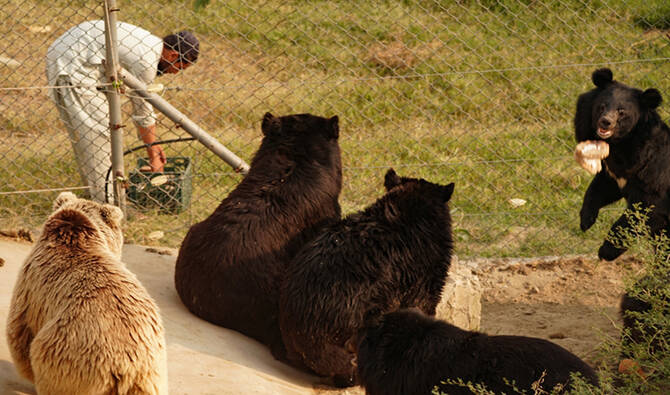
This file photo, posted on October 31, 20219, shows Himalayan bears feeding at the Balkasar Bear Sanctuary in Chakwal, Pakistan. (Photo courtesy: Indus Caravan Tours & Treks)
Short Url
Updated 12 July 2025
Follow

Pakistan’s climate minister orders action over black bear killing in northern region

  • Video of the incident shows men pushing an unconscious bear down a rocky slope
  • Dr. Musadik Malik calls such acts of violence against wildlife ‘utterly unacceptable’

ISLAMABAD: Federal Minister for Climate Change Dr. Musadik Malik on Saturday ordered strict action against a group of people who killed a black bear in the northern region of Gilgit-Baltistan, according to an official statement, saying such brutality cannot be overlooked under any circumstances.

A video of the incident circulating on social media shows three individuals pushing the unconscious bear down a rocky mountainside. Authorities have already lodged a police complaint and are working with the local community to ensure the accused are brought to justice.

“Such acts of violence against wildlife are utterly unacceptable and will not be allowed to continue under any circumstances,” an official statement quoted Malik as saying.
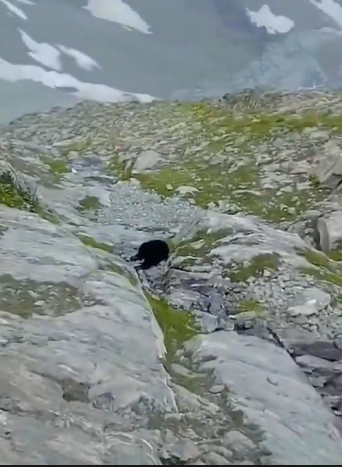


This screengrab from a viral video shows a Himalayan black bear being thrown off a cliff after reportedly being tortured and killed in Gilgit-Baltistan, Pakistan. (APP/Screengrab)

It added he had “directed the Wildlife Management Boards to take strict and immediate action against those responsible.”

The minister also stressed his commitment to protecting Pakistan’s wildlife and enforcing conservation laws across all regions, adding that community engagement was critical to prevent such incidents.

Acts of animal cruelty are not rare in Pakistan. In June 2024, a landlord in Sanghar district, Sindh, ordered the brutal amputation of a camel’s leg for straying into his fields. Days later, another mutilated camel was found dead in the region with its legs amputated.

Animal rights activists have also condemned practices like bear dancing, where the animals are trained by being forced to stand on hot metal plates, and bear baiting, a blood sport in which the chained bear is attacked by dogs for public spectacle.

Though officially banned, both practices have been reported in parts of the country over the years.


Pakistan telecom authority approves PTCL’s $400 million deal to acquire Telenor

Updated 6 sec ago
Follow

Pakistan telecom authority approves PTCL’s $400 million deal to acquire Telenor

  • Deal will see PTCL’s mobile arm Ufone merge with Telenor Pakistan to create second-largest mobile operator
  • Regulator says will closely monitor transaction, urges both companies to ensure continuity, quality of services 

ISLAMABAD: The Pakistan Telecommunication Authority (PTA) announced this week it has granted a no objection certificate to the Pakistan Telecommunication Company Limited (PTCL) to push ahead with its $400 million deal to acquire Telenor Pakistan. 

The major acquisition, which was announced earlier this year, will merge PTCL’s mobile arm Ufone with Telenor Pakistan to create the country’s second-largest mobile operator.

The development takes place as Pakistan’s telecom industry faces rising costs and regulatory pressures.

 “PTA evaluated the transaction’s impact on market competition and consumer interests, and consulted relevant government bodies to ensure full compliance with statutory requirements,” the authority said in a statement issued late Saturday. 

The PTA said both companies must ensure continuity and quality of services to consumers, urging them to uphold all license obligations during the transaction. 

“PTA will closely monitor the process to safeguard consumer rights and maintain a competitive and forward-looking telecom sector,” it added. 

PTCL had earlier said the acquisition will improve customer experience, enhance network quality and coverage, while enabling the whole sector to achieve greater efficiency, build resilient infrastructure and create a more competitive landscape. 

The deal is expected to reshape Pakistan’s telecom landscape, which has four major operators but remains under pressure from thin margins, high spectrum fees and heavy capital expenditure needs.