

Saudi money supply surges to $824bn as savers embrace high-interest deposits

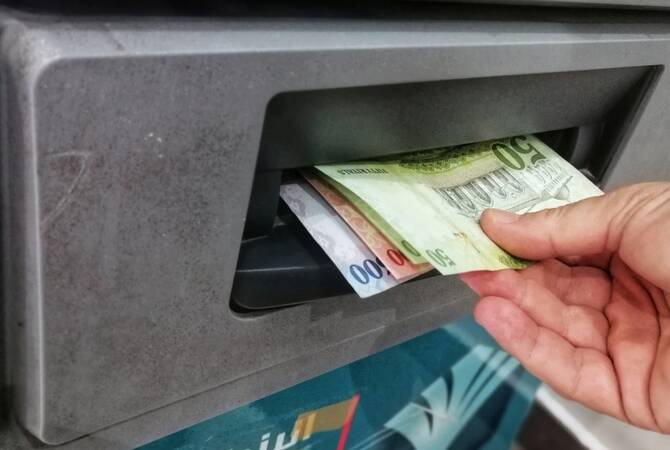
Savers are increasingly locking their money into term deposits to take advantage of higher interest rates. Shutterstock
Short Url
Updated 10 July 2025
Follow

Saudi money supply surges to $824bn as savers embrace high-interest deposits

  • Time and savings deposits accounted for 35.16%
  • Rate relief expected to continue into 2025

RIYADH: Saudi banks’ money supply M3 reached SR3.09 trillion ($824.3 billion) in May, rising about 9.39 percent from the same period last year. 

According to data by the Saudi Central Bank, also known as SAMA, time and savings deposits accounted for 35.16 percent of the total, slightly below the 16-year peak of 35.2 percent recorded in March, but still representing the highest share since 2009. 

The expansion has been driven by a marked shift in deposits. Savers are increasingly locking their money into term deposits to take advantage of higher interest rates. 

These interest-bearing accounts have grown at the fastest pace among all money categories, reflecting depositors’ preference for higher returns amid a high-rate environment. Term deposits offer better interest in exchange for keeping funds for a fixed period, and therefore tend to gain popularity when interest rates are elevated. 

Despite this shift, demand deposits — funds in checking accounts that can be withdrawn on demand — remain the single largest component of the money supply, at around SR1.5 trillion, or roughly 48.6 percent of M3. 

That share has edged down from over 49 percent a year ago as more savers move into interest-yielding options. Meanwhile, other quasi-money deposits, such as foreign currency accounts and certain short-term instruments, represent roughly 8 percent or SR250 billion of the total, and physical currency in circulation outside banks adds about SR246 billion, according to SAMA data. 

As the US Federal Reserve embarked on aggressive rate hikes over the past two years to curb inflation, SAMA mirrored those moves to maintain the currency peg. This pushed Saudi interest rates to multi-year highs, peaking around 6 percent late last year. 

With inflation pressures subsequently easing, the US Fed began to loosen policy, implementing rate cuts totaling 100 basis points by the end of 2024. 

The rate relief was expected to continue into 2025. Indeed, by January, signs emerged that the deposit mix was starting to rebalance, as demand deposits began regaining ground once benchmark rates had come off their peak, according to SAMA data. 

Any further rate cuts were abruptly put on hold amid renewed global inflation concerns. Speaking earlier this month at the European Central Bank’s annual forum in Sintra, Portugal, Federal Reserve Chair Jerome Powell said the Fed would probably be in a position to begin cutting rates were it not for the inflationary impact of President Donald Trump’s new tariffs, according to Bloomberg. 

Central bankers expect Trump’s import tariffs to lift inflation, so they have adopted a cautious “wait-and-see” stance before resuming any rate reductions. 

As a result, the Fed has kept rates steady in recent months, after having trimmed about 100 basis points late last year, with the risk of inflationary pressure from tariffs delaying further easing. 

Given that SAMA typically mirrors Fed decisions to defend the riyal’s dollar peg, this pause in US rate cuts has likewise led the Saudi central bank to hold its rates, keeping domestic borrowing costs elevated. 

Banks, in turn, have been competing for deposits by offering better returns on time accounts, a strategy to shore up liquidity while credit demand stays strong. 

Looking ahead, officials and analysts foresee an eventual turning point in the interest rate cycle. Goldman Sachs, for example, now projects that the Fed will begin cutting rates later in 2025, delivering three quarter-point rate cuts by the end of the year, up from two cuts in its earlier forecast, according to a July article by Bloomberg. 

Until that pivot materializes in interest rates, Saudi banks and their customers are capitalizing on the elevated returns offered by term deposits — a trend that has pushed savings deposits to record highs and fundamentally altered the composition of the Kingdom’s money supply. 


Cruise Saudi strengthens global ties as Celestyal makes maiden calls to Jeddah

Updated 10 December 2025
Follow

Cruise Saudi strengthens global ties as Celestyal makes maiden calls to Jeddah

JEDDAH: Saudi Arabia is accelerating its push to become a global cruise hub, with Cruise Saudi — a wholly owned Public Investment Fund subsidiary — expanding international partnerships to draw more travelers to the Kingdom’s Red Sea and Arabian Gulf ports.

The latest milestone came as award-winning Greek cruise line Celestyal completed its first-ever calls to Jeddah, signaling rising global interest in Saudi Arabia’s cultural and natural attractions.

The visits form part of Cruise Saudi’s strategy to build a year-round cruise ecosystem that supports tourism growth, boosts local supply chains, and contributes to the Kingdom’s broader economic diversification.

Three UNESCO World Heritage Sites — AlUla, Jeddah Historic District, and Al-Ahsa Oasis — are now accessible by sea, with curated shore excursions designed to deepen visitor engagement.

Cruise Saudi aims to welcome 1.3 million cruise passengers annually by 2035, creating 50,000 direct and indirect jobs and positioning the Kingdom as a premier international cruise destination.

The 1,360-passenger Celestyal Discovery arrived in Jeddah on Dec. 5, following the 1,260-passenger Celestyal Journey, which made its maiden call on Nov. 29. The Journey concluded a seven-night Athens–Jeddah itinerary with stops in Turkiye and Egypt, marked by a traditional plaque exchange ceremony attended by Cruise Saudi executives, port officials and Celestyal representatives.

Passengers were welcomed with traditional Saudi hospitality and toured Jeddah’s historic Al-Balad district, bustling souks, and cultural sites. Some Muslim travelers also visited Makkah to perform Umrah.

“We are honored to celebrate our maiden call in Jeddah alongside our partners at Cruise Saudi, marking the beginning of a long and effective relationship,” said Lee Haslett, chief commercial officer at Celestyal.

He added that Jeddah’s role as “the cultural heart of Saudi Arabia” presents strong potential for cruise tourism.

Barbara Buczek, chief destination experiences officer at Cruise Saudi, told Arab News: “This maiden Red Sea sailing highlights the strong appeal of the region and aligns with Cruise Saudi's commitment to developing seamless, high-quality cruise experiences in Saudi Arabia.”

She noted that Celestyal’s expanded itineraries reflect rising demand for distinctive Red Sea and Arabian Gulf voyages.

Since its launch in 2021, Cruise Saudi has activated five cruise ports, introduced Aroya Cruises, the Kingdom’s first homegrown cruise line, and established Aman at Sea, an ultra-luxury JV with Aman Group set to launch in 2027. The company manages the full value chain — from terminals and berths to curated excursions — and has already welcomed more than 600,000 passengers of over 120 nationalities.

Celestyal, which carries more than 140,000 passengers annually across two refurbished vessels, is aligning with the Kingdom’s Vision 2030 ambition to transform coastal tourism. After departing Jeddah, both Celestyal ships continued to Abu Dhabi to begin the company’s second Arabian Gulf season.

Aroya Cruises has also launched a new seasonal program featuring stops in Mykonos, Athens, Crete, and coastal cities in Turkiye, expanding on a successful inaugural season that attracted over 95,000 guests.

The growing activity underscores Saudi Arabia’s emergence as a world-class cruise destination, supported by modern infrastructure, expanding routes, and experiences that highlight the Kingdom’s culture, heritage and hospitality.