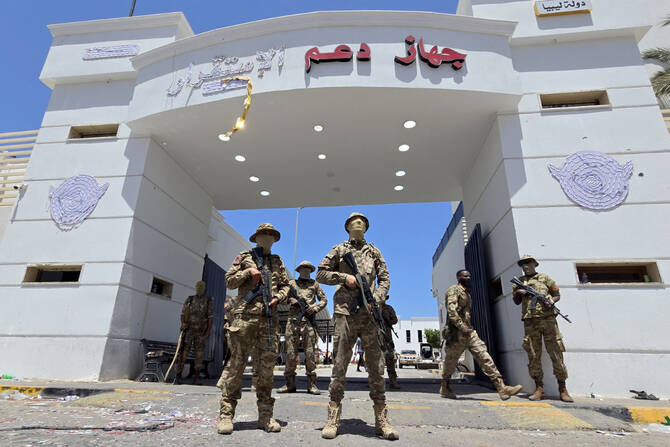
TRIPOLI: The UN Mission in Libya urged on Wednesday all Libyan parties to avoid actions or political rhetoric that could trigger escalation or renewed clashes in Tripoli, following reports of continued military buildup in and around the city.
Libyan Prime Minister Abdulhamid Al-Dbeibah ordered in May the dismantling of what he called irregular armed groups, which was followed by Tripoli’s fiercest clashes in years between two armed groups that killed at least eight civilians.
“The Mission continues its efforts to help de-escalate the situation and calls on all parties to engage in good faith toward this end ... Forces recently deployed in Tripoli must withdraw without delay,” the UN Mission said on social media.
A Tripoli-based Government of National Unity under Al-Dbeibah was installed through a UN-backed process in 2021 but the Benghazi-based House of Representatives no longer recognizes its legitimacy.
Libya has had little stability since a 2011 NATO-backed uprising ousted longtime autocrat Muammar Qaddafi. The country split in 2014 between rival eastern and western factions, though an outbreak of major warfare paused with a truce in 2020.
While eastern Libya has been dominated for a decade by commander Khalifa Haftar and his Libyan National Army, control in Tripoli and western Libya has been splintered among numerous armed factions.


![]()

UN mission in Libya urges immediate de-escalation in Tripoli
Short Url
https://arab.news/cwbzm
UN mission in Libya urges immediate de-escalation in Tripoli
- Call follows reports of continued military buildup in and around the capital city
- Libya has had little stability since a 2011 NATO-backed uprising ousted longtime ruler Muammar Qaddafi


Latest updates


© 2026 SAUDI RESEARCH & PUBLISHING COMPANY, All Rights Reserved And subject to Terms of Use Agreement.