

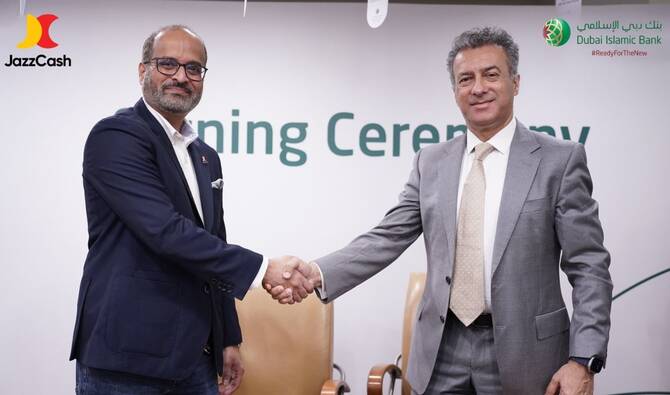

KARACHI: Dubai Islamic Bank Pakistan (DIBPL) and JazzCash, Pakistan’s largest mobile wallet provider, have partnered to streamline inward remittances and expand digital payment solutions for the country’s growing freelance economy, the two companies said in a joint statement on Tuesday.
Under a Memorandum of Understanding signed in Karachi, DIBPL and JazzCash will enable international home remittances to be deposited directly into JazzCash mobile wallets through DIBPL’s global network. The collaboration will also focus on developing customized financial products for freelancers in Pakistan.
“This partnership with JazzCash is motivated by our commitment to deliver inclusive and innovative financial solutions,” Muhammad Ali Gulfaraz, CEO of DIBPL, said in a statement.
“By combining our international and domestic scale with JazzCash’s extensive last-mile digital reach to millions of recipients, we aim to make remittances and digital transactions more accessible, secure, and aligned with the needs of a diverse customer base.”
JazzCash, a subsidiary of Jazz and a key player in Pakistan’s digital payments sector, has over 48 million registered users, according to Mobilink Microfinance Bank. It already serves over 25 percent of the country’s 2.3 million freelancers, according to company estimates.
“With over a quarter of Pakistan’s freelancers already relying on JazzCash for their payments, this partnership with DIBPL allows us to deepen our impact and build tailored solutions for a rapidly growing segment of the digital economy,” said Murtaza Ali, President of JazzCash.
“Together, we are enabling more seamless cross-border transactions, particularly for freelancers who need fast, secure, and Shariah-compliant access to global payments.”
Pakistan’s Islamic banking sector has expanded rapidly over the past decade, now accounting for nearly 20 percent of the country’s banking assets, according to the State Bank of Pakistan. The combination of Shariah-compliant banking and mobile financial services has created new avenues for financial inclusion, particularly among unbanked populations.
The country also ranks among the top five recipients of remittances in South Asia, with overseas Pakistanis sending home over $27 billion annually. However, informal channels and limited access to formal banking continue to hinder financial inclusion.
With an increasing number of Pakistanis working as freelancers and remote workers for global clients, especially in IT, digital marketing and content creation, there is growing demand for reliable, fast, and regulatory-compliant payment solutions.
Partnerships like the one announced Tuesday aim to address these gaps by integrating formal financial services with digital platforms, the firms said, adding that the collaboration reflects their commitment to advancing Pakistan’s digital economy while remaining within a Shariah-compliant and regulatory-compliant framework.


