WASHINGTON: Donald Trump has shrugged off Elon Musk’s plans for a new political party as “ridiculous” — but the announcement underscored the threat the disaffected former ally poses to US Republicans defending paper-thin congressional majorities.
Musk’s weekend launch of the “America Party” came in the wake of Trump signing into law a sprawling domestic policy bill that the tech mogul has slammed over estimates that it will balloon the deficit.
Musk has been light on policy detail, but is expected to target a handful of House and Senate seats in next year’s midterm elections where the sitting Republican voted for Trump’s bill after preaching fiscal responsibility.
“Elon Musk’s America Party is a wild card that could upend the midterms in 2026, particularly for Republicans,” said political analyst Matt Shoemaker, a former Republican congressional candidate and an ex-intelligence officer.
“With bare majorities in Congress, the Republicans should be worried.”
Musk, the world’s richest person, had teased the idea of a new party for weeks, running an informal social media poll in June that showed 80 percent support among 5.6 million respondents.
Unlike previous third parties, his would have almost limitless resources, and a talisman with a large constituency of young American men who see him as a maverick genius and a superstar.
“Musk’s brand appeals to disaffected independents and younger, tech-savvy voters who might otherwise break for Republicans in swing districts,” Shoemaker told AFP.
With a personal wealth estimated at $405 billion, Musk has already demonstrated that he is willing to spend big on politics, lavishing $277 million on Trump’s 2024 campaign.
Yet a more recent foray into Wisconsin politics — he spent $20 million only to see his candidate for the state supreme court lose handily — has underlined the limits of wealth and celebrity in politics.
And then there is the political difficulty of building support in the American heartland, among voters who are not part of Musk’s Silicon Valley “tech bro” bubble.
Time magazine’s 2021 Person of the Year was once liked by a broad cross-section of Americans, but he saw his numbers plunge after joining the Trump administration as the president’s costcutter-in-chief.
Musk’s net favorability in the most recent rating published by Nate Silver, one of the most respected US pollsters, is underwater at -18.1, compared with a slightly less subaquatic -6.6 for Trump.
“While you don’t want to paint with too broad a brush, the Republican base and MAGA movement are fairly inseparable in today’s political climate,” said Flavio Hickel, associate professor of political science at Washington College in Maryland.
“And their support for Trump has been unwavering despite recent controversies. It’s hard to imagine any political project associated with Musk siphoning off votes from individuals who approve of Donald Trump.”
While multiple Republicans and Democrats have switched to independent, wins for third parties have been rare in modern US history.
The Conservative Party of New York State in the 1970s and the Farmer-Labour Party in the 1930s are the only minor parties to win Senate seats in the last century.
Smaller parties saw more success in the House in the early 20th century but have only won one seat since the 1950s.
AFP spoke to multiple analysts who pointed to the many hurdles thrown in front of third-party candidates trying to get onto the ballot in a system designed to favor the status quo.
These include minimum signature requirements, filing fees and other onerous state-specific regulations on age, residency and citizenship.
“Remember in early 2024 the so-called ‘No Labels’ party that was going to chart a middle course for the 2024 elections?” said veteran political strategist Matt Klink.
“They fizzled out in epic fashion.”
Analysts agree that winning seats in Congress may be a stretch, but say Musk can inflict pain on Trump by syphoning votes from vulnerable sitting Republicans or throwing cash at primary opponents of the president’s preferred candidates.
“Elon’s party won’t win seats, but it could cost Republicans plenty,” said Evan Nierman, the founder and CEO of global crisis PR firm Red Banyan.
“In tight districts, even a few points siphoned off from the right could flip control.”


![]()

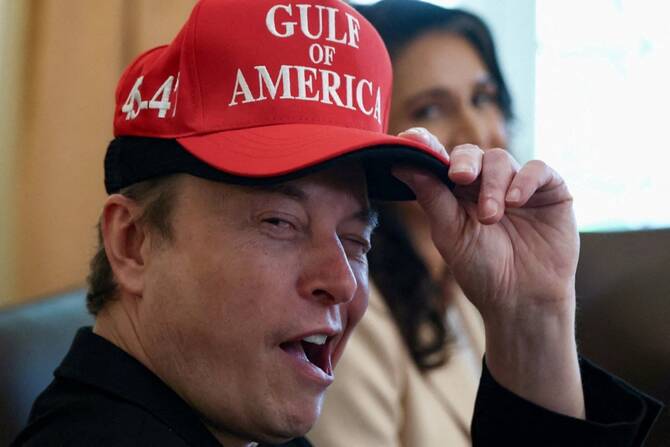
Even without wins, Musk’s party may be threat to Trump: analysts
Short Url
https://arab.news/wxguv
Even without wins, Musk’s party may be threat to Trump: analysts
- Musk, the world’s richest person, had teased the idea of a new party for weeks


Latest updates




Recommended


© 2026 SAUDI RESEARCH & PUBLISHING COMPANY, All Rights Reserved And subject to Terms of Use Agreement.