RIYADH: As Riyadh sizzles under peak summer heat, residents are turning to the city’s new metro system for a faster, cooler way to get around, proving that public transport can thrive, even when temperatures soar.
Arab News spoke to Riyadh residents about why the summer sun is no issue when it comes to commuting.
For the past couple of months, Rashid Alikhan has opted to use the metro to get to work, hopping on at SABIC Station and getting off at King Abdullah Financial District.
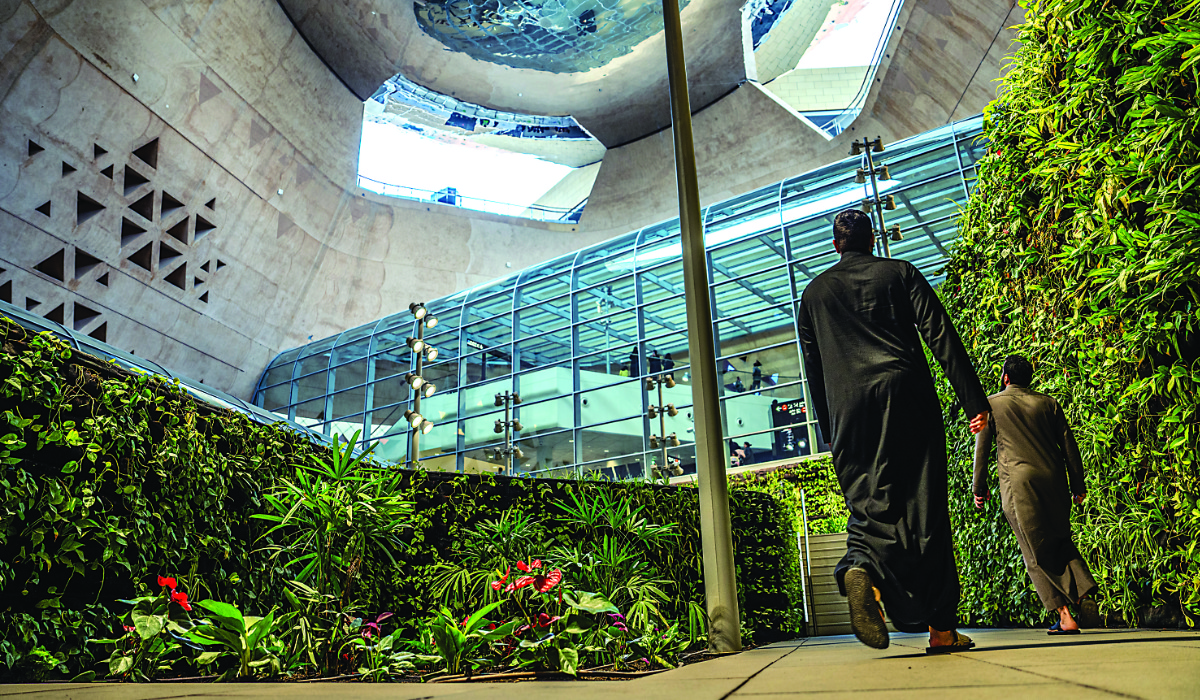
Commuters say the Riyadh Metro has significantly reduced travel times compared to navigating the city’s increasingly congested roads. (AN photo by Huda Bashatah)
“The most challenging aspect has been getting to the station and back home in a way that made sense. I’d say parking is an issue if you don’t go early,” he said.
“I go before it gets too hot to walk from the parking to the station … The stations are well AC’d … but it does get hot, so you just have to bear it.”
He recommends that passengers take a seat during the transit, whenever they are available, to minimize the burden of the trip.
HIGHLIGHTS
• Riyadh Metro features driverless trains and air-conditioned cabins with designated seating areas.
• The system is also integrated with the Riyadh Bus network, creating a unified public transport solution.
• Riders can pay via contactless cards, station kiosks, or the Darb app.
“Getting first class is worth it, and avoiding the rush and the sun. If you’re walking from the car to the station, I see a lot of people taking umbrellas, so that helps.”

Commuters say the Riyadh Metro has significantly reduced travel times compared to navigating the city’s increasingly congested roads. (AN photo by Huda Bashatah)
Commuters say the Riyadh Metro has significantly reduced travel times compared to navigating the city’s increasingly congested roads.
The system includes several sustainable features, such as energy-efficient trains and stations, and regenerative braking technology that helps cut energy use.
To boost accessibility, rideshare platforms such as Uber are offering free connections through the RPT Link service, which transports passengers to metro stations within a 3 km radius.

Commuters at Qasr Al Hokm Station in Riyadh. (AN Photo by Huda Bashatah)
Nouf Al-Dossari, a content creator, said she relies on the metro for attending events and work-related outings. “It has been cost-friendly to me and saves me lots of time,” she said.
“Usually I’d leave my house an hour before to just reach in time because of the traffic, but now I leave 15 to 20 minutes before the scheduled time. It’s been wonderful.”
She encourages others to use the metro during the hot months, but also advises staying hydrated and in the shade as much as possible.

Commuters at Qasr Al Hokm Station in Riyadh. (AN Photo by Huda Bashatah)
“I believe the most challenging part is trying to find an available seat when coming back home, and even in the morning because everyone is heading to work,” she said.
While she is used to the Riyadh heat, she still uses Uber to reach the stations for safety reasons.
“Some are located near highways or busy roads which makes it a bit difficult to safely walk to and from,” she explained.

People purchase tickets at the King Abdullah Finance District "KAFD" metro station in the Saudi capital Riyadh on December 1, 2024. (AFP)
Noura Al-Dakhil has been using the metro for her daily commute for over a month and says that the transition has been relatively smooth.
“The stations I use have a big sidewalk next to it, safety measures, and comfortable access. Although the parking situation isn’t ideal — or, let’s say, nonexistent,” she said.
While she used to walk to a nearby station in cooler months, the summer heat has forced her to adapt.

The metro is built to accommodate up to 1.2 million passengers daily. (Supplied)
“In the summer, I use my car and park next to the station,” she said. For those without that option, she recommends preparing for the weather, such as using an umbrella.
“It’s a game changer. And wear airy fabrics. I switched to cold caffeinated beverages, which helped too.”
The metro is built to accommodate up to 1.2 million passengers daily. It features driverless trains and air-conditioned cabins with designated seating areas.
The system is also integrated with the Riyadh Bus network, creating a unified public transport solution. Riders can pay via contactless cards, station kiosks, or the Darb app.