Pakistani films Nayab and Deemak win top honors at SCO Film Festival in China

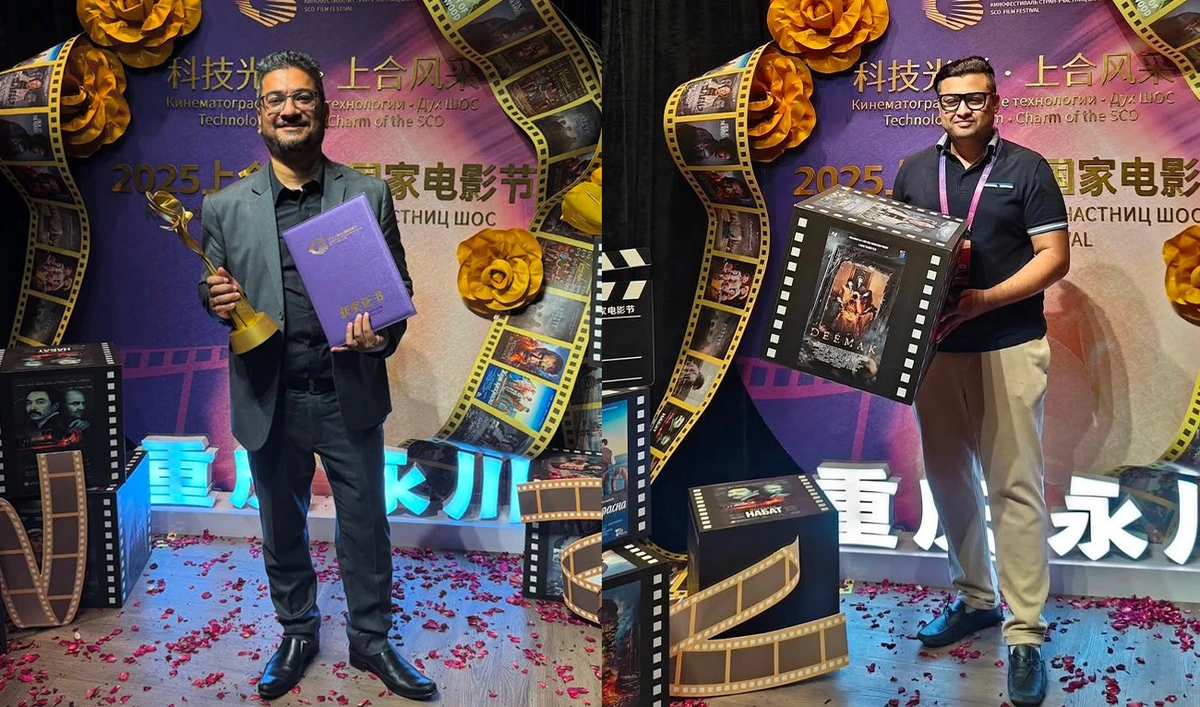
An image collage created on July 7, 2025, shows Pakistani film directors Umair Nasir Ali (left) and Rafay Akbar Rashdi posing for picture at SCO Film Festival in Chongqing, China. (Rafay Rashidi/ Umair Nasir Ali/Instagram)
Short Url
Updated 07 July 2025
Follow

Pakistani films Nayab and Deemak win top honors at SCO Film Festival in China

  • Nayab wins Jury Special Award, Deemak Best Editing Award at 2025 event
  • Pakistan’s film industry has seen a creative resurgence in recent years

ISLAMABAD: Two Pakistani films, Nayab and Deemak, have won major accolades at the Shanghai Cooperation Organization (SCO) Film Festival in China, state-run news agency APP reported on Monday. 

The festival showcased 27 films from SCO member states, including China, Russia, Pakistan, India, and Central Asian countries. Organized to foster regional cinematic exchange, the event featured screenings, industry forums, a film technology expo, and a gala concert, with awards presented in ten categories.

The SCO Film Festival first launched in 2018 and is a cultural initiative of the multilateral bloc to promote cooperation in cinema and the creative industries among member countries. 

“Pakistani film Nayab and Deemak received prestigious ‘Jury Special Award’ and ‘Best Editing Award’ respectively at the colorful concluding ceremony of SCO film festival held at Chongqing, China,” Associated Press of Pakistan reported.
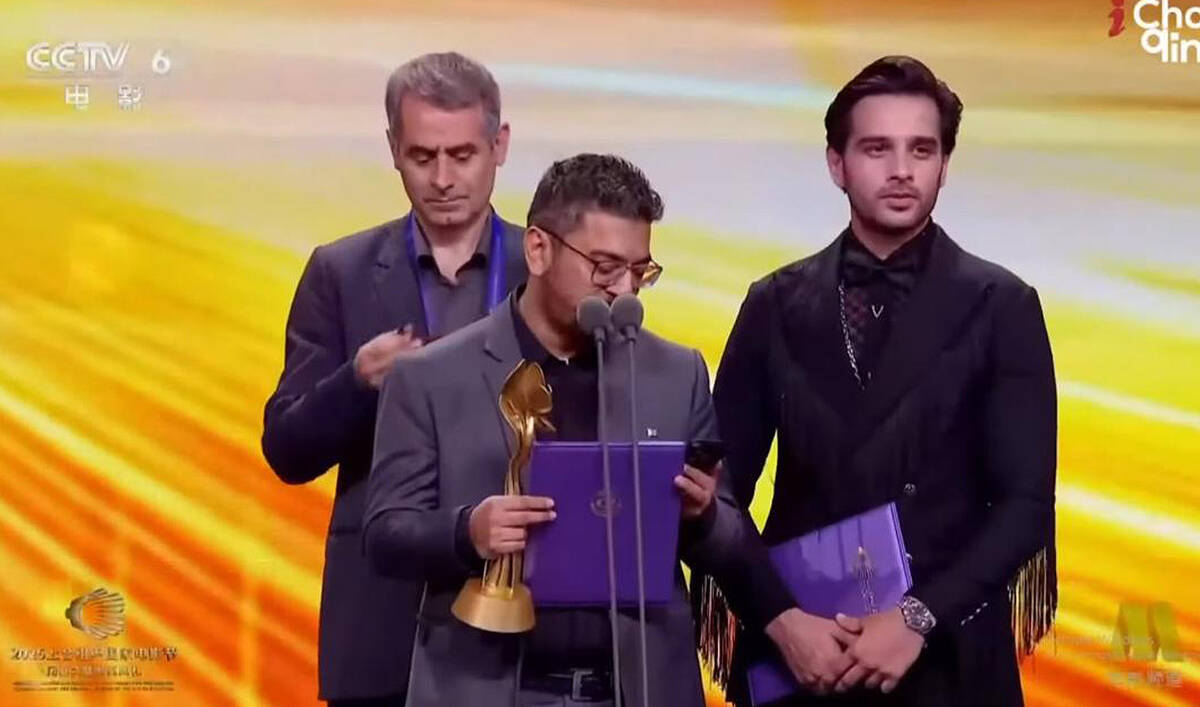


Director of Pakistani movie, Nayab, Umair Nasir Ali (center) giving acceptance speech at the SCO Film Festival for the Jury Special award in China, in a picture shared by the director himself on social media on July 7, 2025. (Umair Nasir Ali/Instagram) 

Nayab, released in 2024, is a sports-drama centered on a young woman from Karachi, played by Yumna Zaidi, who aspires to become a professional cricketer despite intense family and societal opposition. The cast includes Fawad Khan, Javed Sheikh, and Adnan Siddiqui.

The film has previously won multiple awards, including Best Foreign Film and Best First-Time Filmmaker (Feature) at the World Film Festival in Cannes, and a Special Jury Diploma at the 30th Minsk International Film Festival.

“The cinema was packed, and what truly moved me was how deeply they engaged with the film,” Nayab’s director Umair Nasir Ali told APP after the film’s screen at the SCO festival. “They picked up on the layers, the emotional arcs and asked thoughtful, relevant questions that showed how closely they had followed the story.”

Deemak is a psychological horror film directed by Rafay Akbar Rashdi and starring Soniya Hussyn, Faysal Quraishi, Samina Peerzada, and Bushra Ansari. 
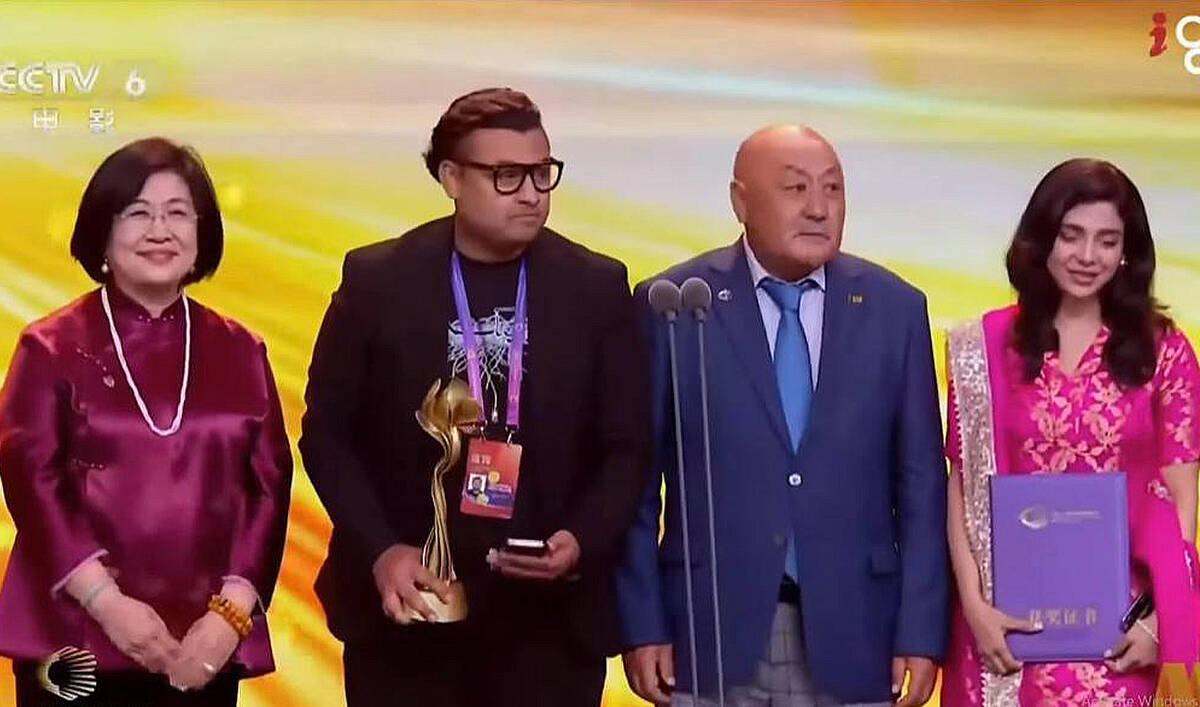


Screengrab of a reel showing director of Pakistani movie, Deemak, Rafay Akbar Rashdi (second left) receiving the best editing award for his movie Deemak at the SCO Film Festival held in China in a video shared on social media on July 7, 2025. (RafayRashidi/Instagram)

Set in an aging home haunted by unexplained phenomena, the film explores family tensions and mental trauma. It became Pakistan’s highest-grossing horror film when it released earlier this year, earning over Rs60 million [$211,173] in its opening week.

Pakistan’s film industry has seen a steady resurgence in recent years, with a new generation of filmmakers experimenting with genres from sports dramas to horror and social realism. 

Joyland (2022) became the first Pakistani feature to premiere at the Cannes Film Festival, where it won the Jury Prize in the Un Certain Regard section, and was later selected as Pakistan’s official entry to the Oscars. The country has also received two Academy Award wins in the documentary short category by filmmaker Sharmeen Obaid-Chinoy. 

Meanwhile, The Legend of Maula Jatt (2022) set new box office records, becoming Pakistan’s highest-grossing film to date and finding global audiences with its big-budget, Punjabi-language action storytelling.

Book Review: ‘The Penguin Book of Polish Short Stories’

Updated 05 December 2025
Follow

Book Review: ‘The Penguin Book of Polish Short Stories’

  • In 39 stories spanning the last century to the present day, this collection gathers short stories by writers who lived in different eras and different worlds


If there was ever a book published in 2025 that encapsulates the spirit and diversity of Polish writing, it is “The Penguin Book of Polish Short Stories,” an anthology edited and translated by Antonia Lloyd-Jones and published by Penguin.

In 39 stories spanning the last century to the present day, this collection gathers short stories by writers who lived not only in different eras, but in literally — and figuratively — different worlds.

From the oldest story in this book: “A New Love,” by Jaroslaw Iwaszkiewicz from 1925, to the newest: “The Isles,” which was written specifically for the anthology in late 2023, by Dorota Maslowska, the collection spans and expands to various timelines and moods.

The impact over the 100 years is huge. The book offers different political, legal and ideological systems.

The book had a herculean task to fully understand the context and nuances of the various eras; the First World War, the Second Polish Republic — the 20-year period of Polish independence between the two world wars — the Second World War, and beyond.

This anthology is curated in such a way that it covers the growth of a country that had been drenched in horrors, but also in joy — and everything in between.

The introduction explains: “This is a book for any English-language reader who likes short stories, and who is interested in exploring Polish short stories in particular.”

It goes on to explain that no previous knowledge of Polish literature is required in order to comprehend and appreciate the stories contained within.

Polish literature, and especially fiction, had not been “very familiar” to English-language readers, the book states, despite three Nobel prizes and literature since 1980. 

The critically acclaimed 63-year-old Polish author and activist Olga Tokarczuk — perhaps most known for winning a Nobel Prize in Literature in 2018 — wrote the preface.

“You may have random and unrelated cause to remember these stories many years from now, even if you’ve forgotten the names of their authors, and the impressions they leave will allow you to see Polish literature as an integral, rather than a peripheral part of the world’s humanist-and-cultural heritage,” Tokarczuk writes.