
KHARTOUM: Hatem Abdelhamid stands amid his once-thriving date palms in northern Sudan, helpless as a prolonged war-driven power outage cripples irrigation, causing devastating crop losses and deepening the country’s food crisis.
“I’ve lost 70 to 75 percent of my crops this year,” he said, surveying the dying palms in Tanqasi, a village on the Nile in Sudan’s Northern State.
“I’m trying really hard to keep the rest of the crops alive,” he told AFP.
Sudan’s agricultural sector — already battered by a two-year conflict and economic crisis — is now facing another crushing blow from the nationwide power outages.
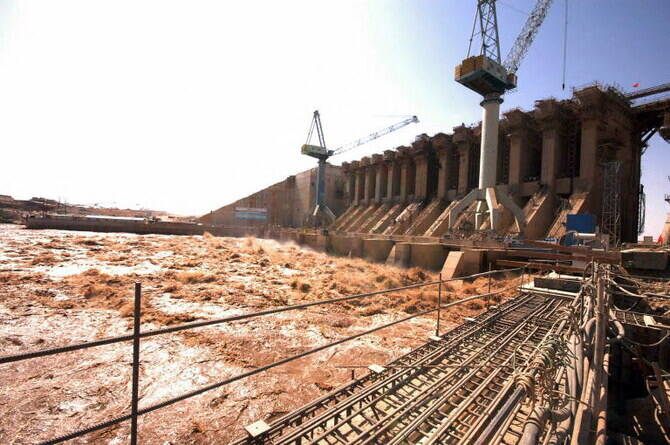
Since the war between the regular army and the paramilitary Rapid Support Forces began in April 2023, state-run power plants have been repeatedly targeted, suffering severe damage and ultimately leaving farms without water.
Like most Sudanese farms, Abdelhamid’s depends on electric-powered irrigation — but the system has been down “for over two months” due to the blackouts.
Sudan had barely recovered from the devastating 1985 drought and famine when war erupted again in 2023, delivering a fresh blow to the country’s agriculture.
Agriculture remains the main source of food and income for 80 percent of the population, according to the United Nations’ Food and Agriculture Organization (FAO).
Now in its third year, the conflict has plunged more than half the population into acute food insecurity, with famine already taking hold in at least five areas and millions more at risk across conflict-hit regions in the west, center and south.
The war has also devastated infrastructure, killed tens of thousands of people, and displaced 13 million.
A 2024 joint study by the United Nations Development Programme and the International Food Policy Research Institute (IFPRI) found that nearly a third of rural households have lost irrigation and water access since the war began.
Without electricity to power his irrigation system, Abdelhamid — like thousands of farmers across the country — was forced to rely on diesel-powered pumps.
But with fuel scarce and prices now more than 20 times higher than before the war, even that option is out of reach for many.
“I used to spend 10,000 Sudanese pounds (about four euros according to the black market rate) for irrigation each time,” said another farmer, Abdelhalim Ahmed.
“Now it costs me 150,000 pounds (around 60 euros) because there is no electricity,” he told AFP.
Ahmed said he has lost three consecutive harvests — including crops like oranges, onions, tomatoes and dates.
With seeds, fertilizers and fuel now barely available, many farmers say they won’t be able to replant for the next cycle.
In April, the FAO warned that “below average rainfall” and ongoing instability were closing the window to prevent further deterioration.
A June study by IFPRI also projected Sudan’s overall economic output could shrink by as much as 42 percent if the war continues, with the agricultural sector contracting by more than a third.
“Our analysis shows massive income losses across all households and a sharp rise in poverty, especially in rural areas and among women,” said Khalid Siddig, a senior research fellow at IFPRI.