
DAMASCUS: Syria said on Friday it was willing to cooperate with the United States to reimplement the 1974 disengagement agreement with Israel, which created a UN-patrolled buffer zone separating the two countries’ forces.
In a statement following a phone call with his US counterpart Marco Rubio, Asaad Al-Shaibani expressed Syria’s “aspiration to cooperate with the United States to return to the 1974 disengagement agreement.”
Washington has been pushing diplomatic efforts toward a normalization deal between Syria and Israel, with envoy Thomas Barrack saying last week that peace between the two was now needed.
Speaking to The New York Times, Barrack confirmed this week that Syria and Israel were engaging in “meaningful” US-brokered talks to end their border conflict.
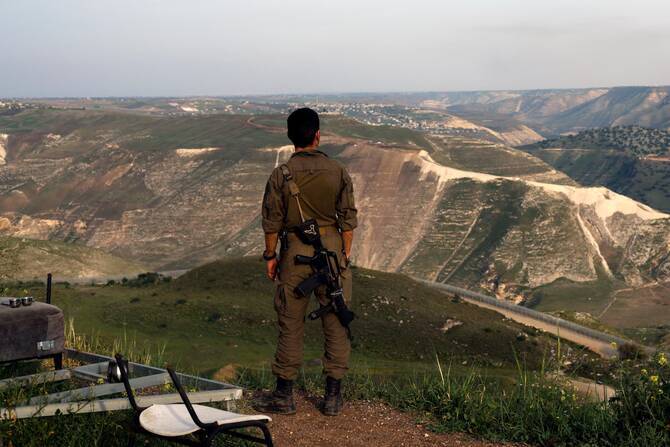
Following the toppling of longtime Syrian ruler Bashar Assad in December, Israel deployed its troops into the UN-patrolled zone separating Syrian and Israeli forces.
It has also launched hundreds of air strikes on military targets in Syria and carried out incursions deeper into the country’s south.
Syria and Israel have technically been in a state of war since 1948.
Israel conquered around two thirds of the Golan Heights from Syria during the 1967 Arab-Israeli war, before annexing it in 1981 in a move not recognized by much of the international community.
A year after the 1973 war, the two reached an agreement on a disengagement line.
As part of the deal, an 80 kilometer-long (50 mile) United Nations-patrolled buffer zone was created on the east of Israeli-occupied territory, separating it from the Syrian-controlled side.
Israeli Foreign Minister Gideon Saar said on Monday that his country had an “interest” in normalizing ties with Syria and neighboring Lebanon.
He however added that the Golan Heights “will remain part of the State of Israel” under any future peace agreement.
Syrian state media reported on Wednesday that “statements concerning signing a peace agreement with the Israeli occupation at this time are considered premature.”