Syria state media says talk of peace deal with Israel ‘premature’

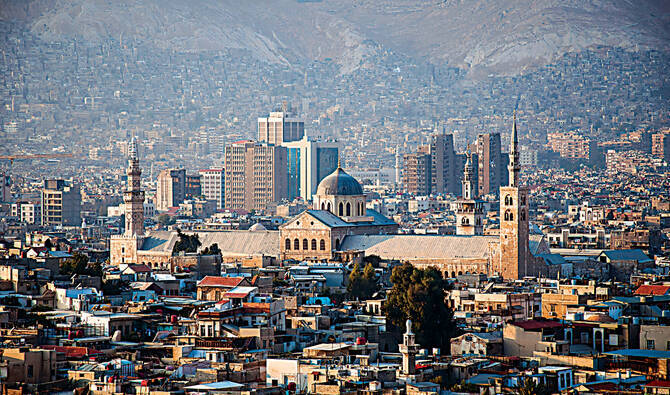
Syrian state media reported Wednesday that statements on signing a peace agreement with Israel were "premature", days after Israel said it was interested in striking normalisation agreements with Syria and neighbouring Lebanon. (Getty Images/File)
Short Url
Updated 02 July 2025
Follow

Syria state media says talk of peace deal with Israel ‘premature’

  • “Statements concerning signing a peace agreement with the Israeli occupation at this time are considered premature,” state TV reported
  • “It is not possible to talk of the possibility of negotiations over a new agreement”

DAMASCUS: Syrian state media reported Wednesday that statements on signing a peace deal with Israel were “premature,” days after Israel said it was interested in striking a normalization agreement with Damascus.

“Statements concerning signing a peace agreement with the Israeli occupation at this time are considered premature,” state TV reported an unidentified official source as saying.

“It is not possible to talk of the possibility of negotiations over a new agreement unless the occupation fully adheres the 1974 disengagement agreement and withdraws from the areas it has penetrated,” it added.

On Monday, Israeli Foreign Minister Gideon Saar said his country had an “interest in adding countries, Syria and Lebanon, our neighbors, to the circle of peace and normalization while safeguarding Israel’s essential and security interests.”

The statement came amid major shifts in the region’s power dynamics, including the fall of longtime Syrian ruler Bashar Assad in December and the weakening of his ally Lebanese armed group Hezbollah after its latest war with Israel.

Syria’s new Islamist authorities have confirmed they held indirect talks with Israel to reduce tensions.

Since Assad’s ouster, Israel has repeatedly bombed targets inside Syria while Israeli troops have entered the UN-patrolled buffer zone along the 1974 armistice line on the Golan Heights and carried out incursions deeper into southern Syria.

Interim President Ahmed Al-Sharaa has repeatedly said Damascus does not seek conflict with its neighbors, asking the international community to pressure Israel into stopping its attacks.

Syria has said that the goal of ongoing negotiations is the reimplementation of the 1974 armistice between the two countries.

Saar insisted that the Golan Heights, much of which Israel seized in 1967 and later annexed in a move not recognized by the United Nations, “will remain part of the State of Israel” under any future peace agreement.

Control of the strategic plateau has long been a source of tension between Israel and Syria, which are technically still at war.



UAE closes embassy in Tehran, withdraws ambassador

Updated 7 sec ago
Follow

UAE closes embassy in Tehran, withdraws ambassador

  • UAE foreign ministry said Iranian strikes represented serious and irresponsible escalation

DUBAI: The United Arab Emirates closed its embassy in Tehran on Sunday and has withdrawn its ambassador and all diplomatic staff from Iran following Iranian missile strikes targeting the Gulf country.

In a statement, the UAE Ministry of Foreign Affairs said the decision came in response to what it described as “blatant Iranian missile attacks” on Emirati territory.

The ministry said the strikes targeted civilian sites, including residential areas, airports, ports and service facilities, and represented a serious and irresponsible escalation.

“These hostile attacks constitute a flagrant violation of national sovereignty and a clear breach of international law and the Charter of the United Nations,” the statement said.

The ministry added that the move reflects the UAE’s “firm and unwavering stance against any aggression” that threatens its security and sovereignty. It accused Iran of continued hostile and provocative conduct that undermines de-escalation efforts and pushes the region toward a dangerous trajectory, threatening regional and international peace, energy security and global economic stability.

Dubai and Abu Dhabi have faced hundreds of missile and drone attacks since Saturday, as Tehran retaliates against US-Israeli airstrikes. 

While the majority of the projectiles have reportedly been intercepted, there have been reports of casualties and damage in several areas of both cities.