

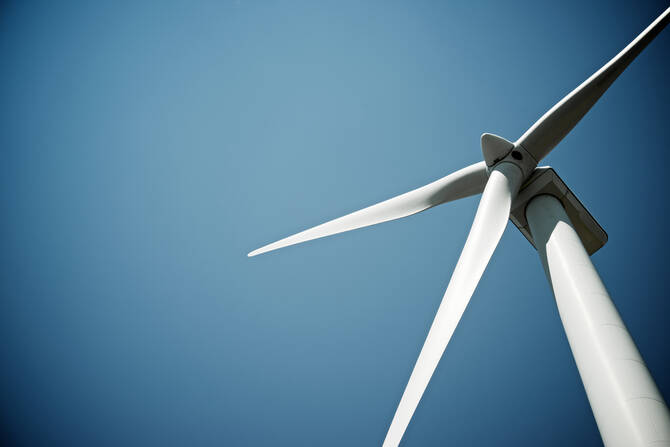

RIYADH: Saudi Power Procurement Co. has signed a power purchase agreement for the 700-megawatt Yanbu Wind Power Project, backed by an investment exceeding SR1.7 billion ($458 million).
The deal was finalized with a consortium made up of Japan’s Marubeni Corp. and the Kingdom’s Abdulaziz Al-Ajlan Sons for Commercial and Real Estate Investment Co. the Saudi Press Agency reported.
This aligns with the Kingdom’s National Renewable Energy Program, a strategic framework overseen by the government and designed to diversify the Kingdom’s power sources.
The SPA reported that the project will help in “maximizing economic returns by contributing to the displacement of liquid fuels used in electricity production, and achieving the optimal energy mix for electricity production” so the share of renewable energy sources will reach approximately 50 percent of the national mix by the end of the decade.
Renewables capacity in Saudi Arabia is planned to reach between 100 gigawatts and 130 GW by 2030, significantly increasing the nationwide supply of solar and wind energy.
The Yanbu Wind Power Project will be situated in the Madinah region and is expected to generate electricity at a cost of SR0.06 per kilowatt‑hour, according to SPA.
This competitive tariff highlights the increasing cost-effectiveness of renewable energy technologies in Saudi Arabia.
SPPC is responsible for managing the Kingdom’s electricity sourcing processes. This includes conducting feasibility studies, organizing competitive tenders for power generation projects, and entering into agreements to purchase electricity from independent power producers.
In November, the company signed agreements for five independent energy projects in the Kingdom, which have a total capacity of 9.2 GW.
The new power generation projects include two thermal energy plants, Rumah and Al Nairyah, and the Al Sadawi Solar Photovoltaic Project.
The Rumah and Al Nairyah facilities will utilize the flexible combined cycle gas turbine technology for their operations, and are designed to incorporate carbon capture units, contributing a combined 7.2 GW to the national grid.
Both facilities are scheduled to begin commercial operations by the second quarter of 2028.


