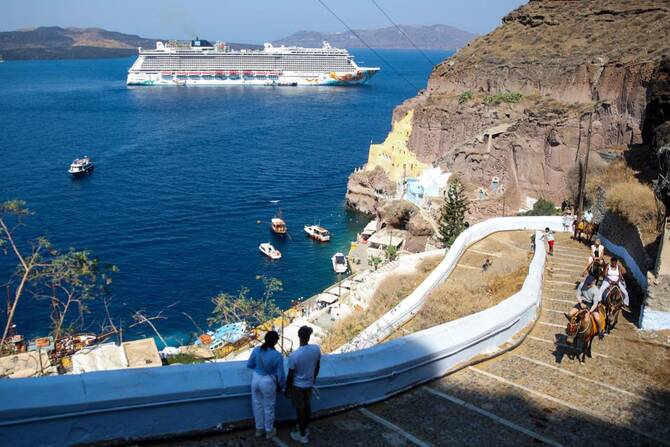

ATHENS: Greece on Tuesday began charging a tax on island cruise ships, the latest European effort to tackle soaring visitor numbers to the continent’s most popular destinations.
Cruise ships docking at the popular islands of Santorini and Mykonos will pay 20 euros ($23.62) per passenger.
“In accordance with the law, the tax will be applied in Santorini, Mykonos and other islands in lesser measures,” a finance ministry spokesman told AFP.
Cruise ships to smaller islands will pay a tax of five euros per passenger, according to the new regulations.
Greece hopes to bring in up to 50 million euros a year with the tax, which will apply during the high tourism season, from June 1 to September 30.
Greece adopted the legislation last year in an effort to curb soaring tourist numbers to often-overcrowded destinations, the latest country in Europe to take such measures.
Italian authorities in Venice, one of the world’s top tourist destinations, last year introduced payments for day visitors, who must pay an access fee of five euros ($5.90) on certain days.
In Spain, the government has cracked down on illegal short-term tourist rentals, with sites like Airbnb and Booking.com ordered to take down thousands of ads amid local alarm about increasingly scarce and unaffordable housing.
The hugely popular island of Ibiza in June began limiting the number of incoming tourist cars and caravans because of the increasing numbers of visitors.
Locals in Barcelona and elsewhere in Spain, the world’s second most-visited country, have held protests against over-tourism.
Greece plans to use the money raised to upgrade over-strained infrastructure on the islands, including their ports, which are often too small to receive multiple cruise ships at once.
Tourism, and the cruise industry in particular, is booming in Greece.
Cruise ship passenger numbers surged 13.2 percent last year to 7.9 million, according to the Hellenic Ports Association, which predicts the trend will continue.
Mykonos, known as a party destination for international jet-setters, received nearly 1.3 million visitors last year, up 8.4 percent from the previous year.
Perched on a volcano, Santorini received more than 1.3 million passengers last year, up four percent.
The island last year limited cruise ship arrivals to 8,000 passengers per day, yet on the first day of the tax, four ships with around 8,400 passengers were scheduled to dock in Santorini, according to port authority figures.
Famed for its sunsets, the island is saturated with tourists in some areas, causing traffic jams, water shortages, waste management headaches and other problems.
Some residents also complain about the pollution generated by the ships, while local businesses say passengers often stay just a few hours and spend little.
But not everyone is happy with the new tax.
The head of the local port authority, Athanasios Kousathanas-Megas, demanded on Friday that the government delay the rollout, complaining the tax creates “unfair competition” between highly taxed islands and the rest.
The cruise industry has hit back at criticism, saying cruise passengers are a small minority of total tourists and generate $2 billion in revenues per year for Greece.
Last year, 40.7 million tourists visited Greece, up 12.8 percent from 2023, according to official figures.