

Saudi FDI net inflows jump 44% in Q1 to $5.9bn

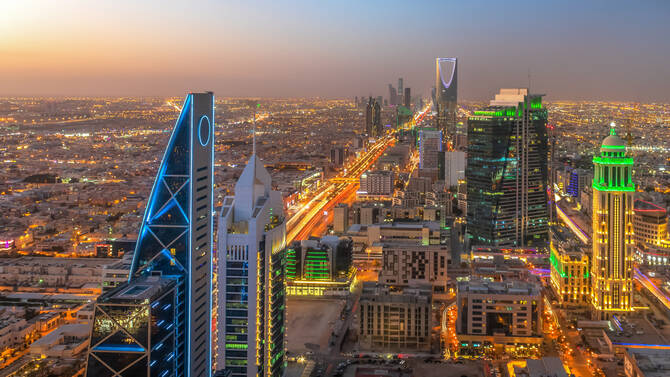
According to figures released by the General Authority for Statistics, this compares to SR15.5 billion during the same period last year. Shutterstock
Short Url
Updated 29 June 2025
Follow

Saudi FDI net inflows jump 44% in Q1 to $5.9bn

  • Gross inflows — total foreign capital entering Kingdom — stood at SR24 billion
  • Narrowing gap between inbound and outbound foreign capital underscores resilience of Kingdom’s investment environment

RIYADH: Saudi Arabia attracted SR22.2 billion ($5.9 billion) in net foreign direct investment in the first quarter of 2025, up 44 percent year on year, driven by rising inflows and sharply lower capital outflows. 

According to figures released by the General Authority for Statistics, this compares to SR15.5 billion during the same period last year. The figure, however, marked a 7 percent drop from the final quarter of 2024, when inflows totaled SR24.0 billion. 

Gross inflows — the total foreign capital entering the Kingdom — stood at SR24 billion, up 24 percent from SR19.4 billion in the first quarter of 2024, but down 6 percent from the SR25.6 billion recorded in the preceding quarter.

Net FDI reflects the actual retained investment after subtracting outflows such as dividends, loan repayments, or capital exits — making it a more accurate indicator of lasting foreign capital in the economy. 

The FDI boost coincides with Saudi Arabia’s growing appeal among global investors. In April, the Kingdom climbed to a record 13th place in Kearney’s 2025 Foreign Direct Investment Confidence Index while maintaining its rank as the third most attractive emerging market, underscoring strong investor confidence. 

In its latest release, GASTAT stated: “The volume of outflows amounted to about SAR 1.8 billion during Q1 of 2025. It achieved a decrease of 54% compared to Q1 of 2024, where the volume of outflows reached SAR 3.9 billion.” 

The report noted that this represented a 7 percent increase from the fourth quarter of 2024, when outflows stood at SR1.7 billion. 

The narrowing gap between inbound and outbound foreign capital underscores the resilience of the Kingdom’s investment environment amid ongoing economic transformation efforts. 

It also reflects a growing trend of multinational companies establishing regional headquarters in the Kingdom. Under new localization rules linked to government contracts, several global firms have set up or expanded their presence in Riyadh. 

In March, Dell Technologies became one of the latest tech giants to open a regional office in the Saudi capital, joining companies such as PepsiCo, Schneider Electric, Morgan Stanley, PwC, and Deloitte — all of which have ramped up operations to tap into the Kingdom’s rapidly evolving market and $1.1 trillion giga-project pipeline. 

The Kingdom’s performance comes against a backdrop of global declines in foreign direct investment.  

According to the UN Conference on Trade and Development, inward FDI inflows in Saudi Arabia fell 31 percent in 2024 to $15.73 billion, while outflows rose 27.1 percent to $22.04 billion.  

The report attributed the downturn to persistent trade tensions, geopolitical uncertainty, and weakening investor sentiment worldwide.  

Earlier this month, S&P Global said it expects FDI into Gulf Cooperation Council countries to slow further in 2025, citing lower oil prices and a more gradual rollout of economic diversification plans across the region. 


Oman launches 2026–2030 SME plan as fiscal recovery strengthens 

Updated 18 sec ago
Follow

Oman launches 2026–2030 SME plan as fiscal recovery strengthens 

RIYADH: Oman has launched a five-year plan to expand its small and medium-sized enterprise sector, seeking to deepen private-sector growth as the sultanate consolidates recent fiscal gains and returns to investment-grade status.  

The 2026–2030 SME Sector Implementation Plan, unveiled by the Small and Medium Enterprises Development Authority, or Riyada, aims to improve market access, boost SME competitiveness and raise the sector’s contribution to the economy, according to the Oman News Agency. 

The plan supports innovation and entrepreneurship while promoting the transition to a knowledge-based economy, the Oman News Agency reported. 

The initiative forms part of Oman Vision 2040 and the Eleventh Five-Year Development Plan, which prioritize private-sector expansion, diversification and job creation. 

The launch follows Fitch Ratings’ decision earlier this month to upgrade Oman to investment-grade status, raising the country’s long-term foreign-currency rating to BBB- from BB+. Fitch cited stronger public finances, a sharper reduction in government debt and an improved external position. 

“The implementation plan is based on several key strategic pillars, most notably: market access and value chains, financing and investment, enhancing local content, and developing a culture of entrepreneurship, skills, and innovation,” the ONA report stated. 

It added: “These pillars were developed through a participatory approach with contributions from several government and private entities supporting the SME sector, and are based on studies, benchmarking, and international best practices.”  

The plan also includes a package of specialized programs and initiatives targeting different stages of SME growth. These include measures to improve readiness for expansion and exports, integrated financing programs, initiatives supporting handicrafts and the creative economy, and the development of a network of entrepreneurship centers across Oman’s governorates.

Riyada said implementation of the plan would help strengthen the sustainability of SMEs, create quality job opportunities and empower entrepreneurs to build viable and scalable businesses, enhancing the competitiveness of the national economy. 

Oman has made significant progress in strengthening fiscal discipline, reducing government debt to around 36 percent of GDP in 2025, down from about 68 percent in 2020. 

With the outlook remaining stable, Fitch expects the budget deficit to remain at a manageable level of around 1 percent of GDP in 2026 and 2027, assuming an average Brent crude price of $63 per barrel. The fiscal breakeven oil price is estimated at around $67 per barrel over the same period.