Jeddah exhibition gives internet cafes an artistic reboot

Seventeen artists and collectives have had their work on display at ‘Internet Cafe,’ an exhibition inspired by the digital age. (Supplied)
Short Url
Updated 29 June 2025
Follow

Jeddah exhibition gives internet cafes an artistic reboot

  • Local artists revive communal, quirky, deeply human qualities of early web era

JEDDAH: Internet cafes in Jeddah were once popular spots with pay-by-the-hour internet access; they have now provided the inspiration for the city’s latest exhibition.

In a collaboration between Kham Space and Estiraha, 17 artists and collectives have had their work on display at “Internet Cafe,” an eight-day exhibition which explored the concept of connection and intimacy in the digital age.
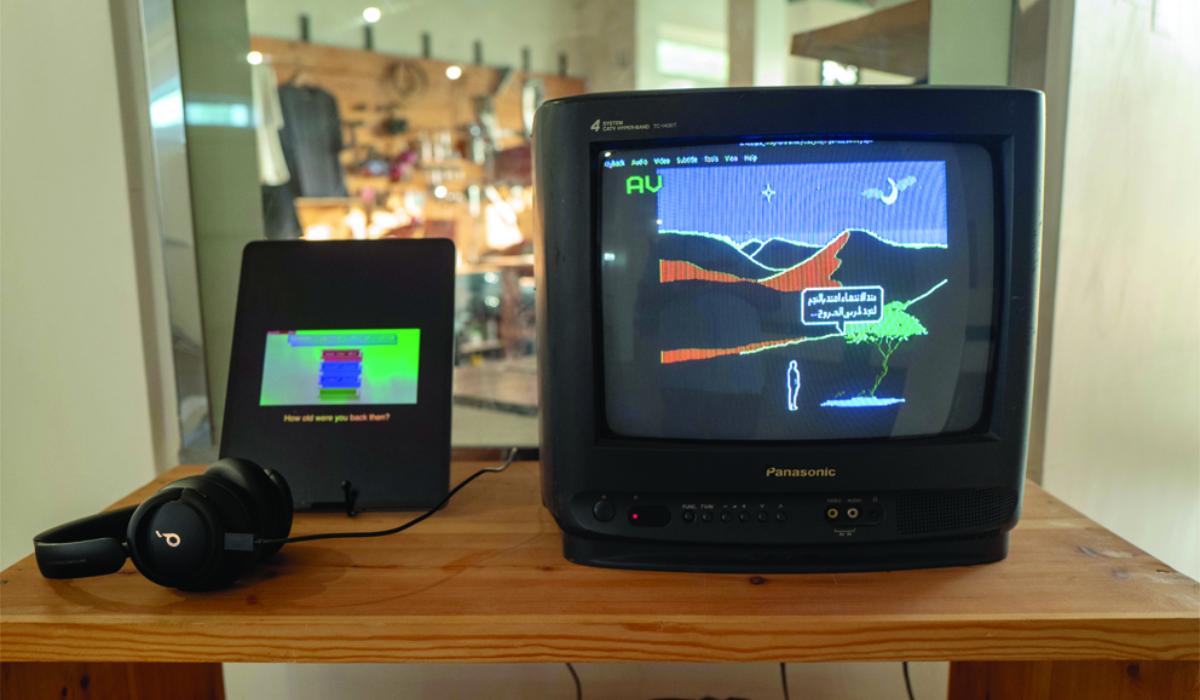


Asaad Badawi’s installation paid tribute to early programmer culture. (Supplied)

Abeer Sultan, who curated the exhibition alongside Mbarak Madhi and Fai Ahmed, spoke to Arab News about the early process in contemplating the theme.

The idea for the exhibition, which concluded on Saturday, stemmed from an exasperation over incessant scrolling, and the deluge of information that has usurped our daily lives.

HIGHLIGHTS

• The idea for the Jeddah exhibition stemmed from an exasperation over incessant scrolling, and the deluge of information that has usurped our daily lives.

• Some of the works were meant to act as ‘hyperlinks’ to connect ideas, as well as creating a communal space and mimicking the social space of a cafe.

She said: “We wanted to do something that is about us now, and maybe the future as well; not only going back to things for nostalgia or the good old days, as they say.
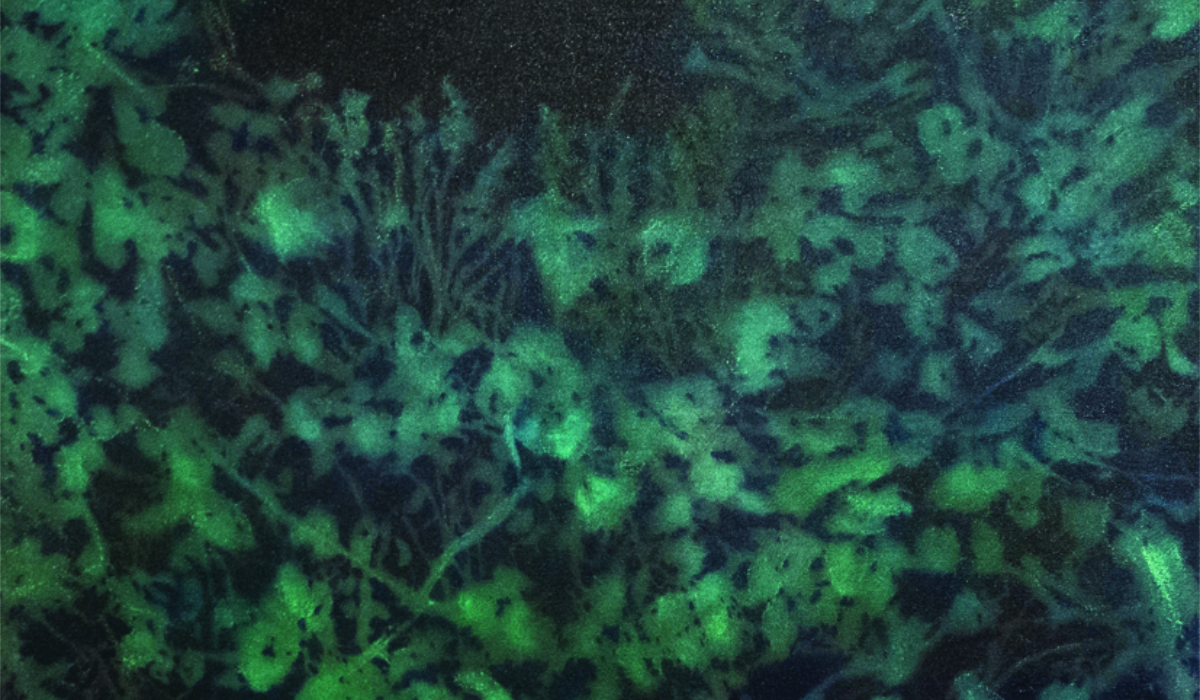


‘Closed eyes under a sunny sky I’ by Zahiyah Alraddadi. (Supplied)

“Maybe it has something that we can use today, especially now that there’s a movement of people trying to slow down, using dumbified devices throughout the internet.”

Instead of creating a literal internet cafe, the curators focused more on the nuances a cybercafe used to have.
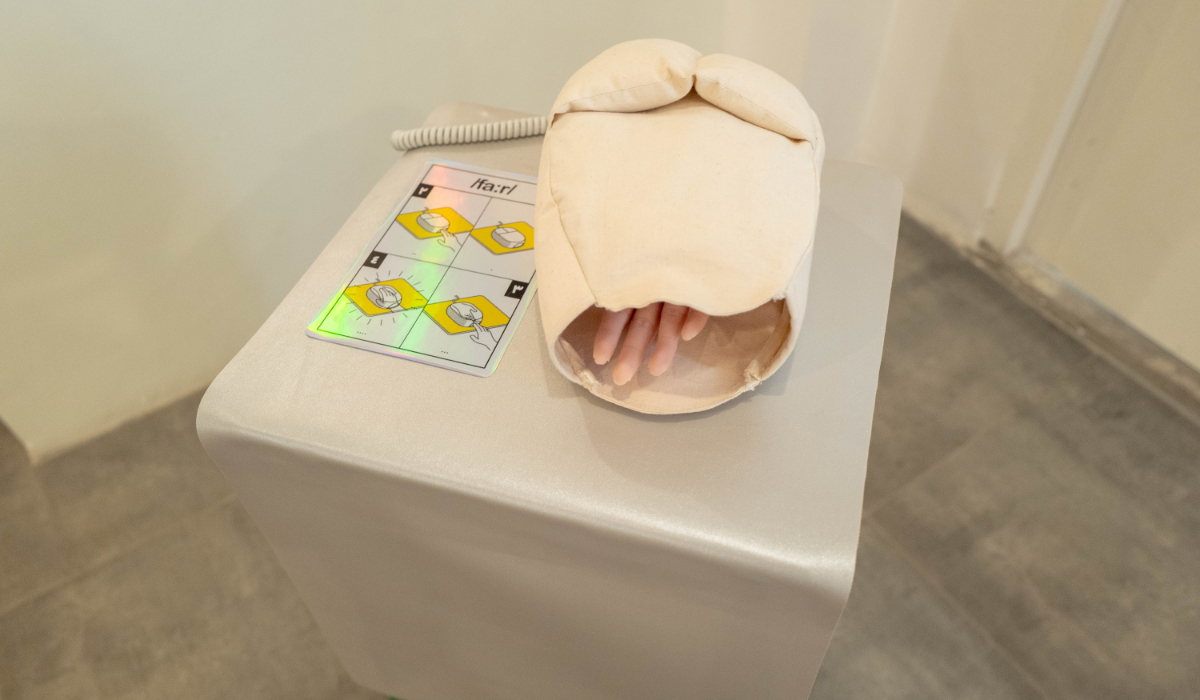


"F.A.R." by Dalal Madhi's work. (Supplied)

Their approach to the space was categorized into three themes: “Disconnected Understanding, Linked Source,” “In the Shadow of a Doubt, Light My Screen,” and “Whirling Algorithms of a Distant Dream.”

Artist Zahiyah Alraddadi, who usually paints works focusing on the significance of the mundane, took oil to canvas to paint “Closed Eyes Under a Sunny Sky I” and “Familiar Features.”
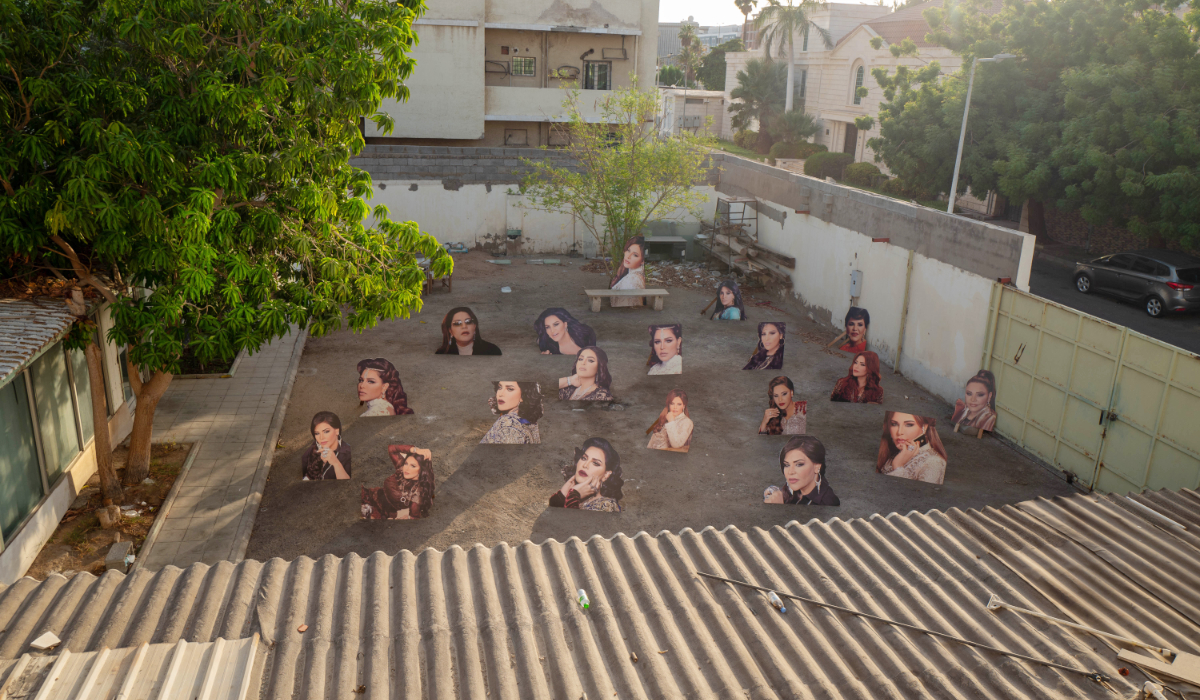


The a piece by Ahaad Alamoudi, “Land of Dreams” takes a humorous approach. (Supplied)

Her work feels meditative and was intended to slow visitors down as they walked through the space — much like the feel of a buffering screen page.

Some of the works were meant to act as “hyperlinks” to connect ideas, as well as creating a communal space and mimicking the social space of a cafe.   
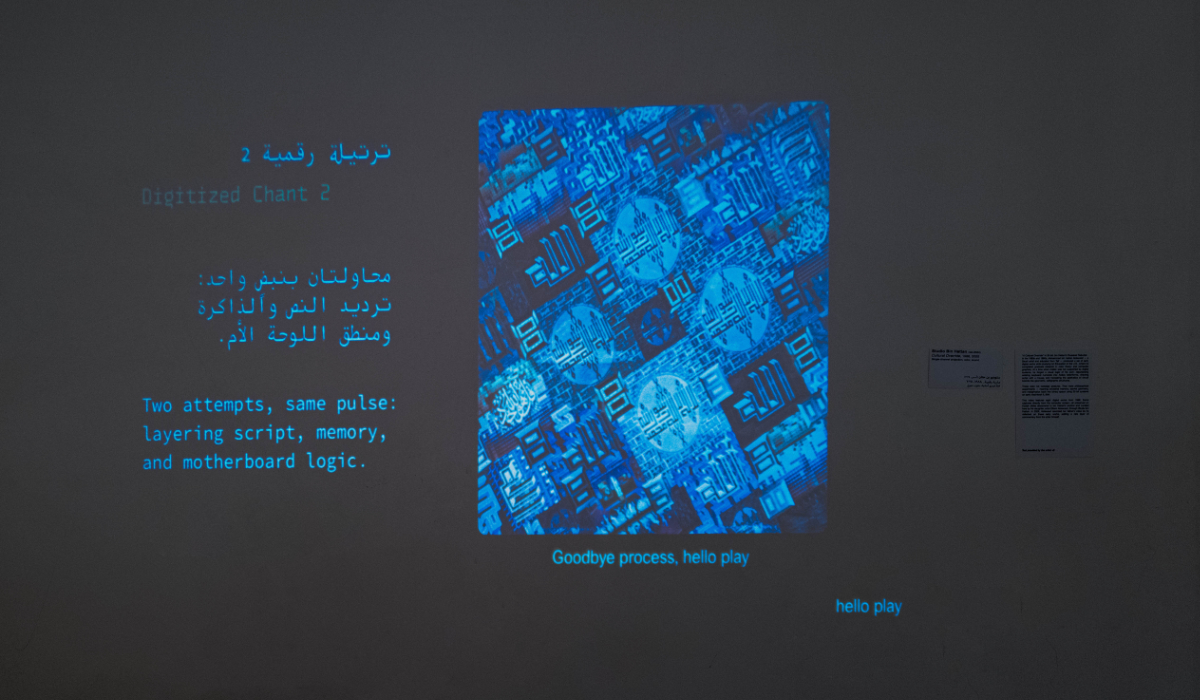


Studio bin Hattan, which is led by artist Elham Dawsari, displays “Cultural Override” derived from her father’s archives from the 80s, who was interested in computer graphics. (Supplied)

Anhar Salem’s work “After Now” was a curtain imprinted with thumbnails of YouTube videos. The artist conducted a survey asking people between the ages of 18 and 40 to share their YouTube video recommendations, making up a curtain of information overload.

Next to that, Tara O‛Conal’s video installation was a film sequence — but the catch is, nothing really happened. The film continued to load, glitch, and reload, perhaps suggesting commentary on our constant yearning for contact.
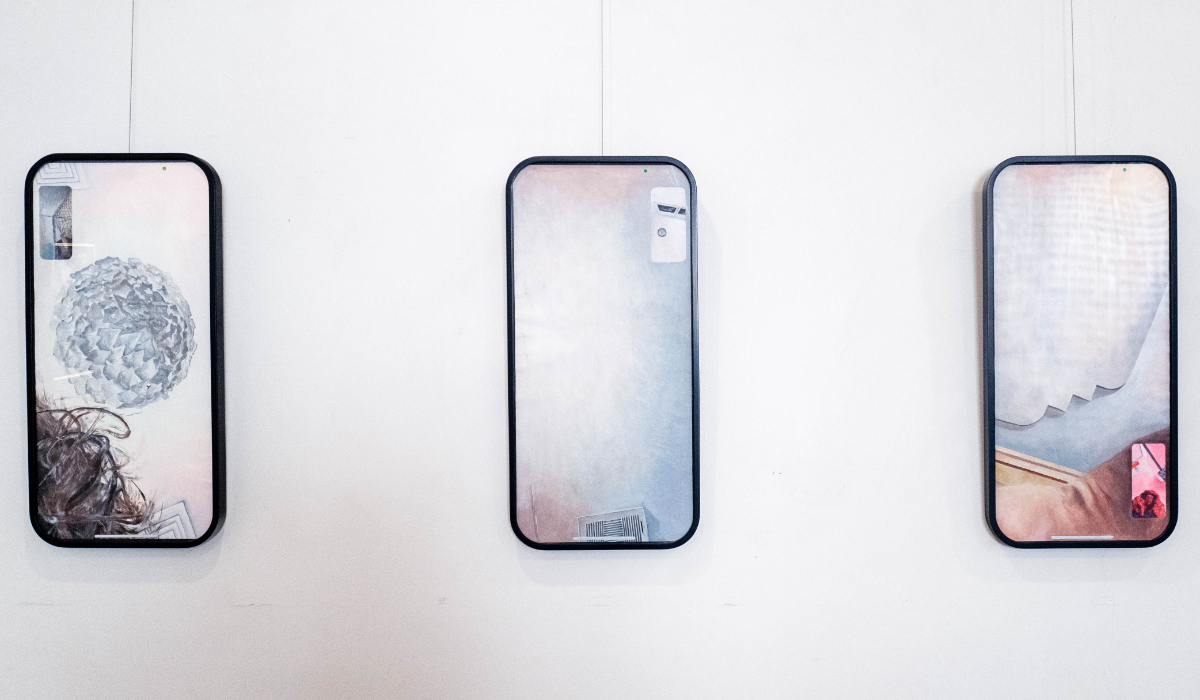


Hayfa Al-Gwaiz’s “Long Distance” is a painted form of FaceTime video calls. The work explores digital intimacy by centering not the callers’ faces, but the ceilings above them. (Supplied)

“Compared to Anhar’s work, (Tara’s) feels like a pond, in a way, to look at,” Sultan said.

Some works were inspired by computer graphics. Asaad Badawi paid tribute to early programmer culture via telephone-book-inspired art, and his father, who is a programmer.
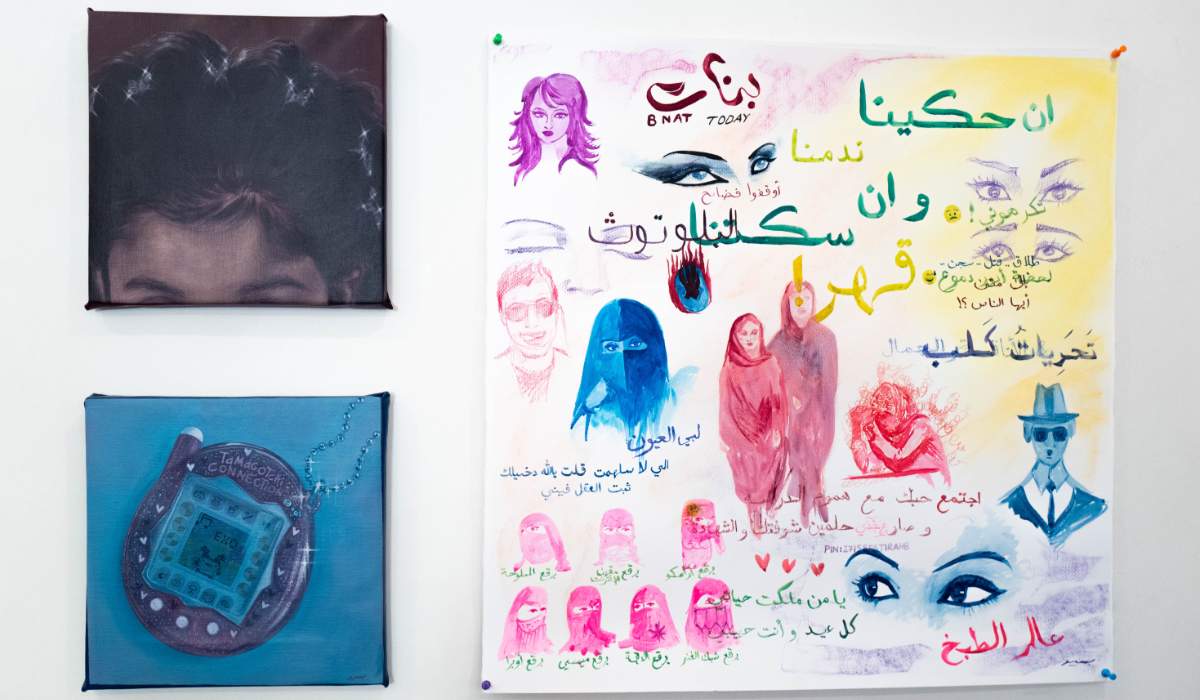


Madhawi Al-Gwaiz's works are painted in a graphic style that is reminiscent of early 00s and '10s graphics styles. (Supplied)

Studio bin Hattan, which is led by artist Elham Dawsari, displayed “Cultural Override,” derived from her father’s archives from the 1980s. Madhawi Al-Gwaiz paints in a style that echoes digital graphics from the early 2000s.

Others took a more distanced approach. ThirdSpace’s “Untitled Table” was a physical object, but the research behind it was about keyboards that then shifted to Hijazi architecture, drawing on the iconography and architectural languages across the history of the region.  
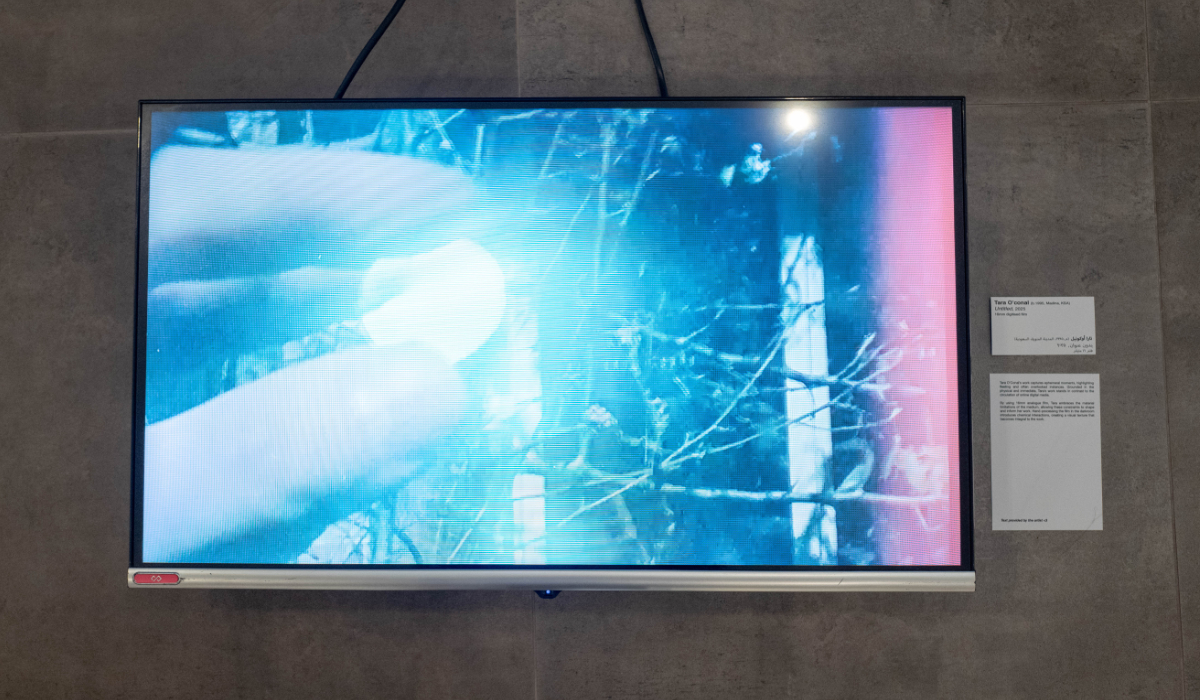


Tara O‛conal’s video installation is a film sequence in nature—but the catch is, nothing really happens. The film continues to glitch and reload, perhaps suggesting commentary on our constant yearning for contact. (Supplied)

Hayfa Al-Gwaiz’s “Long Distance” was a painted form of facetime video calls. The work explored digital intimacy by showcasing not the callers’ faces, but the ceilings above them — a scene that’s familiar to anyone who has taken up a long-winded video call with a loved one and set down the phone to cater to life’s more immediate demands.

While the exhibition tackled the digital boom personified through cybercafes, it notably avoided artificial intelligence.

Sultan explained: “It is the idea of being fast and efficient, which is what we are resisting with AI …  It’s dominating the internet in a weird way, and we wanted a space where people customized things manually, going back to montadayat (domains) where people had to do things by themselves. There’s no template.”

The last piece was by Ahaad Alamoudi, and “Land of Dreams” took a humorous approach to directing audiences to their dreams. As you walked toward the work, in an outdoor area outside the confines of the exhibition space, visitors were met with vinyl boards of the iconic Emirati singer Ahlam.

Sultan said: “The work accentuates the fact that the dream land is a subjective experience or idea, and everyone would have their own imagination of what that is, whether it's Ahlam or something else.”

The “Internet Cafe” was a love letter to a new digital age — one that is sustainable, communal, and deliberately slow.  

“This is our way of keeping in touch with other people. An exhibition space is also a space where people meet, even if it’s for a moment, to have these conversations together, which is really important,” Sultan said.


Kingdom key player in regional peace, EU official says

Updated 17 January 2026
Follow

Kingdom key player in regional peace, EU official says

  • Hana Jalloul Muro highlights Riyadh’s role in regional stability, economic growth and advancing EU-Saudi strategic ties

Riyadh: Hana Jalloul Muro, vice-chair of the European Parliament’s Foreign Affairs Committee, has praised Saudi Arabia’s role as a “reliable partner” to the EU.

Describing the Kingdom as a “key international actor,” she highlighted its pivotal role in regional stability, including brokering peace talks on Ukraine, promoting peace in Palestine, and supporting stable governments in Lebanon and the Syrian Arab Republic.

“Saudi is a reliable partner because it is a country that has demonstrated that with Vision 2030, only in the last five, six years, it has changed impressively. It has a major women’s labor force, a very low youth unemployment rate and is growing very fast,” Muro told Arab News.

Speaking on the sidelines of the Future Minerals Forum in Riyadh, she added: “Saudi Arabia is becoming a key major player in the international arena now — for peace conversations on Ukraine, supporting the Syrian government, paying Syria’s external debt, stabilizing the government in Lebanon, promoting peace in Gaza, in Palestine and pushing for a ceasefire, too.

“So, I think it is a very key international actor, very important in the region for stability,” Muro added.

Explaining why she considers the Kingdom a reliable partner, Muro said: “It’s a country that knows how to see to the East and to the West.”

Muro also serves as the European Parliament’s rapporteur for Saudi Arabia, and is responsible for drafting reports on legislative and budgetary proposals and other key bilateral issues.

In mid-December 2025, the European Parliament endorsed a road map to elevate EU-Saudi relations into a full-fledged strategic partnership, which Saudi Ambassador to the EU Haifa Al-Jedea described as “an important milestone” in bilateral ties.

The report highlighted the possibility of Saudi-EU visa-free travel, reaffirming the EU’s commitment to advancing a safe, mutually beneficial visa-free arrangement with the five GCC countries to ensure equal treatment under the new EU visa strategy.

“One of the key hot topics is the visa waiver to Saudi Arabia, which I always support,” Muro said. “Saudi Arabia has, as you are aware, been in cascade for five years, and I think we need to work toward a visa waiver.”

The report also highlighted the economic significance of Saudi tourists to EU member states, particularly for the hospitality, retail and cultural sectors, while emphasizing that Saudi citizens do not pose a source of irregular migration pressure.

When asked about the status of the visa waiver, Muro said: “The approval, it is the recommendation to the commission to take into account its importance. We need to advance on that because we are in the framework of this strategic partnership agreement that covers many topics, so this is why the visa waiver is a central key issue.”

She added: “I think by now we recognize the international role of Saudi Arabia and how important it is to us as a neighbor — not only for security, counter-terrorism and energy, but for everything. We need to get closer to partners like the GCC, Saudi specifically.

“And I think that we need to take Saudi Arabia as a very big ally of ours,” Muro said.

During her time in Riyadh, Muro took part in a panel at the forum focused on the EU-KSA business and investment dialogue, and advancing the critical raw materials value chain.

On the sidelines, she met Saudi Vice Foreign Minister Waleed Elkhereiji to discuss ways to further strengthen Saudi-EU relations.

She also met Hala Al-Tuwaijri, chairwoman of the Saudi Human Rights Commission, saying: “I have to congratulate you and the government, your country, on doing a great job.”