

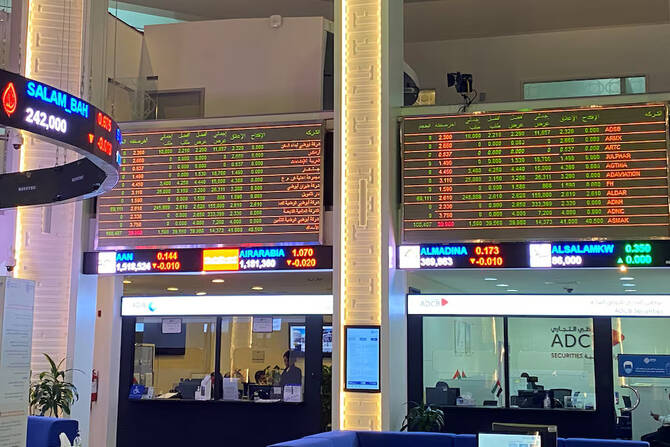

LONDON: Stock markets in the Gulf closed higher on Thursday amid steady oil prices as a ceasefire between Israel and Iran appeared to be holding for a second day.
Markets have been soothed by the ceasefire after 12 days of strikes on each other’s territory.
US President Donald Trump said on Wednesday he would likely seek a commitment from Iran to end its nuclear ambitions at talks next week.
Saudi Arabia’s benchmark stock index extended its gains to a fourth straight session, rising 0.9 percent, with most sectors in the green.
Al Rajhi Bank, the world’s largest Islamic lender, gained 0.9 percent and oil major Saudi Aramco added 0.7 percent.
Elsewhere, Saudi Arabia’s trade surplus fell sharply in April, even as non-oil exports surged and imports rose, according to new government data issued Wednesday.
Dubai’s benchmark stock index extended its rally to a fifth straight session, rising 1.3 percent to 5,684, its highest level in 17 years. Dubai Islamic Bank climbed 4.9 percent and tolls operator Salik advanced 2.2 percent.
The Abu Dhabi benchmark index rose 0.8 percent, aided by a 7.6 percent surge in RAK Properties and a 4.3 percent gain for Abu Dhabi Islamic Bank.
Fitch Ratings affirmed the UAE’s rating at “AA-” with a stable outlook on Tuesday, while S&P Global assigned the same rating last week.
Oil prices, a catalyst for the Gulf’s financial markets, rose 0.4 percent as a larger-than-expected draw in US crude stocks signalled firm demand. Brent was trading at $67.98 a barrel by 2:30 Saudi time.
The Qatari benchmark index was up for a consecutive fifth day, rising 0.4 percent with almost all its constituents posting gains.
AlRayan Bank advanced 1.4 percent and Industries Qatar added 0.5 percent.
Qatar Investment Authority and Canadian asset manager Fiera Capital have launched a $200 million fund to boost foreign and local investment into the Gulf state’s stock market, QIA said on Wednesday.
“Markets are benefiting from favorable market sentiment following the easing of geopolitical risks,” said Joseph Dahrieh, managing principal at Tickmill.
“This has led to increased demand for stocks in the region and a greater focus on market fundamentals.”


