Iran expressed rare gratitude to Pakistan amid recent Israel war — PM Sharif

In this handout photo, taken and released by Pakistan’s Prime Minister Office, Prime Minister Shehbaz Sharif chairs a meeting of the Federal Cabinet at the Parliament House in Islamabad on June 26, 2025. (Photo courtesy: Handout/PMO)
Short Url
Updated 26 June 2025
Follow

Iran expressed rare gratitude to Pakistan amid recent Israel war — PM Sharif

  • Shehbaz Sharif acknowledges Crown Prince Mohammed bin Salman's ‘significant role’ in defusing tensions
  • He also highlights Field Marshal Asim Munir’s lengthy meetings with the top American and Iranian officials

ISLAMABAD: Prime Minister Shehbaz Sharif on Thursday expressed satisfaction over the ceasefire that brought an end to the recent Israel-Iran conflict, saying Tehran had thanked Pakistan’s political and military leadership for playing a constructive role during the war after Field Marshal Asim Munir’s meetings with both American and Iranian officials.

The 12-day war began after Israel carried out airstrikes on Iranian nuclear facilities, killing several senior military commanders and scientists, while officials in Tehran were engaged in nuclear negotiations with the United States.

Shortly before the ceasefire was announced, US forces struck three Iranian nuclear sites and claimed to have set back Iran’s nuclear program by years.

“For the first time in history — and I am not just talking about the war itself, but on several fronts — Iran openly thanked Pakistan’s political and military leadership in a way that, in my view, has no precedent in recent times,” Sharif told the federal cabinet.

“Our Field Marshal had a luncheon meeting in Washington with President [Donald] Trump,” he continued. “Then in Istanbul, the army chief had a one-and-a-half-hour meeting with [Iranian Foreign Minister] Abbas Araghchi.
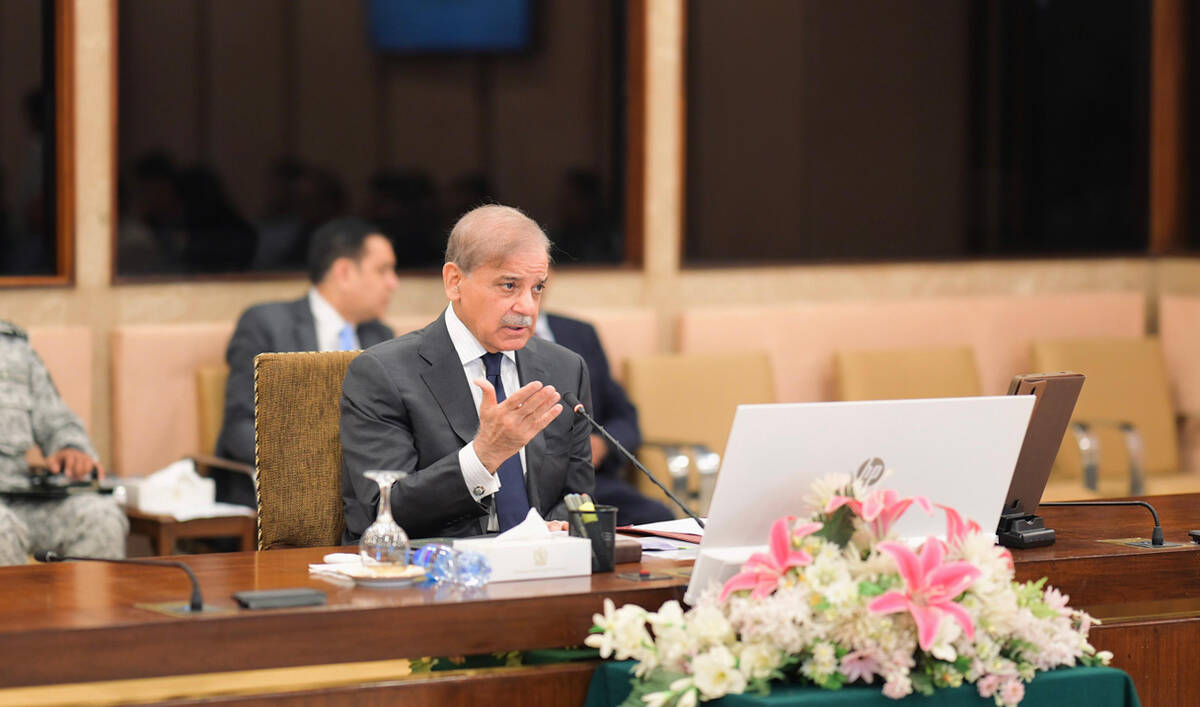


In this handout photo, taken and released by Pakistan’s Prime Minister Office, Prime Minister Shehbaz Sharif chairs a meeting of the Federal Cabinet at the Parliament House in Islamabad on June 26, 2025. (Photo courtesy: Handout/PMO)

During that meeting, he specified Pakistan’s efforts. In response, he [Araghchi] said … ‘We [Iranians] were not the ones who attacked… If Israel stops, then we are ready for dialogue.’”

The prime minister said Pakistan also condemned the missile attacks on US bases in Qatar and had conveyed its position clearly to all sides.

He described Iran’s posture during the war as one of “dignity and restraint,” praising the Iranian people for refusing to capitulate under pressure.

Sharif said Saudi Crown Prince Mohammed bin Salman also played a significant role in defusing tensions.

“I had a phone conversation with the Crown Prince,” he said. “We spoke in great detail. And I say this to you with full sincerity: he played a significant role in helping to stop this war.”

“As soon as Israel launched its attack, Saudi Arabia issued a strong statement of condemnation,” he added. “After that, the Crown Prince personally spoke to the President of Iran [Masoud Pezeshkian].”

As the ceasefire continues to hold between the two Middle Eastern rivals, President Trump has said American and Iranian officials could engage in talks next week, though Tehran has not confirmed any such plans.

Trump, speaking at a NATO summit, said he was not keen to resume formal negotiations but declared the war was over and insisted Iran would not be allowed to acquire a nuclear weapon.

Iran’s parliament, meanwhile, voted to fast-track legislation suspending cooperation with the International Atomic Energy Agency, following US strikes on its nuclear facilities.

With input from AP


Pakistan, Egypt reaffirm support for dialogue, diplomacy to resolve regional issues

Updated 04 January 2026
Follow

Pakistan, Egypt reaffirm support for dialogue, diplomacy to resolve regional issues

  • The development comes amid tensions over Yemen following the Southern Transitional Council advance into Hadramaut, Al-Mahra
  • Saudi Arabia has invited factions in south Yemen to hold a dialogue in Riyadh to 'discuss just solutions to the southern cause'

ISLAMABAD: Pakistan and Egypt have reaffirmed their support for dialogue and diplomacy as the preferred means to resolve regional issues, the Pakistani foreign office said on Sunday, amid tensions over Yemen.

The development comes days after Saudi Arabia-led Coalition to Support Legitimacy in Yemen said it conducted a “limited” airstrike targeting two shipments of smuggled weapons and other military hardware coming from the Emirati port of Fujairah into Mukalla in southern Yemen.

Coalition Forces spokesman Major General Turki Al-Maliki said the weapons and combat vehicles were meant to support the Southern Transitional Council (STC) forces, backed by the United Arab Emirates (UAE), in Yemen's Hadramaut and Al-Mahra "with the aim of fueling the conflict." The UAE has since announced withdrawal of its remaining troops from Yemen, rejecting any actions that could threaten the Kingdom or undermine regional stability.

Pakistan's Foreign Minister Ishaq Dar on Sunday spoke with his Egyptian counterpart Badr Ahmed Mohamed Abdelatty over the phone and discussed the current regional situation with him, according to a Pakistani foreign office statement.

"Both leaders reviewed current regional situation and appreciated efforts of all parties in resolving issues through dialogue and diplomacy," the statement said.

Separately, Saudi Arabia’s foreign ministry has invited factions in south Yemen to hold a dialogue in Riyadh to “discuss just solutions to the southern cause.” The STC on Saturday welcomed Saudi Arabia’s invitation to take part in the inclusive dialogue among southern Yemeni factions.

Disregarding previous agreements with the Arab Coalition, the STC group had launched a sweeping military campaign early in December, seizing the governorates of Hadramaut along the Saudi border and the eastern governorate of Al-Mahra in Yemen’s border with Oman. It also took control of the strategic PetroMasila oilfields, which account for a massive portion of Yemen’s remaining oil wealth.

Pakistan this week expressed solidarity with Saudi Arabia and reaffirmed Islamabad’s commitment to the Kingdom’s security.

“Pakistan expresses complete solidarity with the Kingdom of Saudi Arabia and reaffirms its commitment to security of the Kingdom,” Pakistani foreign office spokesperson Tahir Andrabi told reporters at a weekly news briefing.

“Pakistan maintains its firm support for the resolution of Yemen issue through dialogue and diplomacy and hopes that Yemen’s people and regional powers work together toward inclusive and enduring settlement of the issue, safeguarding regional stability.”

Pakistan and Saudi Arabia signed a landmark defense pact in September last year, according to which aggression against one country will be treated as an attack against both. The pact signaled a push by both governments to formalize long-standing military ties into a binding security commitment.