LASBELA, Pakistan: When Abrar Roonjha returned to his hometown near Bela in Pakistan’s southwestern Balochistan province during the COVID-19 lockdown, he was faced with a major dilemma: how would he attend online classes without reliable Internet connectivity.
Balochistan, Pakistan’s largest province by area, accounts for nearly 44% of the country’s landmass but only around 6% of its population. Despite its mineral wealth and geostrategic location, the militancy-plagued region remains the country’s most underserved in infrastructure and connectivity.
Combine that with the COVID-19 pandemic, which had a devastating impact on education across Pakistan, with prolonged school closures affecting more than 40 million students nationwide. According to a 2021 UNICEF report, around 23 million school-going children were unable to access remote learning during the pandemic due to limited or no Internet connectivity and a lack of digital devices.
The situation was especially dire in rural and underserved areas like Balochistan, where infrastructure gaps meant many students were entirely cut off from their lessons.
“I used to hang my mobile phone on a tree and try to connect to its hotspot to continue my studies but it was very difficult,” Roonjha, now 21, told Arab News.
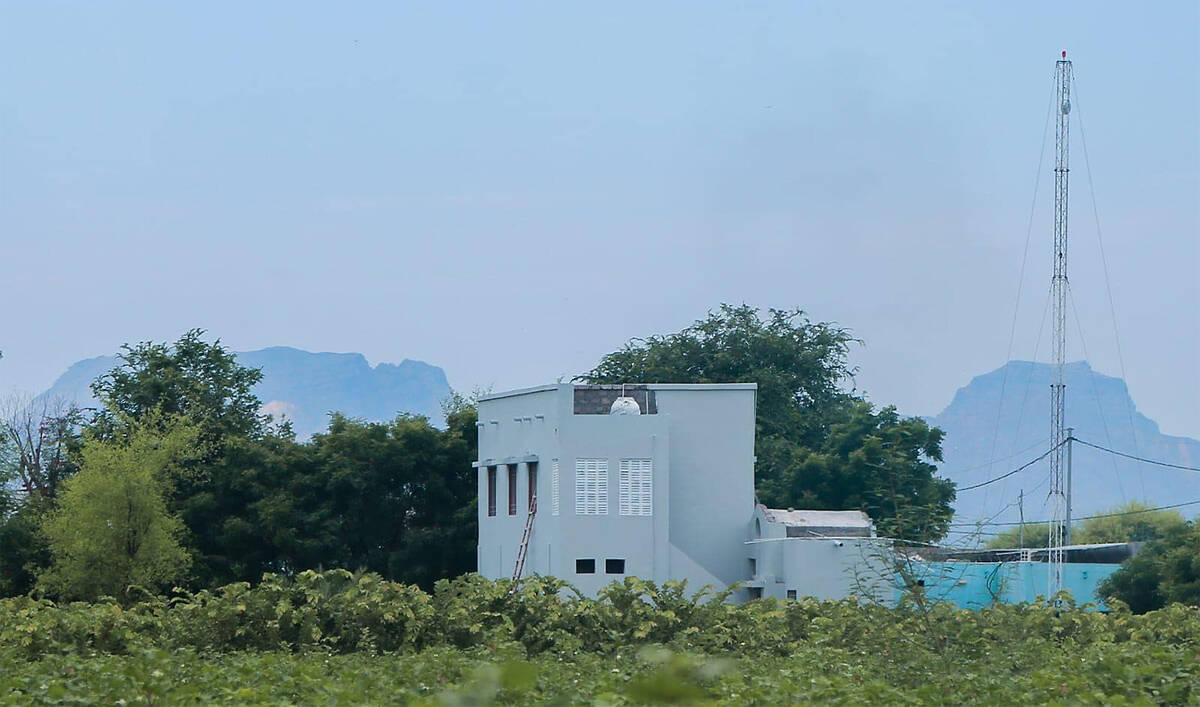
The picture posted on August 30, 2024, by Qaiser Ronjha shows Wang Lab of Innovation in Lasbela in Pakistan’s southwestern Balochistan. (Qaiser Ronjha)
That changed in 2021 with the launch of the Wang Lab of Innovation (WALI), a free Internet and digital skills center in Roonjha’s village, supported by the Internet Society and run by the Welfare Association for New Generation (WANG), a grassroots organization in Lasbela district.
Since then, nearly 650 youth in the region, many from low-income families, have gained access to high-speed Internet and basic tech education.
For young people like Roonjha, the lab has become a portal to the wider world.
“When the Wang Lab of Innovation was established here, I was able to access high-speed Internet. This brought a major positive change in my life,” said Roonjha, who now leads creative programs at the lab.
The connectivity also enabled him to attend international forums, including the World Youth Festival in Russia in 2024 and a UN regional conference on sustainable development in Bangkok earlier this year.
DIGITAL DIVIDE IN PAKISTAN’S LARGEST PROVINCE
Despite its vast size, Balochistan remains Pakistan’s least connected province when it comes to Internet access.
According to Freedom House, around 60 percent of the region lacks any Internet coverage, and in areas with service, mobile speeds are often well below the national average of 6.2 Mbps. The Pakistan Telecommunication Authority reports broadband penetration in the province sits at just 15 percent, compared with the national average of 45.7 percent.
Infrastructure challenges, like mountainous terrain, sparse population, and frequent security-related shutdowns, have consistently deterred investment in fiber and mobile networks . While government-backed initiatives like the Universal Service Fund have begun extending 4G and broadband over limited areas of Balochistan, the majority of rural communities still struggle to connect, reinforcing the importance of local projects like the WALI lab.
“WALI has created a vital space, especially for girls, to access knowledge and skills they would otherwise have no means to acquire,” said Aftab Ahmed, 26, a co-founder of the lab.
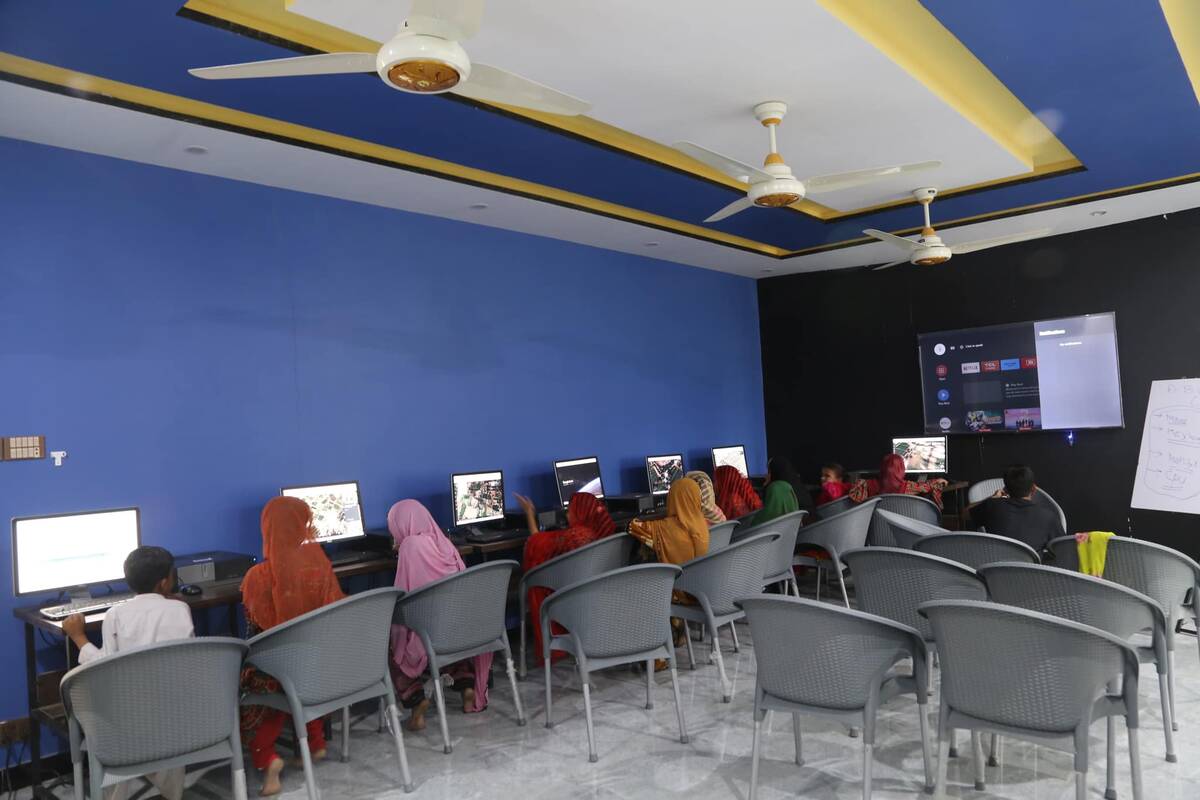
The picture posted on January 3, 2023, by WALI shows girls using computters at WALI lab in Lasbela in Pakistan’s southwestern Balochistan. (WALI)
The initiative is also one of the few local digital literacy efforts led by young people from the region. While national programs like Pakistan’s “Digital Pakistan” campaign have focused on major urban centers, grassroots projects in remote provinces are rare and often underfunded.
The lab is housed in a modest building in the village and is now a daily destination for schoolchildren, university students, and aspiring content creators. Its impact is visible in the confidence and creativity of its youngest users.
Fawaz Qadir, 16, began coming to the lab a year ago.
“I would come here and learn about different AI tools,” he said, describing how he creates music and short films using Suno AI and Meta’s animation tools.
“I talk about climate change and how humans have damaged our environment.”
Abdul Hadi, 14, walks two kilometers each day to reach the lab. In just a year, he’s learned to design YouTube banners and navigate the Internet.
“Things are no longer the way they used to be,” he said.
For Rifat Wasim, 13, a student at the local girls’ school, the lab is her only access to a computer.
“There’s no laptop or such devices at my home, so I come to the lab, and I enjoy it,” she said. “I’ve learned to browse the Internet, use a computer, and create videos.”
RETHINKING THE FUTURE
Roonjha, the sociology student who once studied under a tree, now teaches children to use artificial intelligence tools.
“I see that children as young as ten or twelve are creating music using AI, they are making films,” he said.
“They’ve started to understand the possibilities the Internet offers, and how, through AI, they can showcase their work to the world and make their presence felt.”
The WANG initiative remains one of few rural digital labs in the province. Other recent government-supported efforts include the USF, which has launched projects to expand 4G coverage in parts of Balochistan. But for many villages in districts like Lasbela, such access remains a distant promise.
Ahmed, the WALI co-founder, hopes the model can be replicated.
“Digital inclusion is not just about connectivity, it’s about opportunity,” he said.
“When children in remote areas have access to the same tools as anyone else, it transforms how they see their future.”